.png)
Botox For Forehead Lines: Dose, Movement And How Long Results Hold
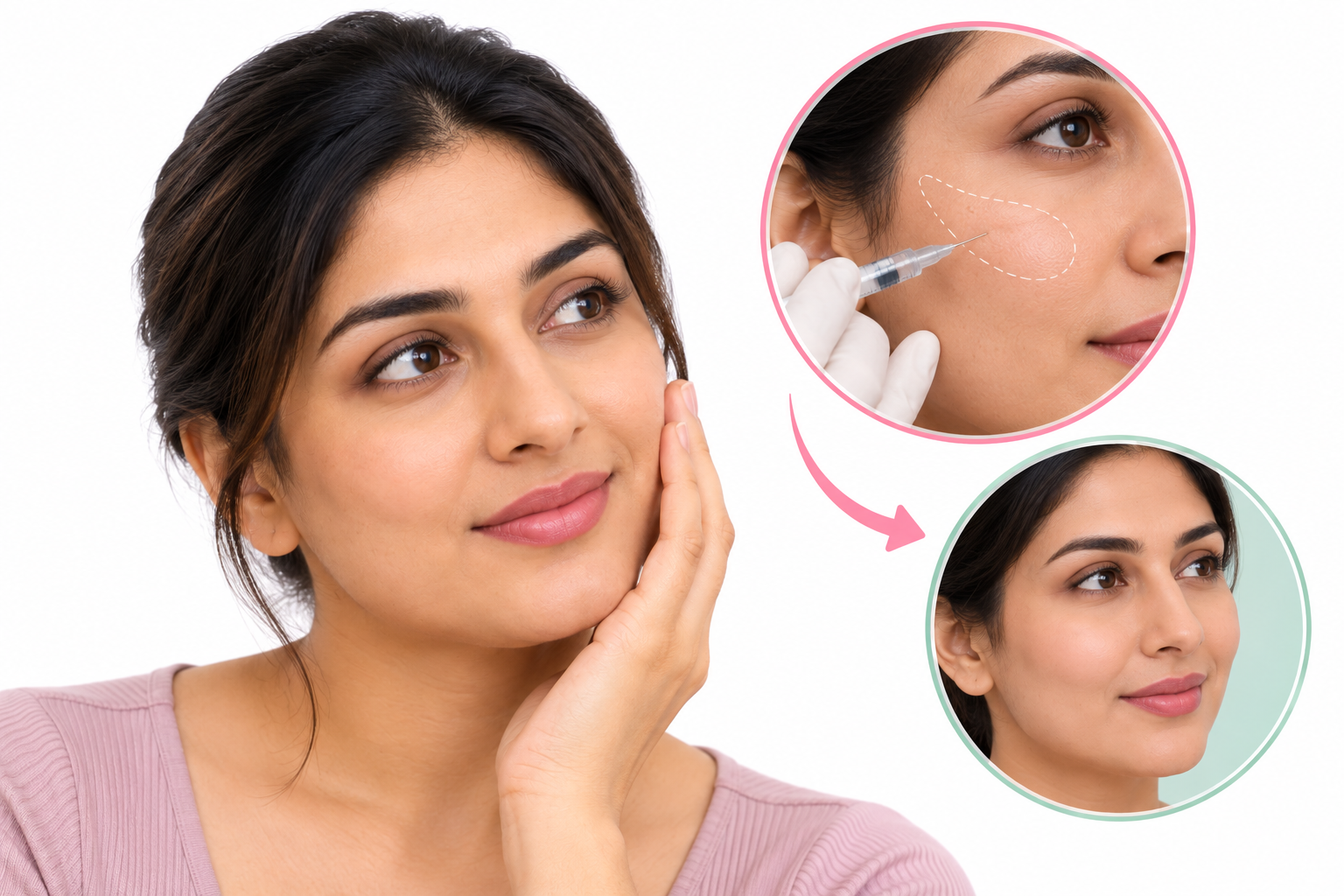
Botox for forehead lines works by relaxing the frontalis muscle responsible for horizontal forehead creases. The effect develops gradually over the first several days, and results commonly last around three to four months. Lines that remain visible when the face is relaxed may also need skin-focused treatment rather than simply using a higher Botox dose.
Forehead treatment needs careful planning because the frontalis muscle does more than create wrinkles it also helps raise the eyebrows. The right treatment therefore depends on the strength of the muscle, position of the brows, depth of the lines and how much natural movement the patient wants to retain.
The aim is not to permanently remove every forehead line. It is to soften excessive lines while maintaining balanced, natural-looking facial expression.
What Actually Causes Horizontal Forehead Lines?
Horizontal forehead lines develop primarily because of repeated contraction of the frontalis muscle.
Every time you raise your eyebrows, look surprised or open your eyes widely, this muscle contracts and folds the forehead skin horizontally.
Initially, these lines may disappear when your forehead relaxes. Over time, repeated folding combined with changes in skin quality can make some lines visible even when you are not moving your eyebrows.
Why Do Some People Get Forehead Lines Earlier?
Forehead wrinkles are not determined by age alone.
They can be influenced by:
- Strong forehead muscles
- Frequent eyebrow movement
- Naturally low brows
- Habitual facial expressions
- Genetics
- Sun exposure
- Reduced skin elasticity
- Collagen changes with age
- Smoking and lifestyle factors
- Overall skin quality
Some people also habitually raise their eyebrows because their brows or upper eyelids feel heavy. This creates additional forehead movement and can make horizontal lines more noticeable.
That is why forehead assessment should include both the wrinkles and the brow position.
Forehead Lines vs Frown Lines
Horizontal forehead lines should not be confused with vertical frown lines between the eyebrows.
They involve different muscles and require different treatment planning.
For procedure-specific information, see the Horizontal forehead lines treatment page.
How Does Botox Soften Them, and How Many Units Does the Forehead Usually Take?
Botox is a botulinum toxin treatment that temporarily reduces targeted muscle activity.
When used appropriately in the forehead, it reduces excessive contraction of the frontalis. The skin consequently folds less strongly when the eyebrows move, allowing horizontal lines to appear softer.
When Do Results Start Appearing?
The effect is not immediate.
Some people begin noticing reduced movement within several days. The result then continues to develop as the treatment settles.
The exact timing varies, so the appearance during the first few days should not be considered the final result.
How Many Units Are Needed for Forehead Botox?
There is no universal number of Botox units that is correct for every forehead.
Dose and placement depend on:
- Botulinum toxin product used
- Forehead muscle strength
- Forehead height and anatomy
- Brow position
- Existing asymmetry
- Depth and pattern of lines
- Previous treatment response
- Amount of movement the patient wants to retain
Importantly, botulinum toxin units are product-specific and cannot be directly compared across different brands.
Therefore, a unit number found online should not be treated as a personal prescription.
Why Isn't More Botox Always Better?
A stronger dose does not automatically produce a better or more natural result.
The frontalis helps elevate the eyebrows. Excessive weakening of this muscle may make the brow feel or appear heavier in some patients.
The objective is therefore to find an appropriate balance between reducing unwanted forehead movement and preserving necessary brow support.
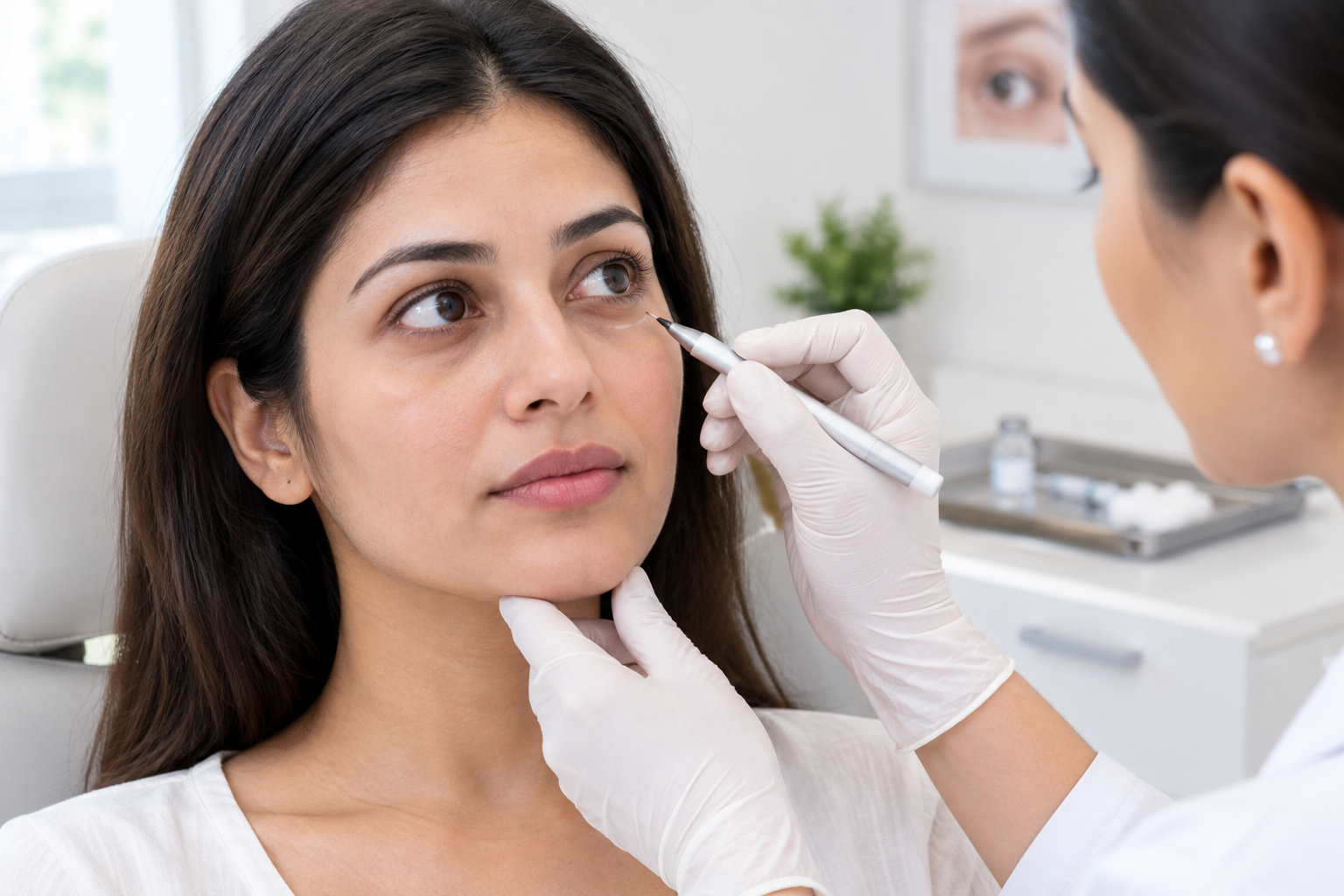
At Elegance Clinic, Dr. Ashutosh Shah assesses forehead muscle activity, brow position and line pattern before determining whether Botox is appropriate and how treatment should be individualized.
For a broader overview, read Botox treatment in Surat explained.
Forehead Botox Planning Table
Because different botulinum toxin products use non-interchangeable unit systems, a safe planning table should not present one universal numerical dose as applicable to every brand.
| Finding | Typical Unit Approach | What Botox Can Change | What Botox Will Not Fully Change | What May Be Added Alongside | Review |
| Fine movement lines | Conservative, individualized | Softens lines during expression | Pigmentation or skin texture | Usually none initially | After effect has settled |
| Moderate movement lines | Based on muscle strength and anatomy | Reduces repeated forehead folding | Established static creases | Skin-quality treatment if required | Clinician-directed |
| Deep static lines | Based on movement rather than crease depth alone | Reduces muscular contribution | May not erase existing deep creases | Appropriate resurfacing/skin treatment | Reassess after Botox settles |
| Low or heavy brow | Particularly careful individualized planning | May soften selected lines | Does not structurally correct significant brow descent | Brow assessment where appropriate | Individualized |
The appropriate dose should be determined during clinical assessment rather than from line depth alone.
What Is the Difference Between Movement Lines and Lines That Stay at Rest?
Understanding static vs dynamic forehead lines is important when deciding whether Botox alone is likely to provide the desired improvement.
Dynamic Forehead Lines
Dynamic lines appear primarily when you raise your eyebrows.
When your forehead relaxes, they disappear or become much less noticeable.
Because these lines are strongly related to muscle contraction, appropriately planned Botox can reduce the movement producing them.
Static Forehead Lines
Static lines remain visible when your forehead is completely relaxed.
They may develop after years of repeated skin folding combined with:
- Loss of collagen
- Reduced elasticity
- Sun exposure
- Skin ageing
- Changes in skin texture
Botox may reduce the repeated muscular movement that contributes to these lines, but an established crease may remain visible.
Why Can Lines Still Be Visible After Botox?
This does not automatically mean the treatment has failed.
If the muscle movement has reduced but a crease remains visible at rest, part of the problem is within the skin itself.
Depending on the patient's skin type and clinical findings, an appropriate skin treatment may be considered separately.
Simply increasing the Botox dose is not necessarily the correct answer.
What if I Already Have a Low Brow?
Brow position needs particular attention before forehead Botox.
Someone with naturally low or heavy brows may use their frontalis muscle to keep the eyebrows elevated.
Reducing too much of that compensatory activity may change how the brow feels or sits.
This is why forehead injections should be planned around the entire upper face, not just individual wrinkle lines.
Read more about Sagging brow treatment.
What Does Aftercare Look Like in the First Week?
Aftercare instructions can vary according to the treatment, product and clinician, so the instructions provided by your treating team should take priority.
Immediately After Treatment
Temporary injection-site effects can include:
- Mild redness
- Small raised bumps
- Minor tenderness
- Mild swelling
- Occasional bruising
These generally settle.
Avoid aggressively rubbing or massaging freshly treated forehead areas unless specifically advised to do so.
Exercise and Daily Activities
Many people return to normal daily activities quickly after Botox.
Recommendations regarding strenuous exercise, heat exposure, lying down, swimming or other activities can vary between treatment protocols. Follow the specific instructions provided by your injector rather than relying on one rigid online timetable.
Skincare, Facials and Massage
Avoid unnecessary vigorous pressure over freshly injected areas.
Ask your treating team when to restart:
- Facial massage
- Head massage
- Facials
- Skin procedures
- Strong active skincare
Do Not Judge the Result on Day One
Forehead Botox takes time to develop.
During the first several days, you may still have considerable movement. The treatment should be given time to settle before deciding whether the result is adequate or whether any review is required.
When Should You Contact the Clinic?
Contact your treating clinic if you experience unexpected or persistent symptoms, significant asymmetry, or troublesome eyelid/brow changes.
Urgent medical attention is appropriate for serious symptoms such as difficulty breathing, swallowing or speaking, or unusual generalized weakness.
For additional safety information, see Can treatment damage forehead skin?.
How Long Do Forehead Results Hold and When Is the Repeat Session?
Results from Botox for forehead lines commonly last approximately three to four months, although the exact duration differs between patients.
The effect usually fades gradually rather than disappearing suddenly.
As muscle activity returns, you may notice:
- More eyebrow movement
- Fine movement lines becoming visible again
- Stronger forehead folding returning gradually
Why Does Botox Last Longer for Some People?
Duration can be influenced by:
- Muscle strength
- Individual anatomy
- Product used
- Dose and placement
- Metabolism
- Previous treatment response
- Degree of facial movement
Therefore, three to four months is a useful general expectation rather than a guaranteed duration.
When Should the Next Session Be Booked?
Repeat treatment should not automatically be scheduled simply because a calendar says three months have passed.
A better approach is to reassess when meaningful unwanted movement has returned and determine whether retreatment is appropriate.
The treatment plan can then be adjusted according to the previous result.
What if I Stop Having Botox?
The effect gradually wears off and normal muscle activity returns.
Stopping treatment does not inherently make your forehead wrinkles suddenly worse than they were before. Natural facial movement and ageing simply continue.
Conclusion
Botox for forehead lines is most effective when treatment is based on how the forehead actually moves rather than simply on how deep the wrinkles look.
Dynamic horizontal lines caused mainly by frontalis activity often respond differently from static creases that remain visible at rest. Brow position also matters because the forehead muscle helps support eyebrow elevation.
Results generally soften forehead movement for approximately three to four months before gradually wearing off.
For natural-looking forehead lines treatment in Surat, the objective should therefore be appropriate muscle relaxation while maintaining facial balance and expression—not permanent "wrinkle removal."