
Square Jaw and Chin Treatment in Surat
Written and medically reviewed by Dr. Ashutosh A. Shah, M.B.B.S., M.S., M.Ch., D.N.B., plastic surgeon, in practice since 2004. Every treatment described on this page is injected by Dr. Shah personally.
A jaw can look wide for three separate reasons: the chewing muscle is bulky, the jaw bone itself is broad, or there is fat and laxity along the jawline. An injection does something useful about the first and nothing at all about the other two. Clenching your teeth and feeling the muscle harden at the back of your jaw is most of the examination. The chin is a different region with its own three problems, and dimpling, a crease and a chin that sits back are not variations of each other.
One thing worth telling the doctor even if it feels unrelated: whether you grind your teeth.
Is your jaw wide because of muscle, bone or fat?
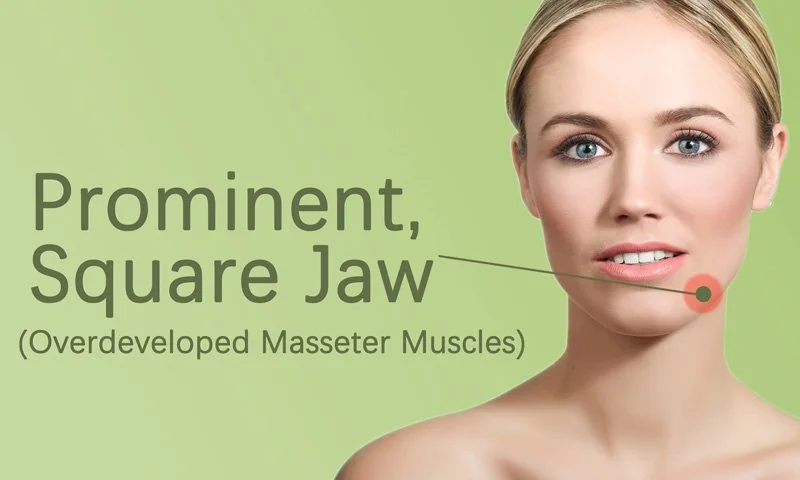
Put your fingers at the back angle of your jaw, just below and in front of the earlobe, then clench your teeth hard. If a firm lump rises under your fingers, that is the masseter, and you have found muscle. Then relax completely and feel the same spot. What remains when the muscle is soft is bone and soft tissue. Almost everyone has some of each, and the proportion is what the treatment plan is built on.
A bulky chewing muscle
This is the one that responds to treatment. The masseter closes your jaw, and in some people it is substantially overdeveloped, which widens the lower face at its widest point. Clenching, grinding, chewing habits and plain genetics all contribute. The width from muscle is typically symmetrical but not always, and a noticeably stronger side is common and worth pointing out.
A broad jaw bone
If the angle of your jaw is wide when the muscle is completely relaxed, that width is skeletal. No injection changes bone. This is said plainly here because it is the single most common mismatch between what people are sold and what they have, and because finding out afterwards is an expensive way to learn it. Skeletal width is addressed surgically or not at all, and that is a different conversation with a different consent process.
Fat and laxity along the jawline
Here the jaw does not look wide so much as undefined, with the line between face and neck softened and often a jowl at the front edge. This is a contour and support problem rather than a muscle one, and treating the masseter in this case narrows a muscle that was not the problem and leaves the outline exactly as it was. Where that softening carries on below the jawline, the bands and lines of the neck are a separate assessment, covered on our neck bands and neck lines page.
Jaw and chin treatment is off-label, and here is what that changes
The BOTOX Cosmetic label is approved for four things: frown lines, lines at the outer corner of the eye, forehead lines, and bands in the neck. The jaw is not one of them and neither is the chin. Treating the masseter, or the chin muscle that causes dimpling, is off-label use.
Off-label is ordinary in medicine and is not a reason to refuse treatment. It has two consequences here. There is no official dose. The masseter is a far bigger muscle than anything in the upper face and is treated accordingly, and in this clinic's experience most patients need somewhere around twenty to thirty units per side, with heavy grinders sometimes needing more. That is this clinic's own figure and not a regulated one, which is the distinction worth holding on to: you will not find an official number for this area anywhere, so if a clinic quotes one as though it were official, that is worth noticing. There is also no official figure for how long it lasts here. The three to four month figure that circulates belongs to the frown lines.
Teeth grinding is often the real story, and it changes the conversation
A large proportion of people who come in asking about jaw slimming also clench or grind, usually at night, and often have not connected the two. If that is you, say so, because it changes what is being treated and what should be monitored afterwards. A bulky masseter and a grinding habit tend to travel together: the habit builds the muscle.
Two honest limits on that. This page does not claim the injection treats teeth grinding. It is widely used that way and the published evidence is genuinely unsettled, so anyone presenting it to you as an established cure for bruxism is going further than the evidence does. And if you are grinding, the thing most likely to protect your teeth is a dental assessment and often a night guard, which is a separate matter from how wide your jaw looks. Raising it matters because treating a muscle without knowing why it is bulky is treating half the problem.
The chin: three problems that get mistaken for each other
Dimpling, sometimes called an orange-peel chin
A pebbled or dimpled texture across the chin, usually more obvious when you speak or purse your lips. It comes from overactivity in the chin muscle pulling the overlying skin into small irregularities. It is a muscle problem, so it is the chin complaint most likely to respond to a small off-label dose of toxin.
The horizontal crease below the lower lip
A single fold running across between the lower lip and the chin, which deepens with expression and in many people stays visible at rest. This is mostly a fold at a junction between two areas rather than a muscle pulling a line, so filler to support the crease is the usual approach, with toxin playing a supporting role at most. This is the complaint that the folded chin-crease page used to cover on its own.
A chin that sits back
Here the complaint is usually described as a weak chin or a profile that disappears, and it is frequently confused with the crease above, because a chin that sits back makes that crease look deeper. This is a projection problem. Filler can improve projection to a degree, and beyond that degree it is a structural question rather than an injectable one. Being clear which of the two you have matters, because filling a crease on a chin that actually needs projection treats the shadow and not its cause.
Both chin filler treatments carry the risk that applies to filler anywhere on the face: product placed into or pressing on a blood vessel blocks the supply beyond it, and the consequences of that range from skin damage to, in the worst reported cases elsewhere on the face, loss of vision. The chin is not among the sites that dominate the published reports, and this page does not give you a figure for it because the review it would come from does not publish one. What it does mean practically is that hyaluronidase should be available in the room wherever hyaluronic acid filler is injected, including here. Ask whether it is on the premises.
| Complaint | What causes it | What is used | What will not change it | Label status |
|---|---|---|---|---|
| Wide jaw, muscle | An overdeveloped masseter closing the jaw | Toxin to the masseter, reducing its bulk over time | Filler, which adds width rather than removing it | Off-label |
| Wide jaw, bone | A broad mandibular angle | A surgical question, or accepting the shape | Any injection, which does not alter bone | Not an injectable problem |
| Undefined jawline, fat and laxity | Loss of contour and support, often with a jowl | Contour treatment aimed at the outline itself | Masseter toxin, which narrows the wrong structure | Not a masseter problem |
| Chin dimpling | Overactivity in the chin muscle | A small dose of toxin to that muscle | Filler, which does not quiet an active muscle | Off-label |
| Horizontal crease below the lip | A fold at the junction, deepened by expression | Filler to support the crease | Toxin alone, which has little to relax here | Off-label |
| Chin that sits back | Lack of forward projection | Filler to a degree; beyond that, structural | Filling the crease, which treats the shadow | Off-label |
What to expect, and why the timeline here is not the same as the rest of the face
This is the part most people are not told. When a forehead line softens, it is because the muscle has stopped pulling, and that happens quickly: the first effect appears one to two days after injection and builds through the first week. A wide jaw narrows for a different reason. The muscle, now used less, gradually reduces in bulk. That is a change in the muscle itself rather than only in its movement, so it appears over weeks rather than days.
In this clinic's experience, chewing feels slightly less powerful within a week or two, visible slimming starts from about four weeks, and the result peaks at around eight to twelve weeks, lasting roughly four to six months. Those are this clinic's own figures and not regulated ones, because no label covers this area, and the honest caveat is that they vary with how bulky the muscle was to begin with. Expect a review later than you would need for the forehead, and a plan that judges the result over a month or more rather than at the two-week mark. If a clinic promises a narrower face next week, that is not how the mechanism works.
The risks worth knowing. Chewing can feel tired for a while, particularly with hard food, which is the expected consequence of weakening a chewing muscle and settles. The masseter sits next to muscles that move the mouth, so injection placed too far forward or too high can change a smile, and that is a technique matter rather than a dose matter. Asymmetry is possible and is the usual reason for a review. On the chin, a dose that is too generous can affect how the lower lip moves, which matters for speech, so small amounts are the rule exactly as they are around the mouth. What the label does say for any area is that treating more often than every three months has not been evaluated.
What it costs in Surat, and why no figure appears on this page
The cost depends on how bulky your chewing muscle actually is, or how much filler the chin takes and on the product used, so any figure quoted before someone has examined your face is a guess. You are given a price after the assessment and before anything is injected, so you know the full cost while you can still say no. EMI options are available.
One warning worth taking seriously. A quote well below the going rate usually means one of three things: fewer units than the area actually needs, a product diluted further than it should be, or an injector who is not a doctor. The masseter sits next to the muscles that move your mouth, and the chin dose affects your lower lip, so this is not an area to economise in. Ask which product is being used, how many units, and who is holding the needle, then compare those three answers rather than the totals.
Frequently Asked Questions
Will Botox make my square jaw narrower?
Only if the width is coming from muscle. Clench your teeth and feel the back angle of your jaw: if a firm lump rises, you have a bulky masseter and that is treatable. If the width is still there when the muscle is completely relaxed, it is bone, and no injection changes bone. If the jawline looks undefined rather than wide, with a jowl at the front, that is contour and support rather than muscle. Those three findings lead to three different answers, and establishing which you have is the whole value of the consultation.
Is jaw slimming with Botox approved?
No, it is off-label. The BOTOX Cosmetic label covers frown lines, lines at the outer corner of the eye, forehead lines and neck bands, and the jaw is not among them. Off-label use is routine in medicine and this is one of the more commonly performed examples, but it means there is no official dose and no official duration to check, so the injector's judgement about how bulky your muscle is does the work a label would do elsewhere. Any clinic should tell you which of your treatments is on-label and which is not.
How long before I see my jaw look narrower?
Longer than for a forehead line, and the reason is mechanical rather than anything to do with the product. A line softens as soon as the muscle stops pulling, within the first week. A wide jaw narrows because the muscle, used less, reduces in bulk, which takes longer. In this clinic's experience slimming starts to show from about four weeks and peaks at around eight to twelve weeks, and those are practice figures rather than regulated ones, because no label covers this area. They also vary with how bulky the muscle was to start with. Expect to judge the result over a month or more, and expect a review later than you would need elsewhere on the face.
I grind my teeth. Should I mention it?
Yes, and it may be the more important half of the appointment. Grinding and a bulky masseter travel together, because the habit builds the muscle, and treating the muscle without knowing why it is bulky is treating half the problem. This page does not claim the injection treats grinding: it is widely used that way and the evidence is not settled, so treat anyone who presents it as a cure for bruxism as overstating. If you grind, your teeth are a dental question and often a night-guard question, which is separate from how wide your jaw looks.
Will it be hard to chew afterwards?
Chewing often feels tired for a while, more noticeably with hard or chewy food, and that is the expected result of weakening a muscle whose job is chewing. It settles. The risk worth asking about is not fatigue but placement: the masseter has neighbours that move the mouth, so injections placed too high or too far forward can change a smile. That is about technique and anatomy rather than about using less product, which is a reason to ask who is injecting and how often they treat this area.
Is my chin crease the same as a weak chin?
They are different and they get confused constantly, partly because a chin that sits back makes the crease above it look deeper. The crease is a fold at the junction between lip and chin, and it is supported with filler. A chin that lacks forward projection is a structural matter, improvable with filler up to a point and a surgical question beyond it. Filling the crease on a chin that actually needs projection treats the shadow rather than what is casting it, which is why the two are assessed in profile and not only face on.
How much does jaw or chin treatment cost in Surat?
No figure is published here. For the jaw the cost follows how bulky your chewing muscle actually is, which is why the clench test matters, and for the chin it follows whether the problem is muscle or support. Both are examination findings, and the product used changes the figure as well. You are quoted after the assessment and before anything is injected, and EMI options are available. A quote well below the going rate for a jaw usually means fewer units than the muscle needs, which simply wears off sooner. Ask which product, how many units, and who is injecting.
Next step
Do one thing before you come in: clench your teeth, feel the back angle of your jaw, then relax and feel it again. Whether a firm lump appears and disappears is the single most useful piece of information you can bring, because it separates the one cause an injection helps from the two it does not. For the chin, look at yourself in profile as well as straight on. Expect to be examined clenched and relaxed, to be told which of your treatments is off-label, and to be given a timeline for the jaw that is longer than the one you may have read elsewhere. Treatment of the lower lip and mouth area is covered on our lip and mouth page, and you can book a consultation or read common questions on our FAQ page.
This page is for education and is not a substitute for examination. Botulinum toxin is a prescription medicine that must be prescribed and administered by a qualified doctor; it carries a boxed warning about the spread of toxin effect and is not suitable in pregnancy, breastfeeding, certain neuromuscular conditions or with some medicines. Masseter and chin treatment are off-label uses: the BOTOX Cosmetic label is approved for glabellar lines, lateral canthal lines, forehead lines and platysma bands only. Because neither the jaw nor the chin is an approved indication, no official unit dose or duration figure exists for these areas. The unit range and the timeline on this page are this clinic's own practice figures and are stated as such, not as regulated ones. The one to two day onset and the three-month minimum interval are from the BOTOX Cosmetic prescribing information. The slower timeline for a narrowing jaw reflects reduction in muscle bulk and is described from this clinic's experience rather than from a published figure. This page makes no claim that botulinum toxin treats teeth grinding. No surgical jaw or chin service is claimed here; ask at consultation what is available. Please consult Dr. Ashutosh A. Shah about your own treatment.