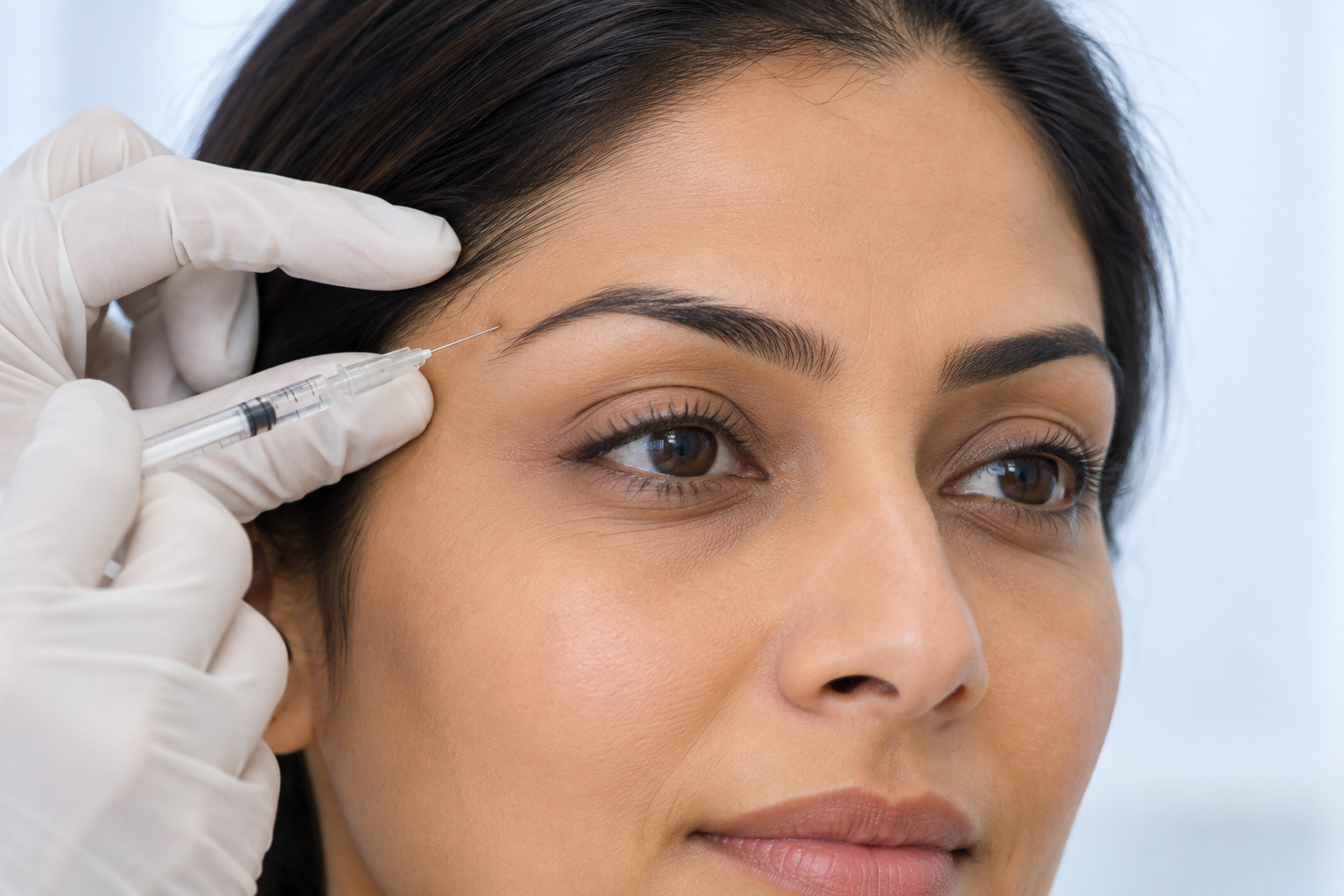
Botox For Hooded Eyes: What A Brow Lift With Injections Can And Cannot Do
<style type="text/css"> </style> Relaxing the muscles that pull the brow down can raise the brow tail by roughly one to three millimetres, which opens a mildly hooded eye. It cannot remove excess eyelid skin. Where the hood is caused by loose skin or a droopy lid, eyelid surgery is the honest answer.
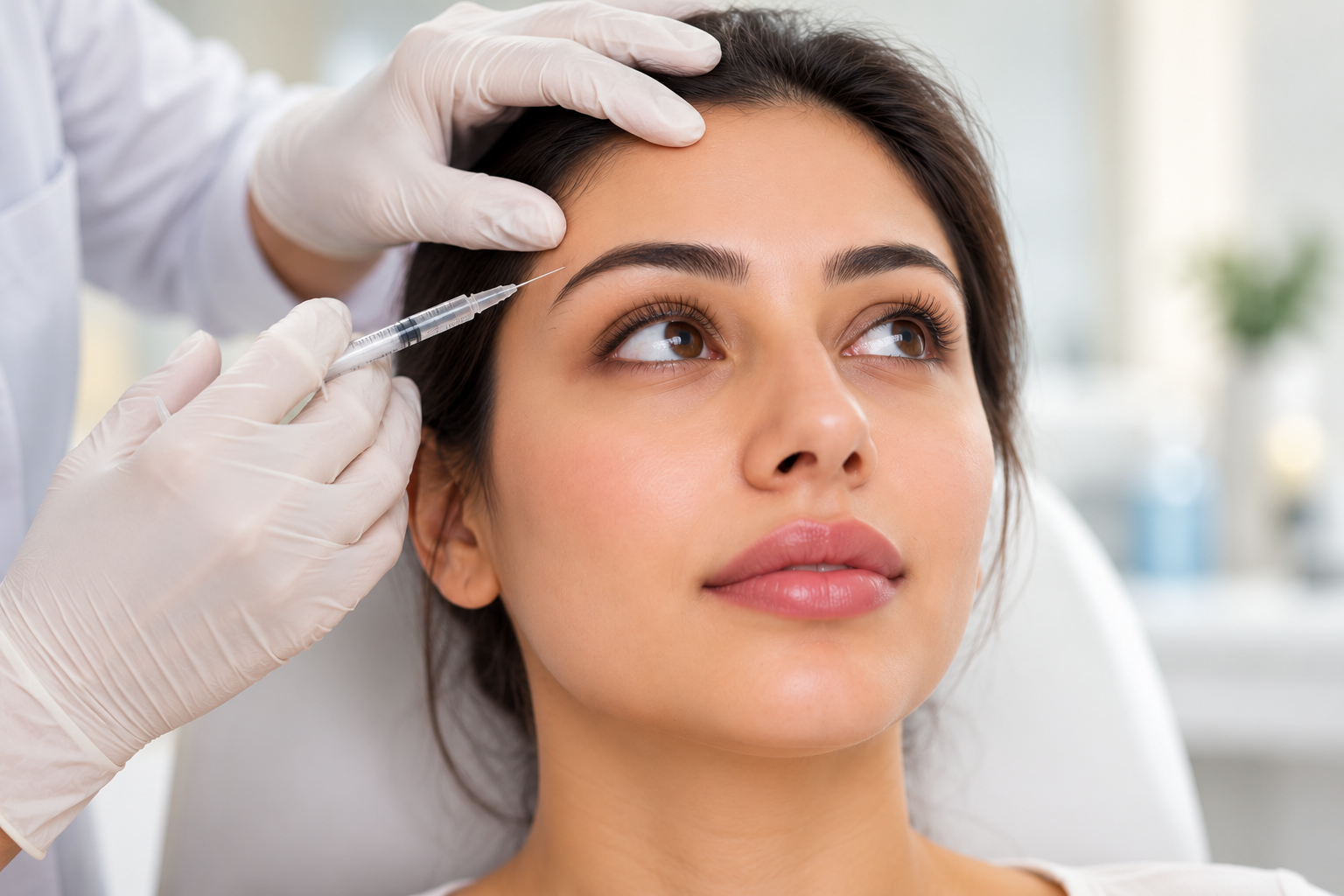
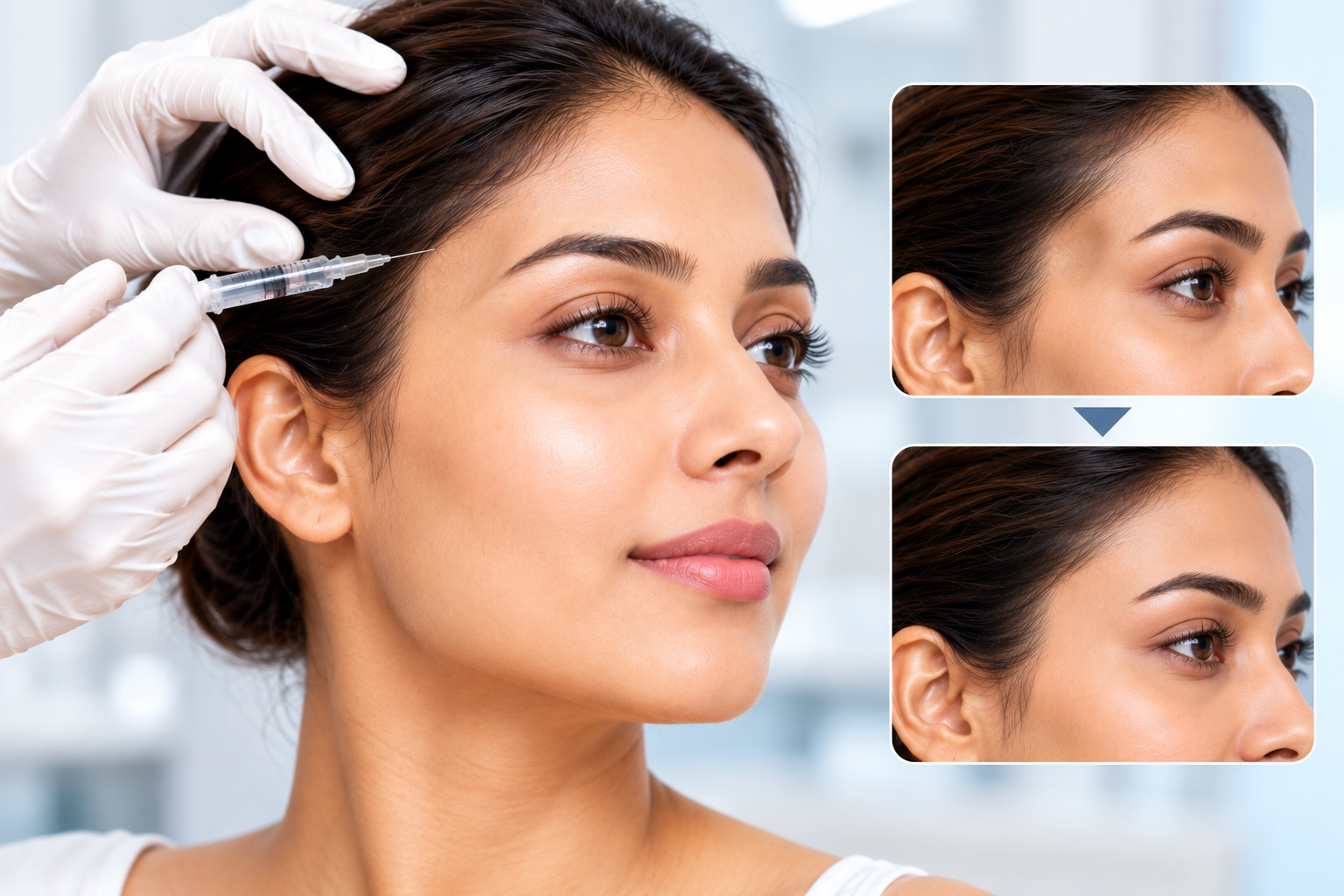
Botox for hooded eyes may help when mild hooding is partly caused by muscles pulling the outer brow downward. Relaxing these muscles can raise the brow tail by roughly one to three millimetres, making the eye appear slightly more open. It cannot remove excess eyelid skin or correct a genuinely drooping eyelid.
At Elegance Clinic, Dr. Ashutosh Shah assesses the brow, upper eyelid and surrounding muscles before deciding whether botox for hooded eyes is likely to provide a useful change. The important question is not simply whether the eye looks hooded, but what is actually causing that appearance.
What Actually Causes a Hooded Upper Eyelid?
A hooded eye describes an appearance in which tissue above the upper eyelid makes the visible eyelid space look smaller.
However, several different anatomical problems can create a similar appearance.
Understanding the cause matters because botox for hooded eyes only helps certain types of hooding.
Mild Brow Descent
The eyebrow can gradually sit lower, particularly toward its outer end.
When the brow tail descends, the skin below it moves downward as well. This can make the outer upper eyelid appear heavier.
This is the situation in which a carefully planned botox brow lift may provide some improvement.
Heavy or Excess Upper Eyelid Skin
Some people have a significant amount of loose or excess upper-eyelid skin.
This skin may fold over the natural eyelid crease and create pronounced hooding.
Botox does not remove this skin.
Trying to solve substantial excess skin with more injections will not reproduce the result of eyelid surgery.
True Eyelid Ptosis
A drooping eyelid is different from a low eyebrow.
With true ptosis, the upper eyelid itself sits lower than it should.
This needs a different assessment because relaxing brow muscles does not correct the underlying eyelid problem.
Facial Asymmetry
Many people naturally have one eyebrow slightly higher than the other.
If one brow sits lower, that eye may appear more hooded even when the amount of eyelid skin is similar on both sides.
The cause of the asymmetry should be identified before treatment.
How Does a Botox Brow Lift Work, and How Much Lift Is Realistic?
Several muscles influence eyebrow position.
Some pull the brow downward, while the forehead muscle contributes to lifting it.
A botox brow lift works by selectively relaxing some of the downward-pulling muscle activity while preserving enough lifting function.
This can allow the outer brow to sit slightly higher.
According to the supplied treatment plan, a realistic change is approximately one to three millimetres at the brow tail.
That is an important limitation.
Botox for hooded eyes is intended to produce a subtle change. It should not be presented as an alternative capable of reproducing a surgical brow lift or removing substantial eyelid skin.
The goal is generally to make a mildly hooded eye appear slightly more open while maintaining natural expression.
For more information about brow-specific treatment, see the Sagging brow treatment page.
What Can Botox for Hooded Eyes Actually Improve?
The treatment is most relevant when muscle activity and mild brow descent contribute to the hooded appearance.
In an appropriate patient, botox for hooded eyes may:
-
Raise the outer brow slightly
-
Make the outer eye appear somewhat more open
-
Reduce downward muscular pull on the brow
-
Improve mild brow asymmetry in selected cases
-
Produce a subtle eyebrow-lifting effect
The expected change should remain modest.
Someone expecting a dramatic increase in visible eyelid space is unlikely to get that result from injections alone.
What Botox for Hooded Eyes Cannot Do
Understanding the limitations is just as important as understanding the potential benefit.
Botox for hooded eyes cannot remove excess upper-eyelid skin.
It also cannot reliably correct true eyelid ptosis.
This distinction prevents patients with structural problems from repeatedly undergoing injections when the treatment cannot address the actual cause.
Botox should therefore not be expected to:
-
Cut away loose eyelid skin
-
Correct substantial upper-eyelid hooding
-
Repair true eyelid ptosis
-
Produce a surgical brow lift
-
Create a dramatic change in eyelid shape
If excess skin is the dominant problem, surgical assessment may provide a more appropriate answer.
Who Is a Good Candidate and Who Is Not?
A suitable candidate generally has mild brow descent with enough upper-eyelid skin quality that a small change in brow position can improve the appearance.
Mild Brow Descent
This is the clearest situation in which a hooded eyelid treatment without surgery may help.
If the brow tail is being pulled downward by muscle activity, reducing that pull can produce a small lift.
Heavy Upper Eyelid Skin
If the main problem is a substantial fold of loose skin, raising the brow by a few millimetres may not provide the desired improvement.
The skin itself remains present.
True Ptosis
When the upper eyelid itself is drooping, the problem should not be treated as simple brow descent.
A proper eyelid assessment is needed.
Asymmetric Brow
Patients with one brow lower than the other require individual planning.
The treatment pattern may need to account for the existing asymmetry rather than using exactly the same approach on both sides.
Candidacy Table
| Finding | Does a Botox Brow Lift Help? | Expected Lift | Alternative Treatment |
|---|---|---|---|
| Mild brow descent | May help in suitable patients | Roughly 1–3 mm at the brow tail | Individual brow assessment if more correction is wanted |
| Heavy upper eyelid skin | Limited benefit | Small brow change will not remove excess skin | Eyelid surgery assessment |
| True ptosis | Does not correct the underlying problem | Brow movement does not repair eyelid ptosis | Ptosis/eyelid surgical assessment |
| Asymmetric brow | May help selected cases | Depends on the cause and degree of asymmetry | Individualised brow or eyelid assessment |
What Are the Risks, Including a Brow or Lid Drop?
Injection placement around the forehead and brow requires careful planning because the same muscle balance that can create a small lift can also affect brow position in an unwanted direction.
A possible unwanted result is a brow that feels or appears lower.
This can make an already hooded eye feel heavier.
The treatment plan therefore needs to account for:
-
Existing brow height
-
Forehead muscle activity
-
Natural eyebrow shape
-
Degree of eyelid hooding
-
Right-to-left asymmetry
-
Previous Botox treatment
A patient's existing anatomy matters.
Someone who already relies heavily on the forehead muscle to hold the brows up may require a particularly careful treatment plan.
What Happens if the Brow Drops Instead?
If the brow sits lower after treatment, the upper eyelid may temporarily look heavier.
This is particularly relevant for patients who already have limited visible eyelid space.
Because botulinum toxin treatment is temporary, unwanted muscle effects generally change as its action gradually wears off.
However, the appropriate response depends on exactly what has happened.
Patients who notice a new brow or eyelid drop after treatment should contact their treating clinic for assessment rather than trying to correct it themselves.
Why More Botox Is Not Always Better
A stronger treatment does not automatically create a stronger lift.
The eyebrow sits in a balance between muscles pulling upward and muscles pulling downward.
Excessive relaxation of the muscles contributing to brow elevation may make the brow feel heavy rather than lifted.
For botox for hooded eyes, the objective is therefore not maximum muscle relaxation.
It is controlled treatment designed around the person's existing brow position and muscle pattern.
When Is Eyelid Surgery the Correct Answer Instead?
Surgery becomes more relevant when the main cause of hooding is structural rather than muscular.
According to the supplied plan, heavy upper-eyelid skin and a genuinely drooping eyelid should not be presented as problems Botox can correct.
If the upper eyelid itself sits lower than normal, the problem may be ptosis rather than simple brow descent. Ptosis can have several causes, and treatment depends on factors such as eyelid position, levator muscle function, symmetry and the underlying cause.
Patients with a genuinely drooping upper eyelid can read our detailed guide to Droopy eyelid and ptosis surgery on our face surgery site.
Similarly, true eyelid ptosis requires assessment of the eyelid itself rather than simply raising the eyebrow.
A patient should therefore be assessed for surgery when:
-
Excess upper-eyelid skin is substantial
-
The eyelid itself appears to droop
-
A few millimetres of brow movement would not provide enough improvement
-
The patient wants a degree of correction injections cannot realistically provide
For information about surgical assessment, see Droopy eyelid and ptosis surgery.
Is Botox for Hooded Eyes the Same as an Eyebrow Lift Treatment?
The terms can overlap when people discuss non-surgical treatments.
An eyebrow lift injection or Botox brow lift generally refers to strategic muscle relaxation intended to produce a small upward change in brow position.
Therefore, botox for hooded eyes may use a similar principle when mild brow descent contributes to the hooding.
However, not every hooded eye is caused by the brow.
Someone with significant excess eyelid skin or true ptosis needs a different approach.
You can also read Droopy eyebrow treatment in Surat and Eyebrow lifting treatment in Surat for related treatment information.
Can Botox for Hooded Eyes Be Combined With Crow's Feet Treatment?
The outer eye and outer brow are neighbouring areas, so patients may ask about treating crow's feet during the same overall treatment plan.
However, the pattern should be planned according to the individual's anatomy rather than treating each concern independently.
If the main goal is a subtle brow-tail lift, the clinician needs to consider how treatment around the outer eye may affect the desired muscle balance.
The final injection plan should therefore be based on the brow position, eye shape and muscle activity found during assessment.
How Long Does a Botox Brow Lift Last?
The supplied 28 September content plan asks for this question to be addressed but does not provide a specific duration figure for a Botox brow lift.
For that reason, an exact number should not be added to this article without clinical approval.
The lifting effect is temporary because botulinum toxin gradually wears off and muscle activity returns.
A repeat treatment schedule should therefore be based on clinical review and the patient's response rather than an unsupported fixed interval.
Why Assessment Matters Before Botox for Hooded Eyes
Two patients can both describe their eyes as “hooded” while having completely different anatomical causes.
One may have mild brow descent and be a reasonable candidate for a subtle Botox brow lift.
Another may have substantial loose upper-eyelid skin.
A third may have true eyelid ptosis.
Giving all three patients the same treatment would ignore the underlying problem.
Before recommending botox for hooded eyes, assessment should determine:
-
Whether the brow is actually low
-
Whether the eyelid itself is drooping
-
How much excess eyelid skin is present
-
Whether the brows are symmetrical
-
How the forehead muscles are being used
-
Whether a 1–3 mm change would meaningfully improve the concern
That assessment provides a more realistic answer than simply asking whether Botox can “lift hooded eyes.”
Conclusion
Botox for hooded eyes can provide a subtle improvement when mild brow descent and downward muscle pull contribute to the hooded appearance. According to the supplied plan, the brow tail may rise by roughly one to three millimetres, but Botox cannot remove excess eyelid skin or correct true eyelid ptosis.
At Elegance Clinic, Dr. Ashutosh Shah can assess the brow, eyelid skin, muscle activity and facial asymmetry to determine whether a Botox brow lift is appropriate or whether another treatment would better address the underlying cause.