
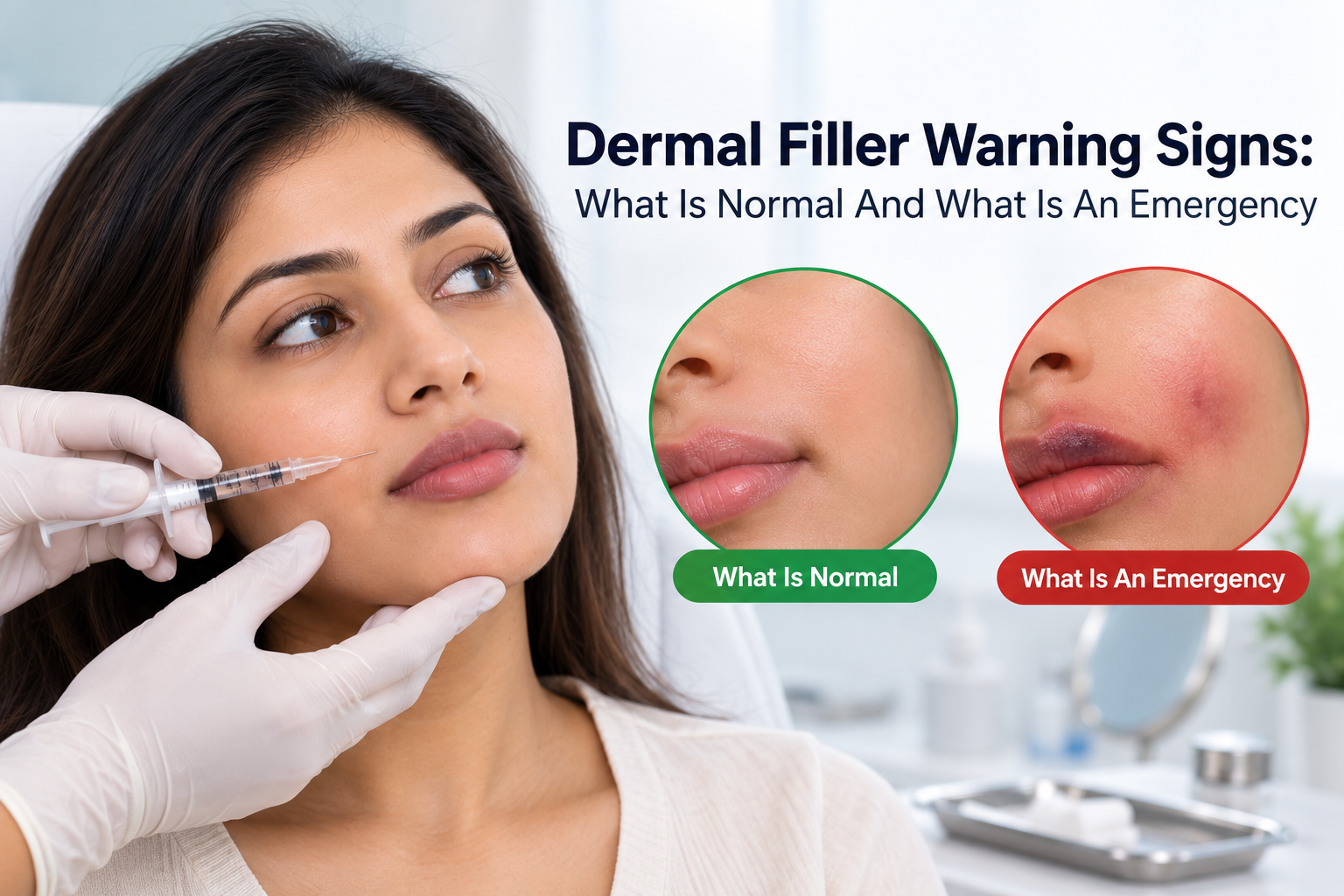
Dermal Filler Warning Signs: What Is Normal And What Is An Emergency
Mild swelling, tenderness and bruising for two to three days are expected. Severe or worsening pain, blanching or a white patch, dusky or blue-grey discolouration, and any visual change are not. Those suggest a blocked blood vessel and need same-day contact with your injector, not a wait-and-see.
Dermal fillers can temporarily leave the treated area swollen, tender, bruised or slightly uneven. These changes can look worrying, particularly during the first few days. The important point is knowing which symptoms are part of normal recovery and which dermal filler side effects warning signs require prompt assessment.
Patients considering injectable treatments should understand both the expected effects and potential complications before treatment. You can also read our guide on whether beauty injections are safe for additional information about injection safety.
A patient should be given clear aftercare instructions and know how to contact the treating clinic if something does not feel right. When symptoms are severe, worsening or unusual, it is safer to contact the injector rather than trying to diagnose or treat the problem at home.
What Is Genuinely Normal In The First 72 Hours After Filler?
During the first two to three days, some local reaction around the injection sites is expected. The extent can vary according to the treatment area, the amount injected and the individual response.
Common early changes include:
- Mild swelling
- Mild tenderness
- Small areas of bruising
- Temporary sensitivity around injection points
- Slight temporary unevenness caused by swelling
These symptoms should generally remain manageable and gradually improve rather than becoming progressively more severe.
Bruising by itself does not automatically mean there is a complication. A bruise develops when a small blood vessel is injured during an injection and can change colour as it resolves.
Swelling can also make the two sides of the face appear temporarily uneven. This is one reason patients should not judge their final cosmetic result immediately after treatment.
Different facial areas may also react differently because injection depth, tissue characteristics and treatment goals vary. Patients who want to understand where fillers may be used can review the dermal filler treatment areas before planning treatment.
What matters most after an injection is the pattern of symptoms.
Mild symptoms that remain stable or gradually improve are very different from pain that becomes increasingly severe, skin that turns white or unusually dusky, or new visual symptoms.
If you are uncertain whether your reaction is normal, contact the clinic and describe when the symptom started, whether it is improving or worsening, and whether the skin colour has changed.
Which Symptoms Suggest A Blocked Blood Vessel And Need Same-Day Review?
A vascular occlusion after filler means blood flow through a vessel may have become blocked. Because tissues depend on their blood supply, symptoms suggesting this problem require prompt professional assessment.
Warning signs include:
- Severe or worsening pain rather than ordinary injection-site tenderness
- Blanching or an unusual white patch in or around the treated area
- Dusky or blue-grey skin discolouration
- Pain that is not settling as expected
- Unusual changes in the appearance of the skin
- Any change in vision following filler treatment
These symptoms should not be treated as routine swelling or bruising.
A white patch after filler, particularly when accompanied by significant pain or other colour changes, is different from ordinary bruising and deserves immediate attention.
Visual symptoms are especially important. Any visual change following filler treatment requires urgent medical assessment.
Do not wait until the following routine review appointment if significant warning signs are already present. Contact the treating injector or clinic immediately and follow the emergency instructions they provide.
Why Do Pain, Blanching And Blue Discolouration Matter More Than Swelling?
Swelling is a common reaction to an injection. Severe pain and abnormal skin colour can tell a different story.
Ordinary post-treatment swelling usually causes puffiness and mild tenderness. It should not normally cause progressively worsening severe pain.
Blanching means an area of skin appears unusually pale or white. Dusky or blue-grey colour changes are also important because abnormal colour can indicate that the tissue needs urgent assessment.
This is why filler pain not settling should not simply be covered up with home remedies while waiting several days to see what happens.
The combination and progression of symptoms matter too.
For example, mild swelling with a small bruise may be expected. Increasing pain together with blanching or abnormal discolouration is much more concerning.
Patients should therefore look beyond the amount of swelling and pay attention to:
- Pain severity
- Whether the pain is increasing
- Changes in skin colour
- Unusual temperature or sensation
- Visual symptoms
- Whether symptoms are improving or worsening
Dermal Filler Red-Flag Triage Table
| Symptom | Triage | What Not To Do Meanwhile |
|---|---|---|
| Mild swelling during the first 2–3 days | Usually normal | Do not repeatedly press or massage the area |
| Mild injection-site tenderness | Usually normal | Do not unnecessarily manipulate the filler |
| Ordinary bruising without severe pain | Usually normal | Do not assume bruising alone means a vascular emergency |
| Temporary unevenness caused by swelling | Usually normal | Do not judge the final result immediately |
| Symptoms that are not settling as expected | Review within 24 hours | Do not ignore persistent changes |
| New or unusual lump | Contact the clinic for review | Do not squeeze, puncture or attempt to correct it yourself |
| Severe or worsening pain | Contact the clinic immediately | Do not wait for the next routine appointment |
| Blanching or a white patch | Contact the clinic immediately | Do not self-treat and wait to see whether it disappears |
| Dusky or blue-grey discolouration | Contact the clinic immediately | Do not massage or apply treatments unless instructed |
| Any visual change | Emergency medical assessment | Do not delay professional assessment |
What Should A Clinic Have Ready Before It Injects Filler At All?
Filler safety begins before the first injection.
A clinic should have a clear process for assessing patients, discussing relevant risks, obtaining appropriate consent, providing aftercare instructions and responding if a patient reports unexpected symptoms.
Before treatment, patients should understand:
- What product is being used
- Where it will be injected
- What the treatment is intended to achieve
- Which early side effects are expected
- Which symptoms are not normal
- Who to contact if a problem develops
- What follow-up is available
Emergency planning matters because recognising a complication is only useful when there is a clear process for responding to it.
Patients can ask the injector what happens if they develop severe pain, abnormal skin colour or another urgent symptom after leaving the clinic. They should also know how to contact the clinic after the procedure.
The clinic's preparation should include appropriate emergency resources and a defined protocol for recognising and managing complications associated with the products it uses.
Injector qualifications and experience also matter. Patients who want to know more about the treating surgeon can read about Dr Ashutosh Shah before scheduling a consultation.
Choosing an injector should therefore involve more than comparing prices. Medical assessment, informed consent, product knowledge, injection technique, emergency preparedness and follow-up arrangements all contribute to safer treatment.
Who Do You Call, And What Should You Not Do While Waiting?
If you develop filler emergency symptoms, contact the injector or treating clinic immediately.
Tell them:
- What area was treated
- What filler was used, if you know
- When the injection was performed
- When the symptom started
- Whether it is improving or worsening
- Whether you have severe pain
- Whether the skin has become pale, white, dusky or blue-grey
- Whether you have experienced any visual change
Patients treated at Elegance Clinic can use the Elegance Clinic contact page to find the clinic's contact information.
Do not attempt to correct filler yourself.
Do not aggressively massage, squeeze, puncture or repeatedly press an abnormal area unless the treating clinician specifically instructs you to do so.
Similarly, do not rely on ice, heat or another home treatment when warning signs are present without first getting professional instructions.
If you have visual symptoms or another serious, rapidly developing problem, urgent medical assessment is required rather than waiting for a routine clinic review.
The key distinction is simple: normal early filler reactions should gradually settle. Severe, worsening or unusual symptoms require assessment.
When In Doubt, Contact The Clinic
It can be difficult for a patient to decide whether a change is normal by looking at it alone. Photographs found online cannot reliably distinguish every bruise, lump or colour change.
If your symptoms are getting worse rather than better, contact your treating clinic.
A professional review can determine whether the change is expected or whether further assessment or management is required.
Being aware of dermal filler side effects warning signs is not intended to make every small bruise alarming. It helps patients distinguish common early reactions from symptoms where waiting may be inappropriate.
Final Takeaway
Most early filler reactions are mild. Temporary swelling, tenderness and bruising can occur during the first two to three days and should gradually improve.
The symptoms that deserve particular attention are severe or worsening pain, blanching or a white patch, dusky or blue-grey discolouration, and any visual change.
Do not treat these symptoms as ordinary filler recovery or simply wait for them to disappear. Contact the treating clinic promptly, explain the symptoms clearly and follow professional instructions.
Knowing the difference between expected recovery and genuine dermal filler side effects warning signs can help patients recognise when they need assessment rather than simply waiting for the symptoms to settle.