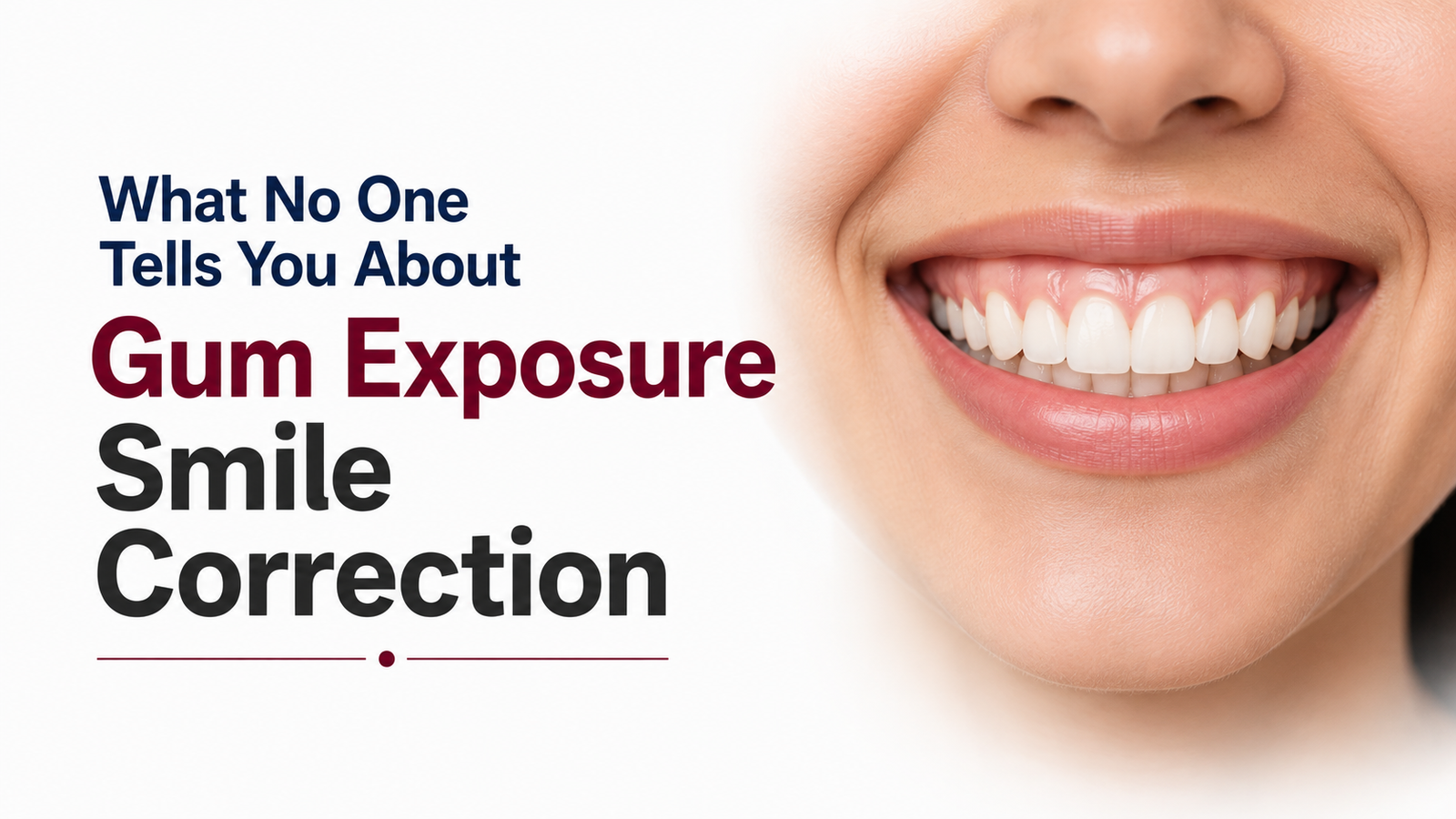
What No One Tells You About Gum Exposure Smile Correction
A smile can look completely healthy and still show more gum than you would like. This is commonly called a gummy smile or excessive gingival display. While some people naturally have more visible gum when smiling, others seek correction because they feel the gums dominate their smile or make their teeth appear shorter.
The important point many people do not know is that gum exposure is not always caused by the gums themselves. The position of the teeth, gum tissue, upper lip, facial structure, and movement of the muscles that lift the upper lip can all influence how much gum becomes visible when you smile.
For someone considering gum exposure smile correction in Surat, identifying the actual cause should come before choosing a treatment.
Gummy smile correction is not always about the gums. In many people the visible gum is caused by an overactive or short upper lip that lifts too far when they smile, and in those cases relaxing that lip muscle with Botox reduces the gum show without touching the gums or teeth at all. Excessive gum display is generally described as roughly more than 2 to 3 mm of visible gum while smiling, and the right treatment depends entirely on which of the possible causes applies to you.
What Is Gum Exposure Smile Correction?
Gum exposure smile correction refers to treatments designed to reduce excessive visibility of the upper gums during smiling and create a more balanced relationship between the lips, teeth and gums.
There is no single treatment that is right for every gummy smile. Depending on the underlying cause, correction may involve cosmetic dental treatment, periodontal procedures, orthodontic treatment, lip repositioning or, in selected cases, Botox treatment for gummy smile.
Research generally describes excessive gingival display as roughly more than 2–3 mm of visible gum during smiling, although the perception of an attractive smile varies between individuals.
The Biggest Misconception: Your Gums May Not Be the Problem
One of the most important things to understand about gummy smile correction is that the visible gum is only part of the picture.
A person may show excessive gum because of:
- An overactive upper-lip muscle
- A short or highly mobile upper lip
- Altered tooth eruption
- Excess gum tissue covering the teeth
- Tooth position or alignment
- Vertical excess of the upper jaw
- Dentoalveolar factors
- A combination of several factors
Because these causes can look similar when you simply look at a photograph, a proper assessment is important before deciding on treatment.
How Does an Overactive Upper Lip Cause Gum Exposure?
When you smile, several facial muscles contract and move the upper lip upward.
For some people, the muscles responsible for elevating the upper lip are particularly active. The upper lip moves higher than expected, exposing more of the upper teeth and gums.
This is where Botox for gummy smile may have a role.
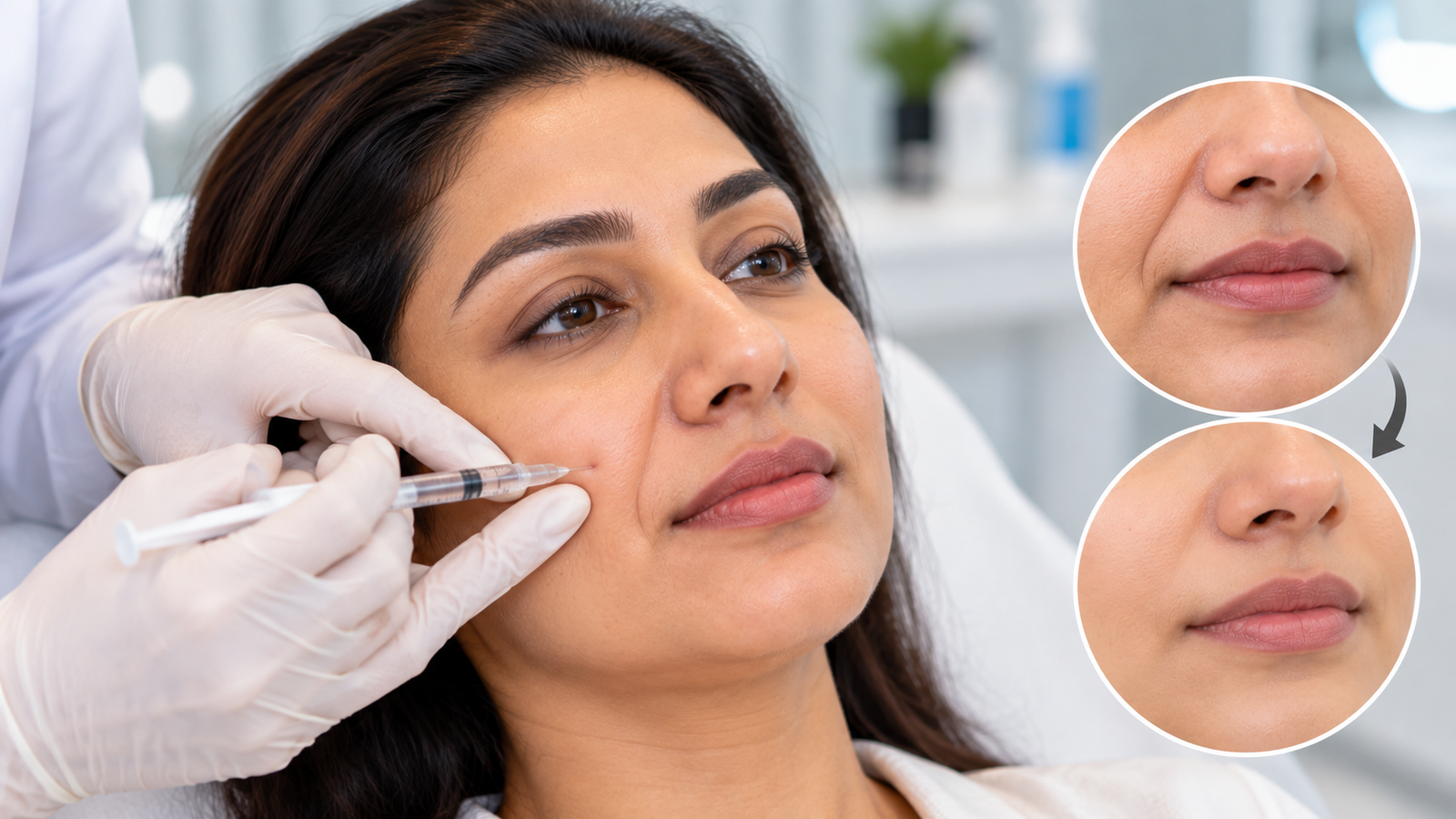
Botulinum toxin temporarily reduces the strength of targeted muscle contractions. When used appropriately, it can reduce excessive upward movement of the upper lip and decrease visible gum during smiling.
Important distinction
Botox does not remove gum tissue or change the position of the jaw.
Instead, it works on muscle activity and lip movement. Therefore, it is most appropriate when excessive gum exposure is substantially related to upper-lip muscle hyperactivity.
Who May Benefit From Botox Gum Exposure Correction?
Botox may be considered for people whose gummy smile is primarily related to excessive upper-lip movement.
A consultation can assess:
- How much gum appears during a full smile
- Upper-lip length and mobility
- Muscle activity during smiling
- Tooth and gum proportions
- Smile symmetry
- Tooth position
- Jaw relationship
- Whether other factors contribute to gum exposure
This assessment helps determine whether Botox alone is appropriate or whether another approach would be more suitable.
Evidence suggests that botulinum toxin can provide a meaningful short-term reduction in excessive gingival display in appropriately selected patients.
Gum Exposure Correction Is Not Always a Botox Treatment
This is another important point that people often overlook.
If the main reason for excessive gum exposure is altered passive eruption or excess gingival tissue, a periodontal approach may be more appropriate.
If the teeth are positioned in a way that contributes to excessive gingival display, orthodontic treatment may be considered.
If the underlying issue involves significant vertical maxillary excess, a more comprehensive surgical assessment may be necessary.
Other treatment approaches described for gummy smile correction include:
- Gingivectomy or crown-lengthening procedures
- Orthodontic treatment
- Lip repositioning
- Orthognathic surgery
- Botulinum toxin
- Combination treatment
The appropriate option depends on the underlying cause and severity.
What Happens During Gum Exposure Smile Correction With Botox?
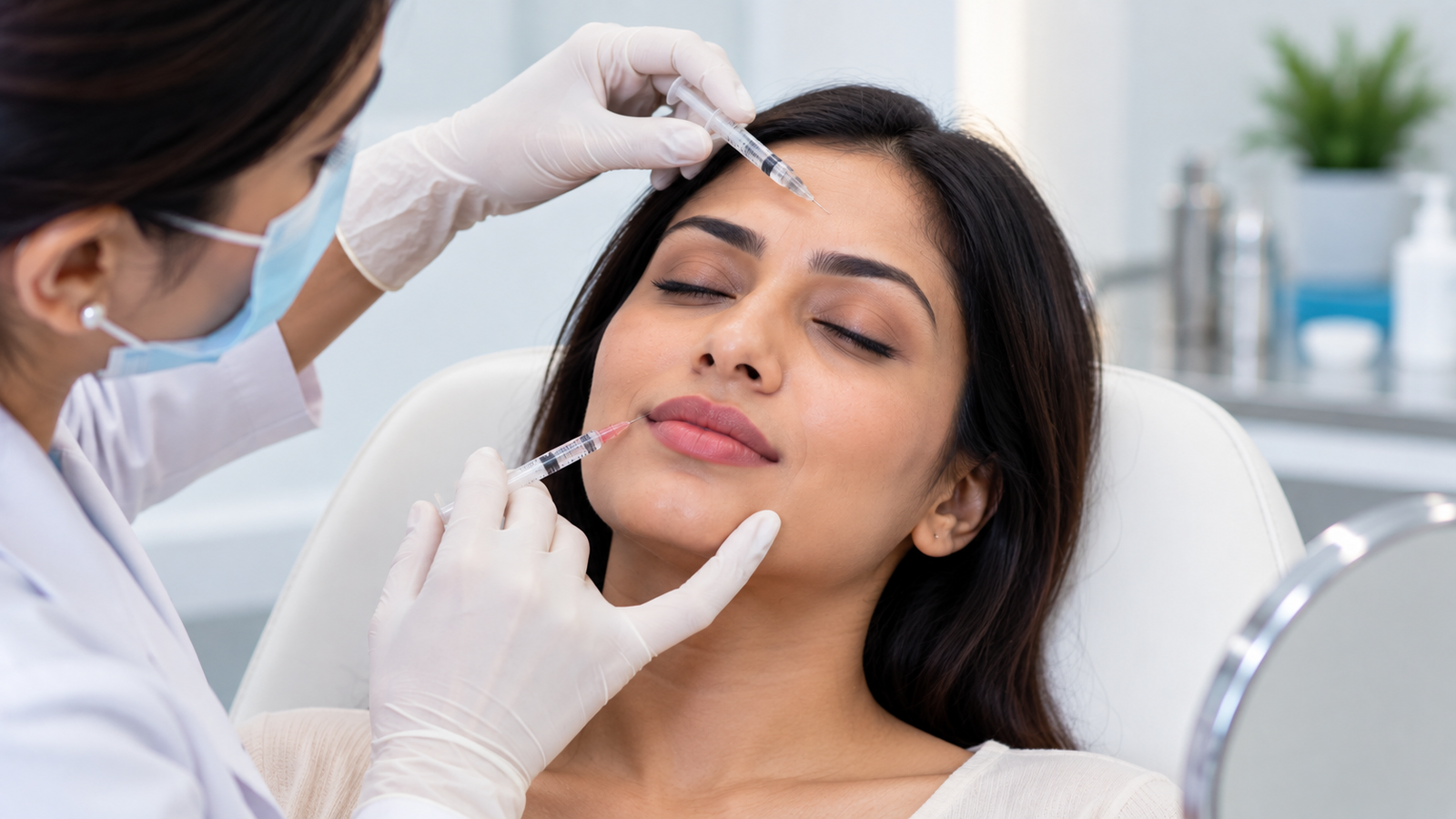
When Botox is selected for a muscular gummy smile, the treatment is planned around the muscles contributing to excessive upper-lip elevation.
The clinician first evaluates the patient's smile and facial movement. The treatment area and dosage are then individualized rather than using the same injection pattern for everyone.
The goal is not to stop the upper lip from moving. Instead, the objective is to reduce excessive elevation while maintaining a natural-looking smile.
Botulinum toxin generally begins showing an effect within about 1–2 weeks, according to published reviews.
How Long Does Botox for Gum Exposure Last?
One limitation of Botox-based gummy smile correction is that the result is temporary.
Published literature commonly reports effects lasting approximately 4–6 months, although the duration can vary between individuals. Repeat treatment may therefore be required to maintain the effect.
This temporary nature can also be an advantage for people who want to explore a less permanent approach before considering more invasive correction.
Does Gum Exposure Smile Correction Change Your Teeth?
Not necessarily.
If Botox is being used to treat excessive upper-lip muscle activity, it does not reshape or reposition the teeth. The treatment primarily changes the degree of upper-lip elevation during smiling.
If the gummy appearance is caused by tooth position, altered eruption or gum coverage, however, another treatment may be required to address the underlying dental or periodontal issue.
Can Gum Exposure Smile Correction Make a Smile Look Natural?
The objective should be balance rather than eliminating every millimetre of visible gum.
A natural smile involves coordinated movement of the lips, teeth and gingiva. Trying to completely eliminate gum visibility may not always produce the most natural result.
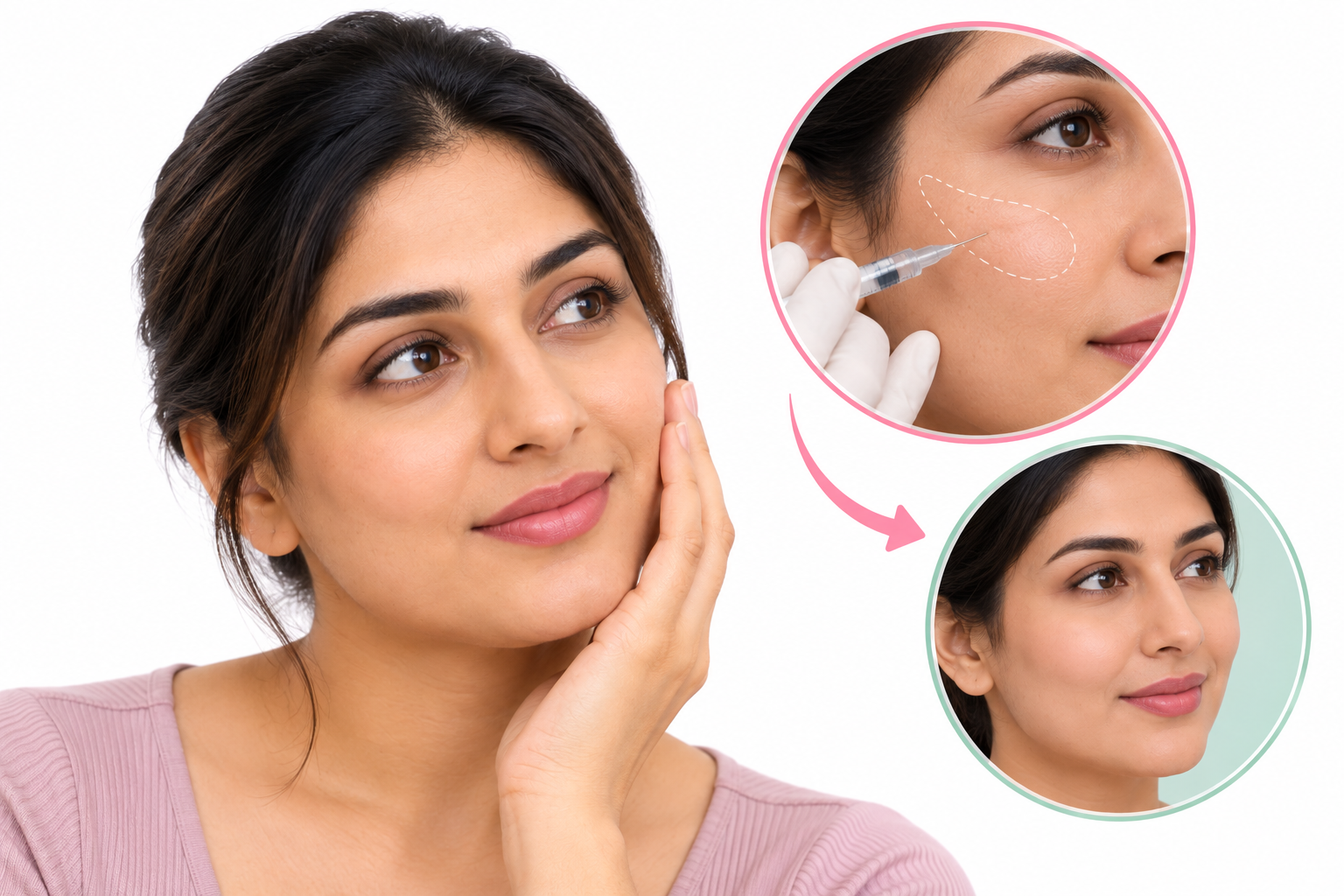
For this reason, personalized treatment planning is important. The clinician should consider your facial proportions, smile dynamics, lip movement and dental anatomy rather than focusing on gum exposure alone.
What Are the Benefits of Botox-Based Gum Exposure Correction?
For appropriately selected patients, potential advantages include:
- Non-surgical treatment
- No gum removal
- No change to tooth structure
- Quick procedure
- Temporary and adjustable effect
- Minimal disruption to daily activities for many patients
- Can reduce excessive upper-lip elevation
Botulinum toxin is considered a minimally invasive option for gummy smiles caused by lip dynamics, but it is not a universal solution for every type of excessive gingival display.
What Are the Limitations?
Understanding the limitations is just as important as knowing the benefits.
Botox may not correct a gummy smile caused primarily by:
- Significant jaw structure
- Excess gum tissue
- Altered passive eruption
- Tooth eruption problems
- Major dental malposition
- Other structural causes
The effect is also temporary, and excessive weakening of lip-elevating muscles can potentially affect smile movement. This is why treatment should be performed by an appropriately qualified and experienced clinician after assessment.
Why Individual Assessment Matters
Two people can have a similar-looking gummy smile but require completely different treatments.
For example:
Person A:
The teeth and gums are proportionate, but the upper lip rises significantly during smiling.
Person B:
The upper lip movement is normal, but excess gingival tissue covers more of the tooth crown.
Person C:
The gum exposure is associated with a skeletal or dental relationship.
All three may describe their concern as a gummy smile, but Botox would not necessarily be the appropriate treatment for all three.
That is why gum exposure smile correction should begin with diagnosis rather than simply choosing an injection.
Gum Exposure Smile Correction in Surat
If you are searching for gum exposure smile correction in Surat, the first step is to understand why your gums appear prominent when you smile.
At Elegance Clinic, the treatment approach can be planned around your individual facial movement and aesthetic goals. Dr. Ashutosh Shah can assess whether your gum exposure is primarily related to upper-lip muscle activity or whether another treatment approach may be more appropriate.
The aim is not simply to reduce gum visibility. It is to create a balanced, natural-looking smile that suits your facial proportions.
Is Gummy Smile Correction Right for You?
Gum exposure smile correction is not simply about hiding the gums. It is about understanding why they are visible in the first place.
For some patients, excessive upper-lip muscle activity makes Botox a useful minimally invasive option. For others, the underlying cause may involve the gums, teeth, orthodontic alignment or jaw structure and may require a different approach.
If you are considering gum exposure smile correction in Surat, a personalized evaluation can help determine whether gummy smile Botox treatment is appropriate for you or whether another correction would better address the underlying cause.
Looking for gum exposure smile correction in Surat? Consult Dr. Ashutosh Shah at Elegance Clinic to discuss your smile concerns, understand the cause of excessive gum exposure, and explore an individualized treatment plan.