Preventive Botox In Your Late Twenties: Sensible Or Too Early?
Preventive botox aims to slow lines that are already visible on movement from etching into the skin at rest. It is reasonable when you can see a crease forming on expression, not when the skin is still smooth. A low starting dose keeps movement natural and is repeated only when it fades.
When considering the preventive botox age, the more important factor is not reaching a particular birthday but whether early expression lines are actually becoming noticeable.
What Does Preventive Botox Actually Prevent?
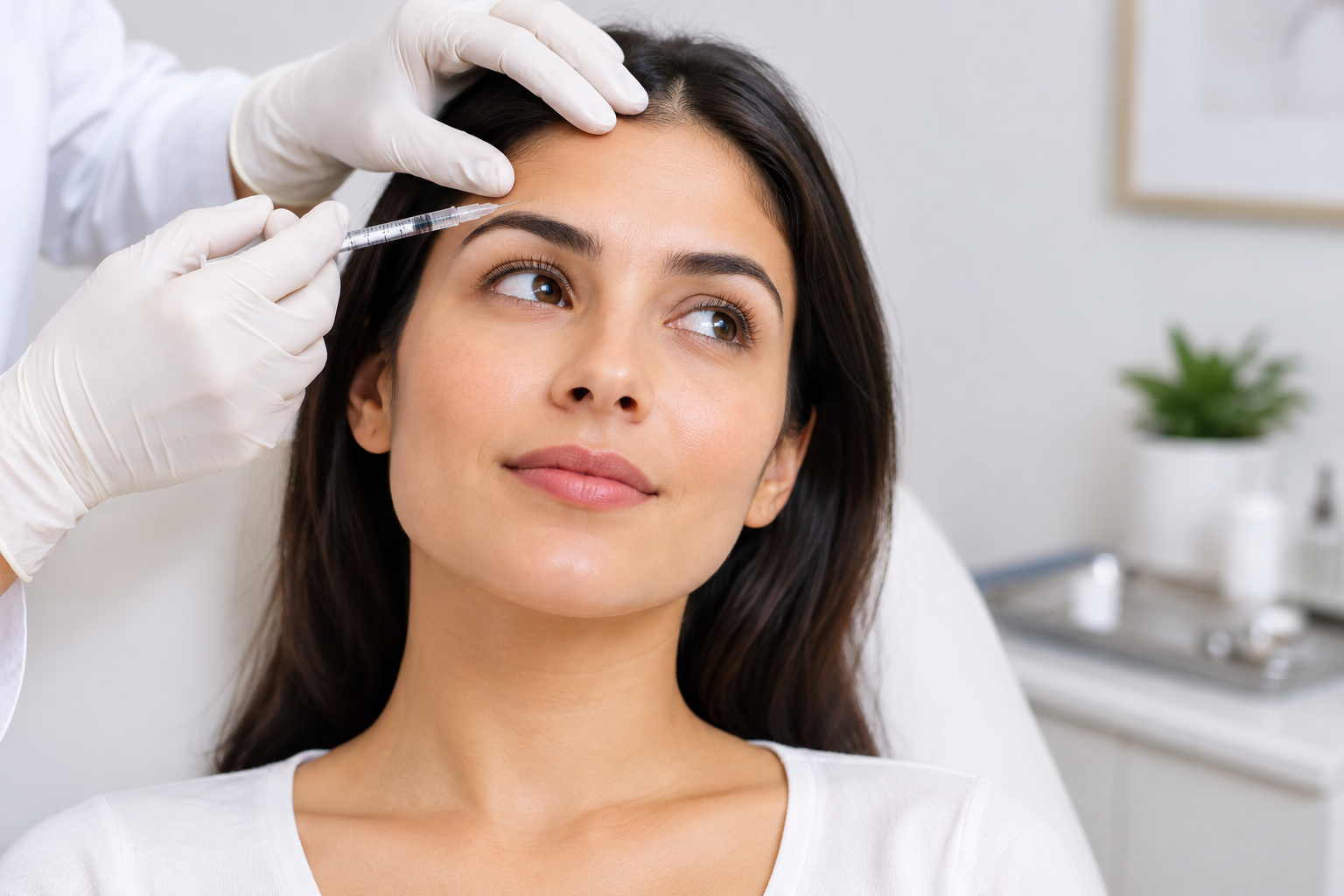
Preventive Botox refers to using botulinum toxin before expression lines have become deeply established at rest. The idea is to reduce excessive movement in selected facial muscles while the lines are still mainly associated with facial expression.
When you frown, raise your eyebrows or make other repeated facial expressions, the underlying muscles contract and the overlying skin folds. Over time, some expression lines can become visible even when the face is relaxed.
Botox temporarily reduces activity in the targeted muscle. It does not permanently remove wrinkles, reverse every sign of skin ageing or prevent every type of facial line.
This is why starting Botox early should be based on an actual concern rather than age alone. Someone in their late twenties with a faint crease that appears when they frown may have a different treatment need from someone whose skin is still smooth during expression.
Before considering preventive treatment, it can help to understand how Botox is used for different facial areas and what the treatment process involves. See the Botox treatment in Surat guide for broader information about treatment areas, results and aftercare.
Which Early Signs Suggest It May Help And Which Do Not?
The most useful distinction is between movement lines and resting lines.
Movement lines appear when you make an expression and become much less visible when your face relaxes. These are the type of lines that may be considered for Botox.
Resting lines remain visible even when the face is relaxed. They may have a stronger skin component and may require a broader treatment plan rather than simply increasing the Botox dose.
Signs that may justify a Botox assessment
- A faint forehead line appears when you raise your eyebrows.
- A vertical line between the eyebrows appears when you frown.
- Crow's feet appear when you smile or squint.
- A crease is becoming more noticeable with repeated facial expressions.
- The line is beginning to remain faintly visible after the expression stops.
Signs that may point towards another first step
- The skin is completely smooth during expression.
- The main concern is pigmentation.
- The problem is dryness or dehydration.
- The concern is uneven skin texture.
- The appearance is mainly related to volume loss.
- The lines are already deeply visible at rest.
For example, someone whose main concern is a frown line between the eyebrows may benefit from an assessment of the muscles responsible for that movement. More information is available in the glabellar frown line treatment guide.
How Is A Low Starting Dose Different From A Full Treatment Dose?
A low starting dose is intended to reduce selected muscle activity without unnecessarily restricting facial movement.
There is no single preventive Botox dose that is appropriate for every person. The amount depends on the area being treated, muscle strength, facial anatomy, the depth of the lines and the amount of movement the patient wants to retain.
This is also why low dose Botox for fine lines should not be treated as a fixed number of units. The appropriate amount varies between individuals.
For someone considering treatment for the first time, the objective should not be to make the face completely still. Natural expressions should remain possible.
Preventive Botox Versus A More Established-Line Treatment
| Consideration | Preventive approach | Established lines |
|---|---|---|
| Main concern | Lines mainly visible during movement | Lines visible during movement and/or at rest |
| Treatment objective | Reduce excessive muscle activity | Soften movement while assessing the skin component |
| Starting approach | Conservative treatment may be considered | May require a broader treatment plan |
| Facial movement | Natural movement remains important | Movement is adjusted according to anatomy and desired result |
| Additional treatment | Skincare may be sufficient for other concerns | Skin-quality treatment may also need consideration |
| Review | Assess the response before repeating | Review depends on the extent and type of lines |
What Does Starting Early Cost Over Five Years, And What Are The Alternatives?
The financial commitment is an important part of deciding whether preventive Botox is worthwhile.
Botox is temporary. Once the effect fades, someone who wants to maintain the result generally needs another treatment. The number of sessions over five years depends on how long the individual's results last and how frequently they choose to repeat treatment.
A simple way to estimate the long-term cost is:
Cost per treatment × treatments per year × five years
If affordability is part of the decision, patients can also review the clinic's EMI facilities at Elegance Clinic before planning treatment.
Preventive Botox is not the only option for someone in their late twenties.
Depending on the cause of the concern, alternatives may include:
- Consistent broad-spectrum sunscreen.
- A suitable moisturiser.
- Evidence-based skincare.
- Treatment for pigmentation or uneven texture.
- Skin-quality treatments when hydration or texture is the primary concern.
- Monitoring a mild movement line before deciding on an injectable treatment.
Baby Botox is another term commonly used for a more conservative approach involving smaller amounts of botulinum toxin. However, the term does not represent a standard dose, so treatment should still be planned according to the individual's anatomy and concerns.
When Is Skincare Or A Skin Booster The Better First Step?
If the skin is still smooth and there is no meaningful expression line, starting Botox simply because you are in your late twenties may not provide a clear reason for treatment.
This is particularly relevant when asking is 28 too young for Botox. There is no universal age at which Botox should begin. The visible concern, facial movement and treatment goals matter more than the number itself.
Skincare may be a more appropriate first step when the concern is primarily:
- Dryness
- Dehydration
- Mild surface texture
- Sun-related changes
- Uneven pigmentation
- Very fine superficial lines
A skin booster or other skin-focused treatment may also be discussed when the main concern is skin hydration, texture or overall skin quality rather than muscle movement.
For someone whose main concern is facial dryness or lack of hydration rather than a strong expression line, a face hydration booster treatment may be a more relevant treatment discussion than preventive Botox.
Suitability Checklist: Do You Actually Need Preventive Botox?
Use this checklist as a starting point for discussion rather than as a self-prescription.
| What you see in the mirror | Visible at rest or only on movement? | Suggested first step |
|---|---|---|
| Skin looks smooth even when making expressions | Neither | Skincare and observation |
| Fine line appears only when smiling, frowning or raising the brows | Movement only | Consider a Botox consultation |
| Expression line is becoming more defined | Mainly movement | Discuss conservative Botox treatment |
| Line remains visible after the expression stops | Movement and partly at rest | Assess both muscle activity and skin |
| Line is clearly established at rest | At rest and movement | Consider a broader treatment assessment |
| Main concern is pigmentation | At rest | Skin-focused care |
| Main concern is dryness or texture | At rest | Skincare or skin-quality treatment |
| Main concern is loss of facial volume | At rest | Assess treatments designed for volume rather than Botox |
Conclusion
The preventive botox age is not determined by a specific birthday. In your late twenties, the more useful question is whether expression lines are beginning to become visible and whether they are caused primarily by repeated muscle movement.
If a crease is forming with facial expression, a consultation can determine whether conservative Botox may be appropriate. If the skin remains smooth, skincare, sun protection or simply monitoring the area may be more appropriate.
The goal of preventive treatment should be to soften excessive movement while keeping facial expression natural, rather than treating every person at the same age or using the same dose for everyone.