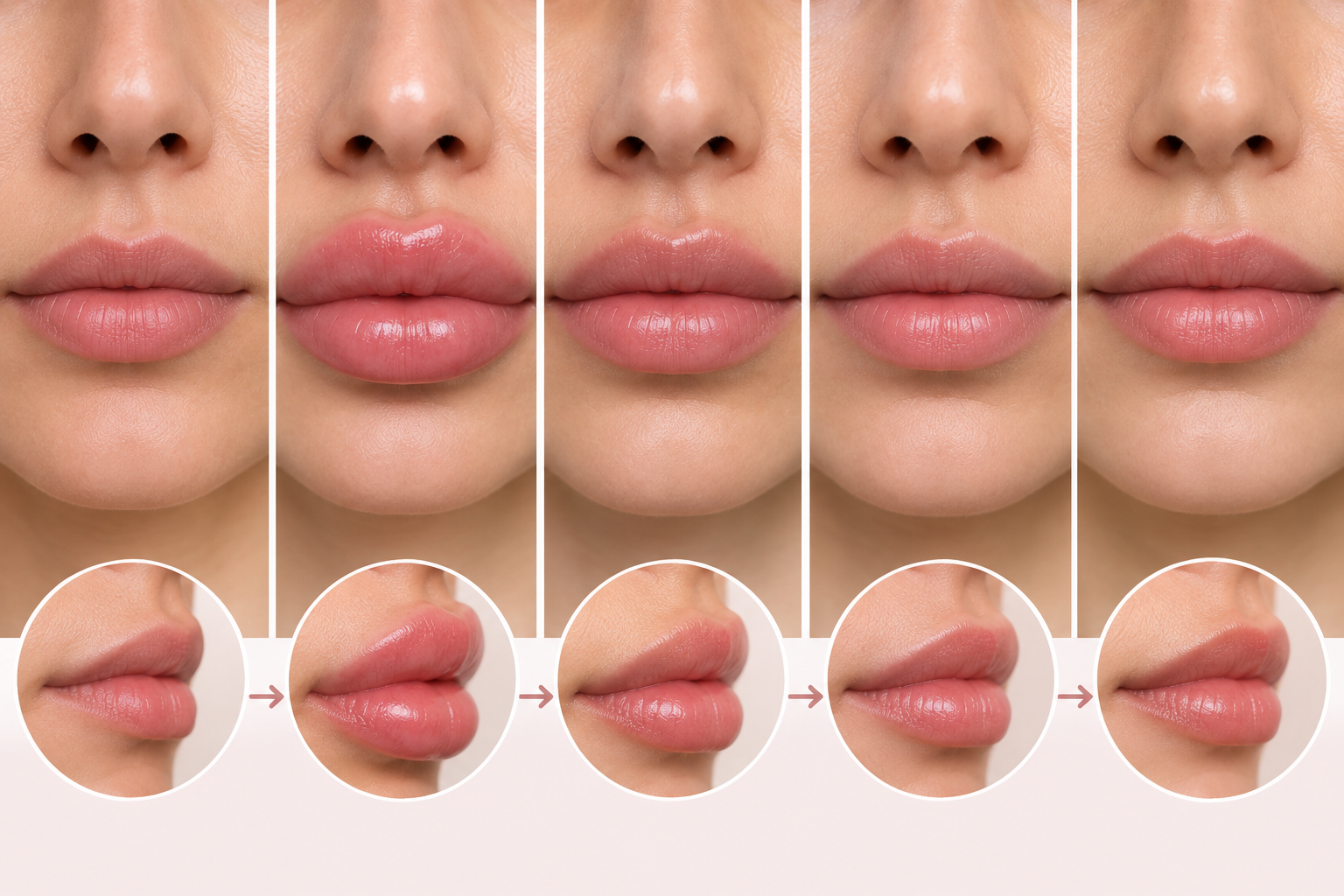
Swelling After Lip Filler: A Day-By-Day Timeline Of What Is Normal
Lips swell most in the first 24 to 48 hours, often looking noticeably bigger than the final result. Most swelling after lip filler improves during the first week, while the settled shape is usually easier to judge at around two weeks. A cool compress and sleeping with the head slightly elevated may help with comfort and swelling.
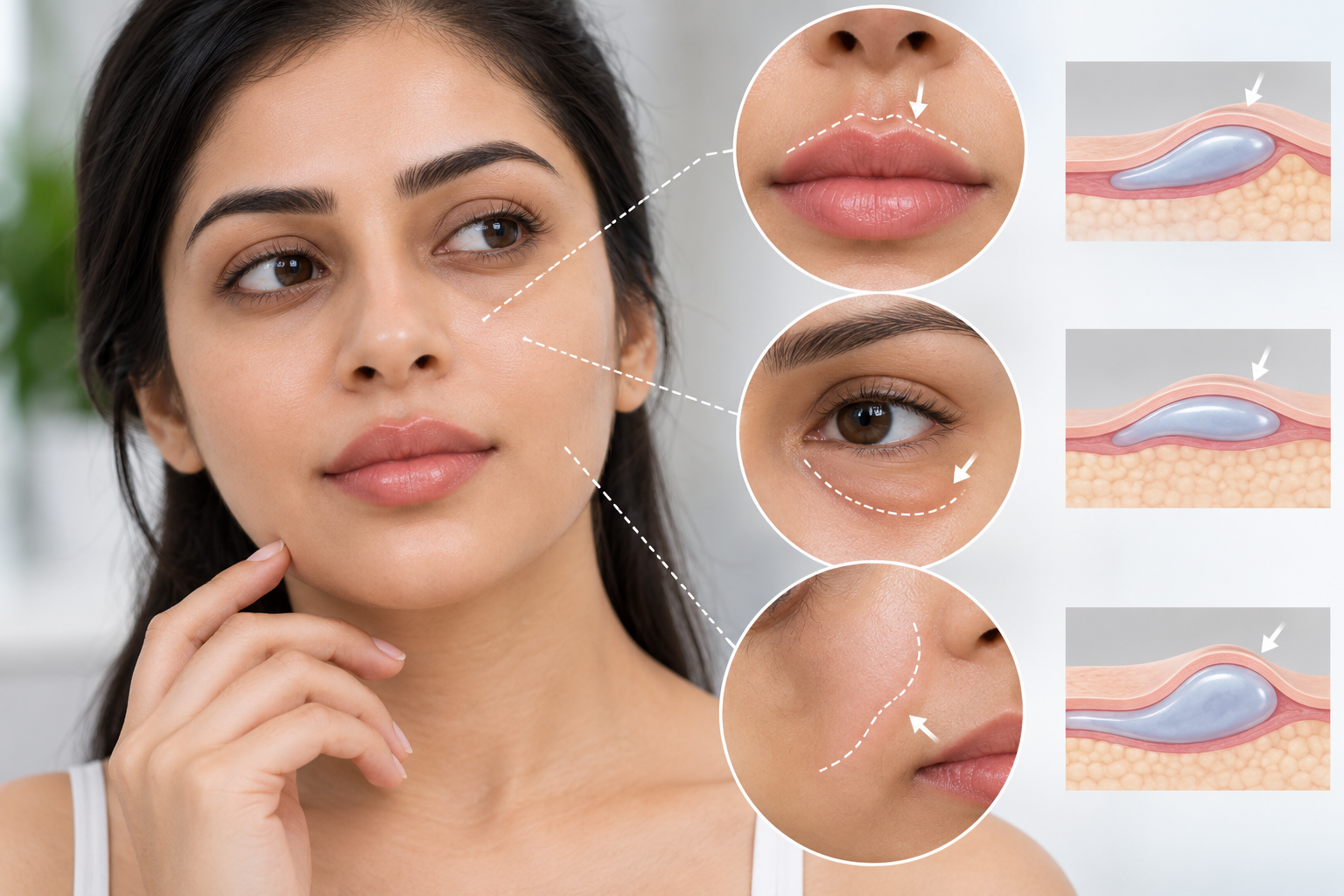
Swelling after lip filler is expected because the lips are highly vascular, sensitive and mobile. The injections themselves cause temporary tissue irritation, and hyaluronic acid filler can also attract water.
This means your lips may look larger, uneven or firmer immediately after treatment than they will once everything has settled.
The important questions are how the appearance should change from day to day, what you can safely do during recovery, and which symptoms should prompt an earlier review.
Why do lips swell so much more than other filler areas?
The lips contain a rich blood supply and delicate soft tissue, so even small injections can produce noticeable swelling.
Several things contribute.
Injection-related tissue response
Every injection creates a small amount of local tissue trauma. Temporary inflammation and swelling are part of the body's normal response.
Hyaluronic acid attracts water
Many lip fillers contain hyaluronic acid, which binds water. This property contributes to the hydrated appearance fillers can create, but it can also add to temporary post-treatment fullness.
The lips move constantly
Talking, eating, drinking and facial expressions keep the lips active throughout the day.
Bruising can add to the appearance
Small blood vessels can be affected during injection. A bruise may make one area look darker, firmer or more swollen than another.
One side may swell more
Uneven swelling after lip filler can occur during early healing. The two sides may have slightly different injection points, bruising or tissue responses.
Early asymmetry therefore does not necessarily represent the final result.
For patients concerned about discomfort as well as swelling, read Does lip filler hurt? A patient's experience.
What does swelling look like on day one, day three, day seven and day fourteen?
The exact recovery differs between people, but a general lip filler day by day pattern can help you understand what may be expected.
Day 1: swelling may be at its most noticeable
During the first day, the lips can appear considerably fuller than expected.
You may notice:
- General puffiness
- Mild tenderness
- Temporary firmness
- Small injection marks
- Minor bruising
- One side appearing larger than the other
This is too early to judge the final size or shape.
Days 2–3: swelling may still be obvious
Swelling can remain prominent during the first 48 hours. For some people, it can appear worse the morning after treatment.
Bruising may also become more visible.
The important factor is the overall pattern. Expected post-injection swelling should begin moving toward improvement rather than becoming progressively more painful or concerning.
Days 4–7: the lips usually begin looking more settled
For many patients, obvious swelling has reduced substantially by this stage.
The lip border may become clearer and the treated volume starts looking closer to the intended result.
Minor tenderness, bruising or subtle asymmetry can sometimes remain.
Days 8–14: the result becomes easier to assess
By around two weeks, most routine swelling should have settled enough for the lips to be assessed more meaningfully.
This is a more useful time to judge:
- Shape
- Symmetry
- Volume
- Border definition
- Persistent lumps or irregularities
A review can then determine whether anything actually requires attention.
At Elegance Clinic, Dr. Ashutosh Shah can assess persistent swelling or an unexpected result after injectable treatment and determine whether observation or further evaluation is appropriate.
Day 1 to Day 14 Lip Swelling Timeline
| Day Range | Expected Appearance | What Is Usually Allowed | What Needs a Call to the Clinic |
|---|---|---|---|
| Day 1 | Noticeable swelling, tenderness, possible asymmetry and injection marks | Gentle routine, cool compress as advised, adequate hydration | Severe or increasing pain, unusual pale/dusky skin, significant blistering or visual symptoms |
| Days 2–3 | Swelling may remain obvious; bruising can become more visible | Continue gentle aftercare and avoid unnecessary pressure | Rapidly worsening swelling, increasing pain, spreading redness or other unexpected symptoms |
| Days 4–7 | Swelling should generally be trending downward; bruising may remain | Gradual return to normal routine according to injector advice | Swelling worsening rather than improving, increasing warmth/redness, discharge or significant pain |
| Days 8–14 | Lips should look substantially more settled and final contour clearer | Most normal activities can generally resume if recovery is uncomplicated | Persistent significant swelling, painful lumps, worsening asymmetry or other concerning changes |
| Around 2 weeks | Better point for judging shape, symmetry and volume | Attend planned review if offered | Persistent concerns should be professionally assessed rather than self-treated |
What actually reduces swelling and what makes no difference?
Many online remedies promise to make swelling after lip filler disappear immediately. In reality, much of the swelling improves because the tissue is naturally healing.
A few simple measures may help with comfort and unnecessary aggravation.
Use a cool compress carefully
A cool compress may help reduce discomfort and temporary swelling.
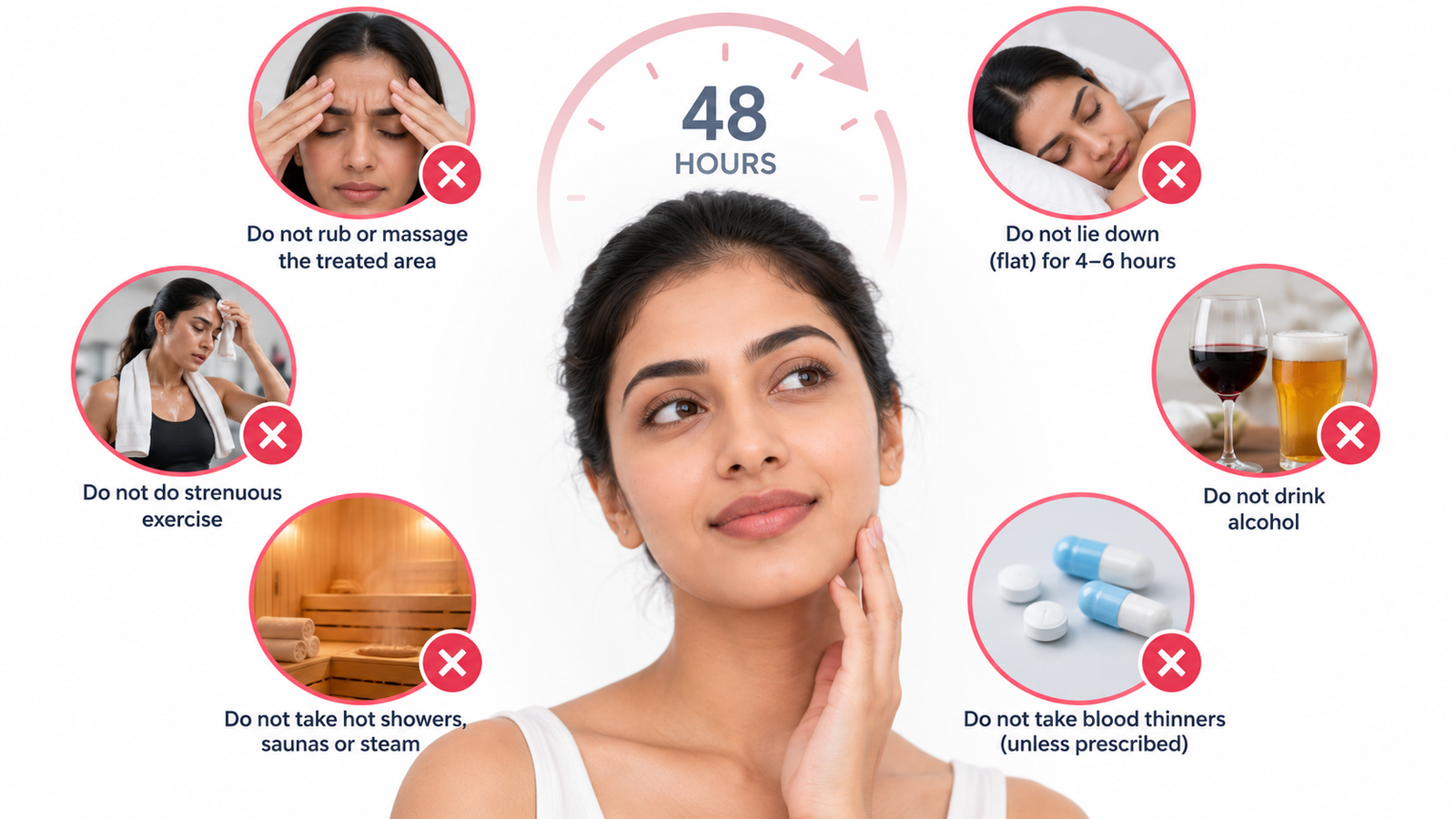
Do not press hard on newly treated lips. Follow your injector's instructions regarding how and when to use it.
Keep your head slightly elevated
Sleeping with the head somewhat elevated during the early recovery period may help limit morning puffiness.
Stay hydrated
Normal hydration is sensible during recovery.
Avoid unnecessary pressure and manipulation
Do not repeatedly press, squeeze or massage the lips unless your treating clinician specifically instructs you to do so.
Trying to “push swelling out” can irritate the area.
Be cautious with alcohol
Alcohol can contribute to flushing and may worsen bruising or swelling in some people. Follow the specific pre- and post-treatment advice given by your injector.
What about salt?
Very salty meals can contribute to temporary fluid retention in some people, but avoiding salt is not a treatment for a filler complication.
Do not judge the result too early
Repeatedly checking the lips during the first 24–48 hours can make normal changes seem alarming.
Photographs taken at the same angle and lighting can be more useful for tracking whether swelling is improving.
For patients interested in a subtle rather than strongly volumising approach, see Hydration lip filler treatment in Surat.
How do you tell swelling apart from a lump, a bruise or migration?
Not every irregularity after filler is the same.
Swelling
Swelling tends to be soft or puffy and is most noticeable soon after treatment. It should generally trend toward improvement as healing progresses.
Bruising
A bruise produces colour changes such as purple, blue, red or yellow as it resolves.
Bruising can also create local tenderness and make one side temporarily look more swollen.
A lump
A lump is a more localised area of firmness or irregularity.
Some early firmness can occur after injections, but a persistent or concerning lump should be assessed rather than aggressively massaged at home.
Migration
Migration describes filler appearing or persisting beyond the intended treatment area.
For example, lip filler migration may create persistent fullness or a ridge above the natural lip border.
It should not be diagnosed during the initial swollen stage simply because the lips temporarily look larger.
If fullness remains outside the intended area after the initial healing period, an assessment can distinguish possible migration from residual swelling, overfilling or another cause.
Swelling versus vascular complications
A vascular complication is different from routine swelling and requires urgent assessment.
Increasing severe pain, unusual blanching or dusky/discoloured skin, a cool area of skin, blistering or visual symptoms should not be dismissed as normal swelling.
Which symptoms mean you should contact the clinic the same day?
Most swelling after lip filler improves without a problem, but some symptoms deserve prompt professional attention.
Contact your treating clinic promptly if you develop:
- Swelling that is becoming substantially worse instead of improving
- Significant or increasing pain
- Unusual pale, grey, dusky or mottled skin
- Blistering or concerning skin changes
- Increasing redness, warmth or discharge
- Fever or feeling systemically unwell
- A rapidly worsening or unexpected reaction
Visual disturbance, loss of vision, severe eye pain or neurological symptoms after facial filler require emergency medical assessment.
Do not rely on photographs, social media advice or home massage when symptoms suggest a possible complication.
For additional general guidance, see Botox and filler FAQs.
Conclusion
Swelling after lip filler is usually most obvious during the first 24–48 hours and then gradually improves. The first few days are therefore not the right time to judge whether the lips are too large, uneven or incorrectly shaped.
By around two weeks, the settled contour is generally easier to evaluate. Persistent lumps, asymmetry or fullness outside the lip border can then be assessed more accurately.
More importantly, worsening pain, unusual skin colour, significant increasing swelling or visual symptoms should never be treated as routine recovery.
For related treatment information, read Lip plumping treatment in Surat.