Temple Filler For Hollow Temples: Why The Upper Face Is Treated First
<style type="text/css"> </style>
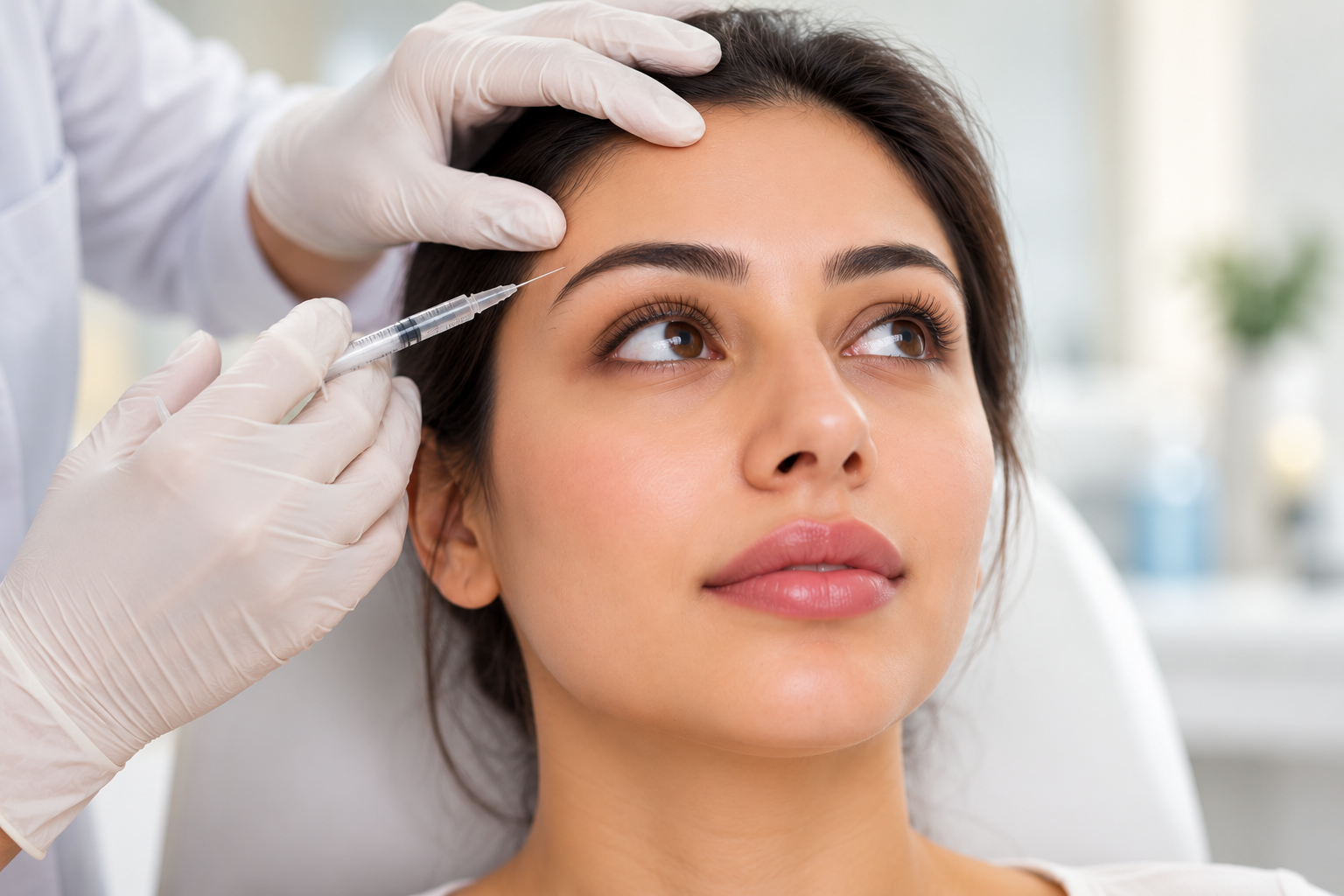
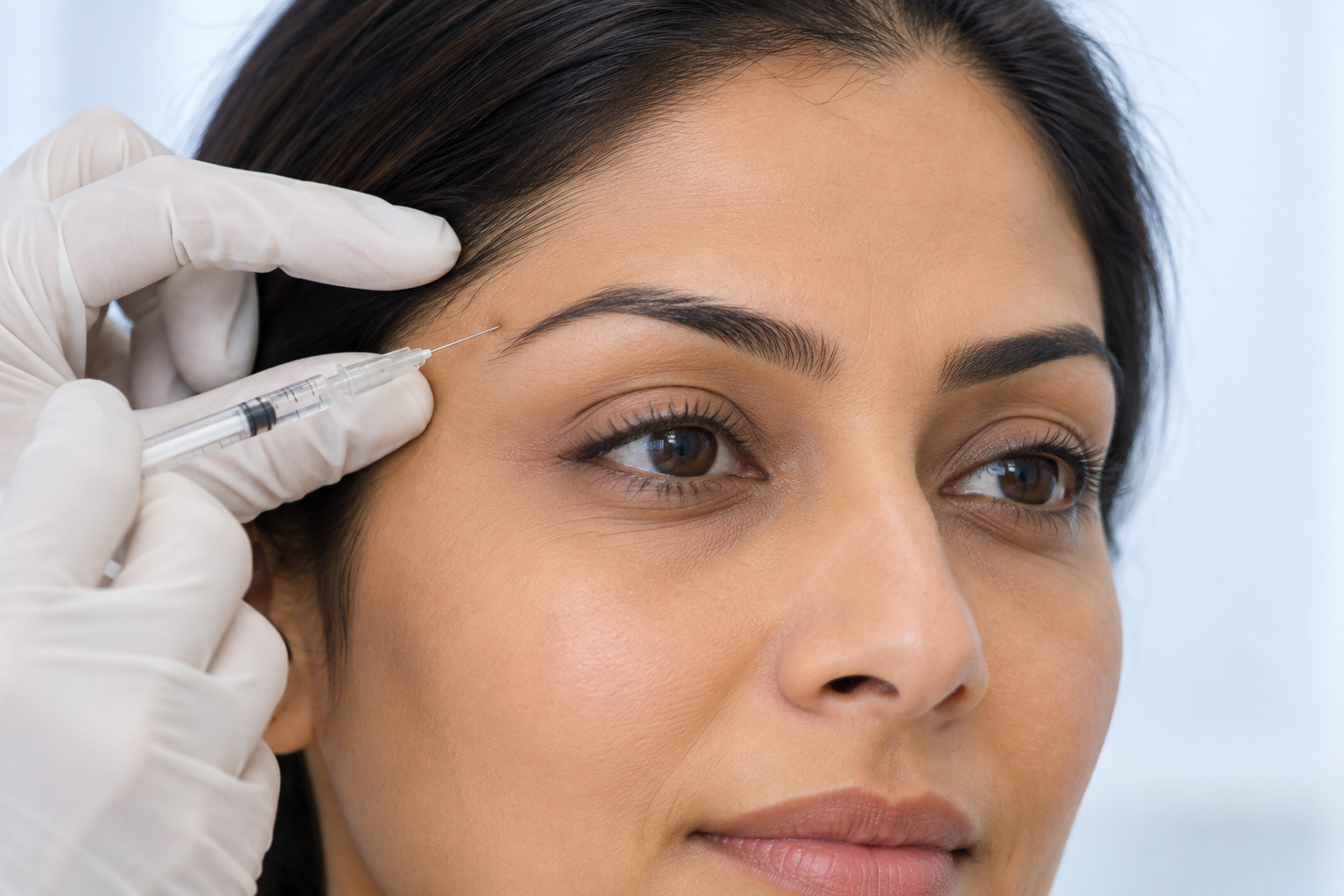
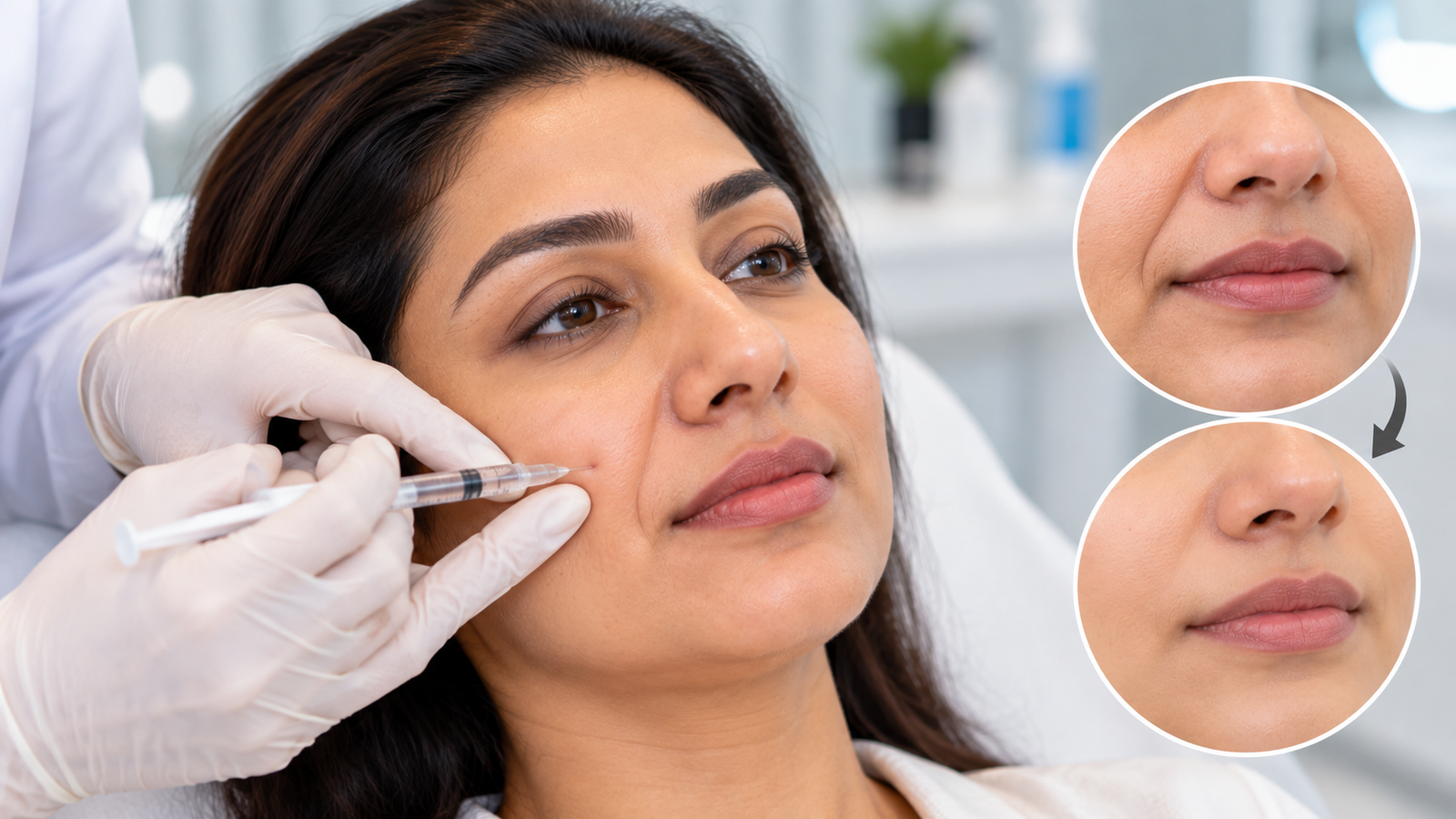
Temple filler for hollow temples restores volume when the sides of the upper face become sunken or narrow. Hollowing here can make the brow and eye area look tired, so restoring appropriate volume may improve overall facial balance more than treating individual lines. Results commonly last around nine to twelve months.
At Elegance Clinic, Dr. Ashutosh Shah assesses the temples together with the brow, eye area, cheeks and overall facial proportions. Before recommending temple filler for hollow temples, it is important to determine how much volume has been lost and whether filler is the appropriate treatment.
What Causes Temple Hollowing, and Why Does It Age the Face So Quickly?
The temples sit between the outer brow, forehead, hairline and upper cheek. In a balanced upper face, this area usually creates a relatively smooth transition between these structures.
When the temples become hollow, that transition becomes more concave. The upper face may look narrower, and the bony outline around the outer brow can become more noticeable.
Several factors may contribute to temple hollowing.
Natural Facial Anatomy
Some people naturally have hollow temples because of their facial structure. This can be present even at a younger age and does not necessarily mean that treatment is required.
If the hollowing affects facial balance or creates an appearance the patient would like to change, temple filler for hollow temples may be considered after assessment.
Age-Related Volume Loss
Changes in facial soft tissue can make the temples appear increasingly hollow with age.
As upper-face volume reduces, the brow and eye region may appear more tired or skeletal even when wrinkles themselves are not particularly deep.
Significant Weight Loss
Weight loss can affect facial volume as well as body shape.
Some patients notice that their temples and cheeks become more hollow after losing a significant amount of weight. In these cases, several facial regions may need to be assessed together.
Facial Structure
Underlying bone shape also affects temple contour.
Two people with a similar amount of soft tissue may have very different temple appearances because their facial skeletons differ.
This is why treatment should be based on individual proportions rather than simply filling every visible hollow.
How Does Restoring the Temple Change the Brow and Eye Area?
The temple is part of the structural frame surrounding the brow and outer eye.
When volume is lost here, the upper face may appear narrower and the transition from forehead to cheek can become more angular.
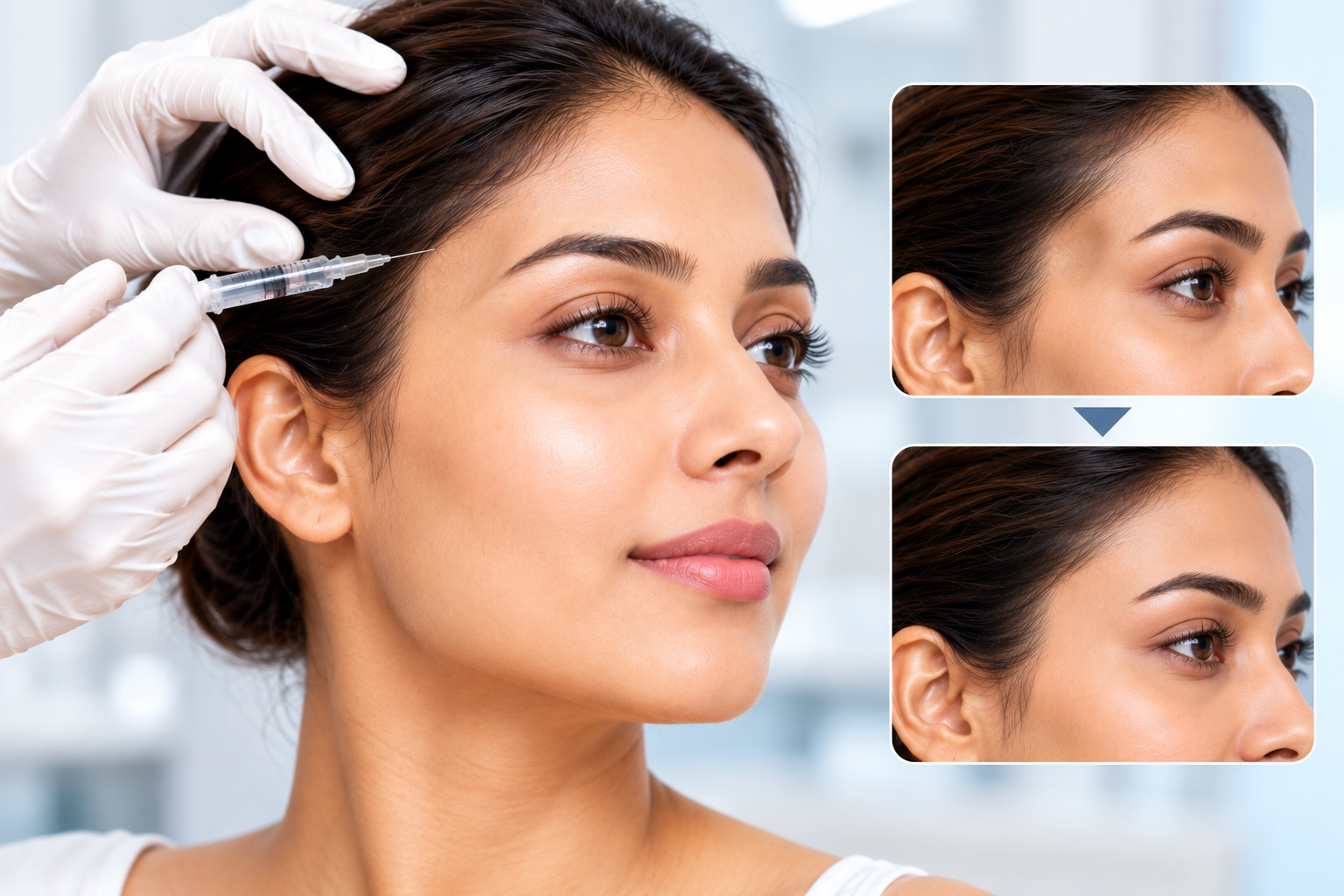
Carefully planned temple filler for hollow temples can restore some of this lost width and create a smoother transition around the outer brow.
The result may make the upper face appear:
-
Less hollow
-
Less skeletal
-
More balanced
-
Smoother around the outer brow
-
Better proportioned relative to the cheeks
The aim is not to create obviously full temples.
Too much volume can make the upper face appear unnatural. Treatment should therefore restore only the amount required to improve facial balance.
Patients considering broader upper-face correction can also read Upper face lift without surgery in Surat.
How Much Product Does This Area Usually Need?
There is no standard amount of filler that every patient needs.
The amount used for temple filler for hollow temples depends on several factors:
-
Degree of temple hollowing
-
Facial width
-
Natural bone structure
-
Right-to-left asymmetry
-
Previous filler treatment
-
Weight-loss history
-
Overall upper-face volume
-
Desired degree of correction
Mild Temple Hollowing
Mild hollowing may need only subtle volume restoration.
The objective is to smooth the concavity rather than make the temple noticeably fuller.
Moderate Temple Hollowing
More obvious hollowing may require additional correction, but treatment should still preserve the person's natural facial proportions.
Marked Temple Hollowing
Marked hollowing may be better approached gradually.
Staged treatment allows the result to be assessed before deciding whether additional volume would improve the face.
Post-Weight-Loss Hollowing
Patients who have lost significant weight may have volume loss in the temples, cheeks and other areas simultaneously.
For these patients, temple filler for hollow temples may form only one part of a broader facial-volume plan.
Upper-Face Planning Table
| Finding | Approximate Volume Per Side | Injection Plane | Expected Duration | Review Point |
|---|---|---|---|---|
| Mild hollowing | Small, individually assessed volume | Selected according to anatomy and technique | Commonly 9–12 months | Review as advised |
| Moderate hollowing | Individualised according to facial proportions | Anatomy-dependent | Commonly 9–12 months | Review before further correction |
| Marked hollowing | May require staged correction | Anatomy-dependent | Depends on treatment plan | Staged review |
| Post-weight-loss hollowing | Depends on overall facial volume loss | Anatomy-dependent | Depends on treatment plan | Full-face reassessment |
Note: The supplied content plan requires approximate volume and injection-plane information but does not provide exact numerical volumes or a specific injection plane. These clinical details should be added only after approval by the treating doctor.
Why Is Injection Depth and Vessel Anatomy So Important Here?
The temple is an anatomically complex area containing important blood vessels and other structures.
For this reason, temple filler for hollow temples requires careful anatomical assessment and appropriate injection technique.
Treatment should not simply involve placing filler wherever the deepest hollow is visible.
The clinician needs to consider:
-
Temple anatomy
-
Blood vessel location
-
Appropriate treatment depth
-
Previous filler
-
Facial asymmetry
-
Product selection
-
Degree of volume loss
-
Emergency preparedness
Patients should tell their clinician about any previous filler or procedures performed in the temple or surrounding areas.
The importance of anatomy and vessel safety makes professional medical assessment particularly important for this treatment.
For an overview of other injectable areas, see Dermal filler treatment areas.
How Long Do Temple Results Hold Compared With Other Areas?
According to the supplied treatment plan, temple filler for hollow temples commonly lasts around nine to twelve months.
However, treatment does not disappear on a fixed date.
The visible correction usually reduces gradually.
How long the result lasts can vary depending on:
-
Product used
-
Amount placed
-
Degree of initial hollowing
-
Individual anatomy
-
Treatment technique
-
Individual response
A repeat session should therefore be based on assessment rather than automatically treating the area at an exact interval.
Why Might the Temples Be Treated Before the Cheeks?
Patients frequently notice cheek flattening before they notice changes in their temples.
However, the temples influence the width and proportions of the entire upper face.
If the temples are significantly hollow, treating only the cheeks may restore the middle of the face while leaving the upper face looking narrow.
For an appropriate patient, treating the temples first can restore the upper facial frame. The face can then be reassessed before deciding how much cheek correction is actually required.
This does not mean that temple filler for hollow temples should always come before cheek filler.
Treatment order depends on individual anatomy.
A full-face assessment may consider:
-
Temple volume
-
Brow contour
-
Under-eye hollowing
-
Cheek projection
-
Facial width
-
Lower-face proportions
Read more about treating facial proportions together in Non-surgical facial contour correction.
Will Temple Filler Change My Eyebrow Position?
Restoring temple volume may change how the outer brow and surrounding tissues appear, but temple filler should not be described as a guaranteed brow lift.
A deep temple hollow can exaggerate the appearance of the outer brow and eye region.
Softening the hollow may make this area look smoother and better supported.
However, a genuinely low or sagging brow is a different anatomical problem.
If brow position is the main concern, it should be assessed separately rather than assuming that adding temple volume will correct it.
What Can Temple Filler for Hollow Temples Actually Improve?
The primary purpose of temple filler for hollow temples is volume restoration.
In appropriately selected patients, treatment may improve:
-
Visible temple concavity
-
Narrow upper-face appearance
-
Skeletal-looking temple contours
-
Transition between the forehead and cheeks
-
Balance around the outer brow
-
Overall upper-face proportions
However, temple filler does not treat every feature that can make the upper face look older or tired.
It does not directly correct:
-
Pigmentation
-
Fine skin texture
-
Expression wrinkles
-
Significant loose eyelid skin
-
Significant brow descent
These concerns require separate assessment.
The treatment plan should therefore be based on the actual cause of the patient's concern rather than simply adding filler to every area.
Is Temple Filler for Hollow Temples Suitable After Weight Loss?
It may be appropriate for selected patients.
Significant weight loss can cause noticeable upper face volume loss, including hollowing of the temples and flattening of the cheeks.
If temple hollowing is a major contributor to the change, temple filler for hollow temples may help restore upper-face proportions.
However, post-weight-loss facial changes often involve several areas.
A patient may have:
-
Hollow temples
-
Reduced cheek volume
-
Under-eye hollowing
-
Changes in lower-face contour
Treating only one area may therefore produce an incomplete result.
A full-face assessment can identify which area should be treated first.
Can Hollow Temples Be Treated With Fat Instead?
Fat transfer may be considered as another way of restoring facial volume in selected patients.
However, fat transfer and filler are different treatments.
Filler is a non-surgical injectable approach, while fat transfer is a surgical procedure involving harvesting and transferring the patient's own fat.
The choice depends on factors such as:
-
Degree of temple hollowing
-
Other areas requiring volume
-
Availability of donor fat
-
Preference for surgical or non-surgical treatment
-
Recovery considerations
-
Overall facial rejuvenation plan
The supplied content plan does not provide a specific fat-grafting protocol, so the choice should be discussed individually during consultation.
How Does Temple Treatment Fit Into Full-Face Rejuvenation?
Facial ageing does not occur in one isolated area.
The temples, brow, eyes, cheeks and lower face influence one another visually.
For example, a patient may initially ask for cheek filler but assessment may reveal significant temple hollowing that is making the entire upper face appear narrow.
Correcting the structural imbalance first may reduce how much treatment appears necessary elsewhere.
This is why temple filler for hollow temples is often best considered as part of an overall facial assessment rather than as an isolated injection.
Patients interested in broader facial volume treatment can also read Face rejuvenation glow filler.
Conclusion
Temple filler for hollow temples can restore lost upper-face volume, soften a sunken appearance and create a smoother transition between the forehead, brow and cheeks. Results commonly last around nine to twelve months according to the supplied plan, although individual duration varies.
At Elegance Clinic, Dr. Ashutosh Shah can assess temple hollowing alongside brow position, cheek volume and overall facial proportions before deciding whether temple filler for hollow temples or another approach is appropriate.