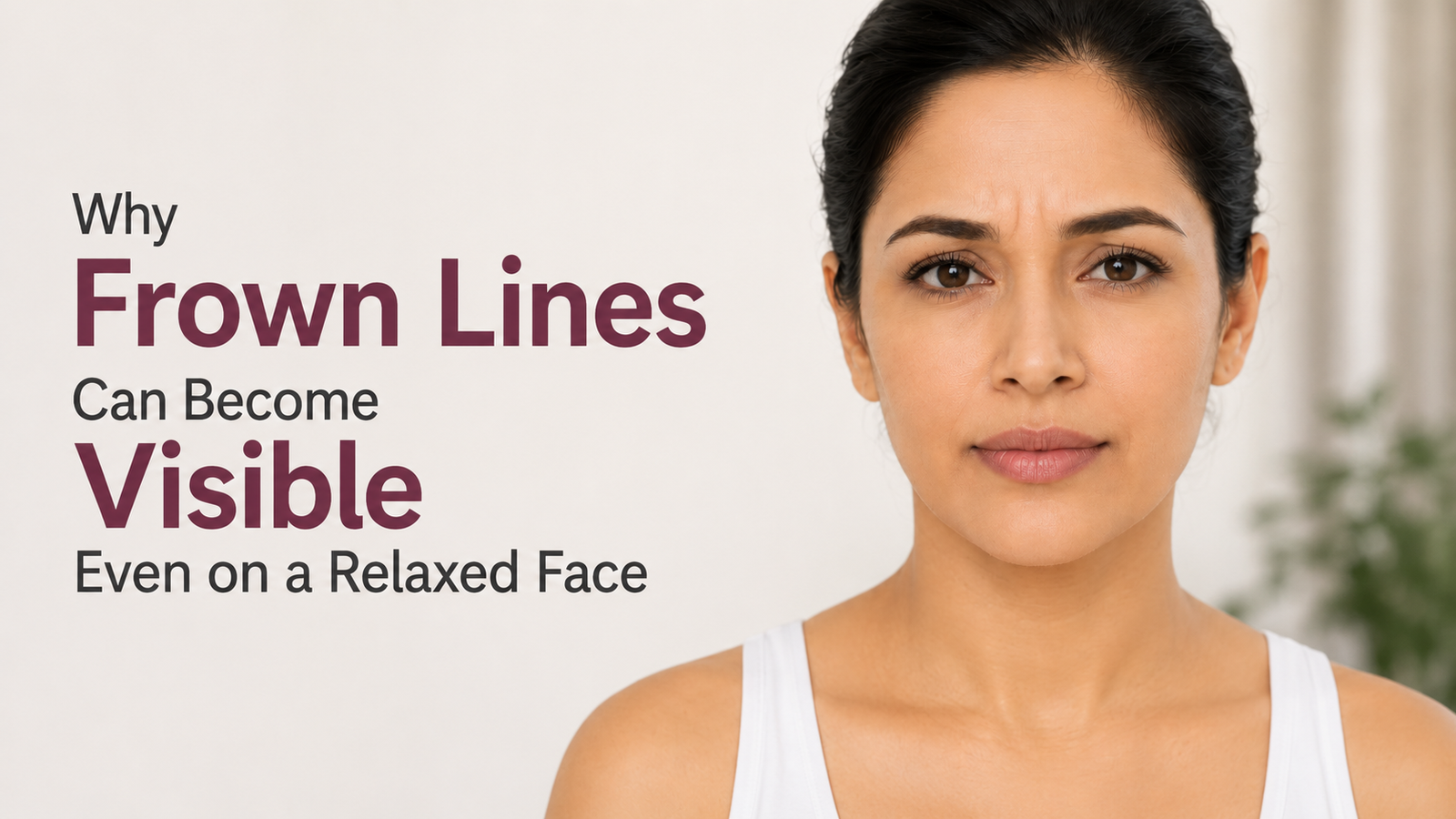
Why Frown Lines Can Become Visible Even on a Relaxed Face
Have you noticed vertical lines between your eyebrows even when your face is completely relaxed? You may assume that frown lines only appear when you are angry, stressed, or concentrating. In reality, these lines can gradually become visible even when you are not actively frowning.
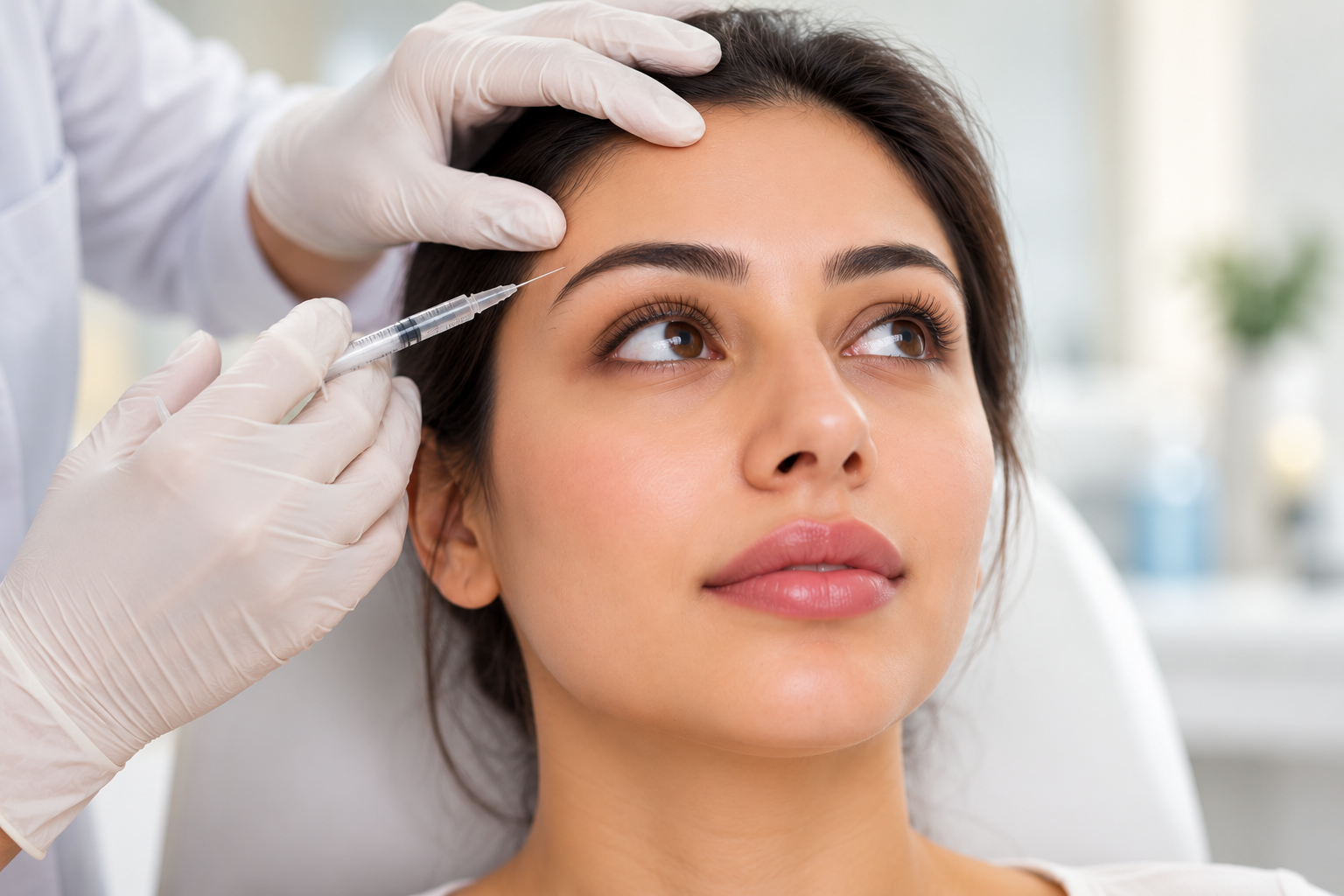
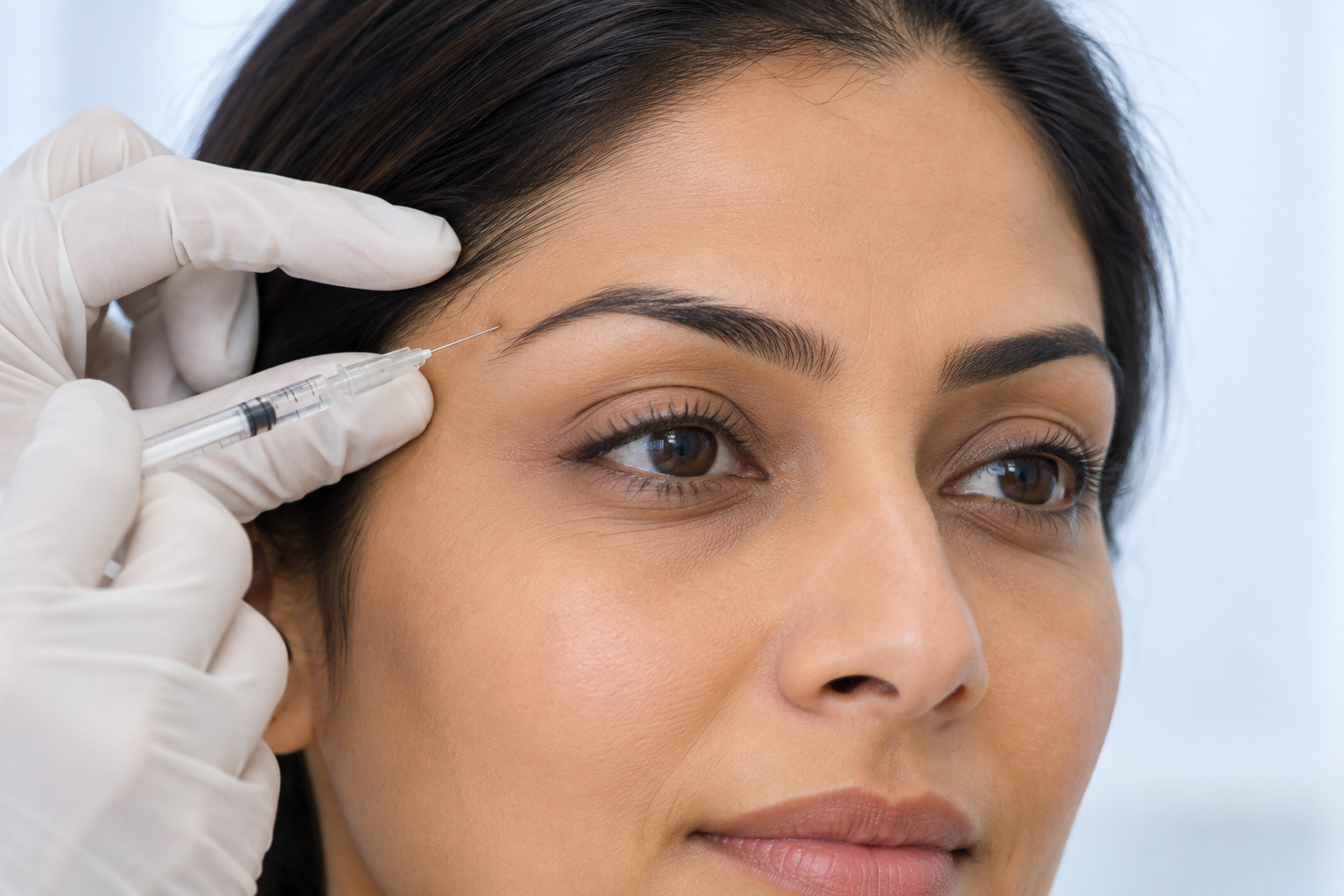
Repeated facial movements, reduced skin elasticity, collagen loss, sun exposure, and natural ageing can make temporary expression lines become more persistent. Botox for Frown Lines in Surat may help soften these lines by temporarily reducing the muscle activity responsible for repeatedly creasing the skin.
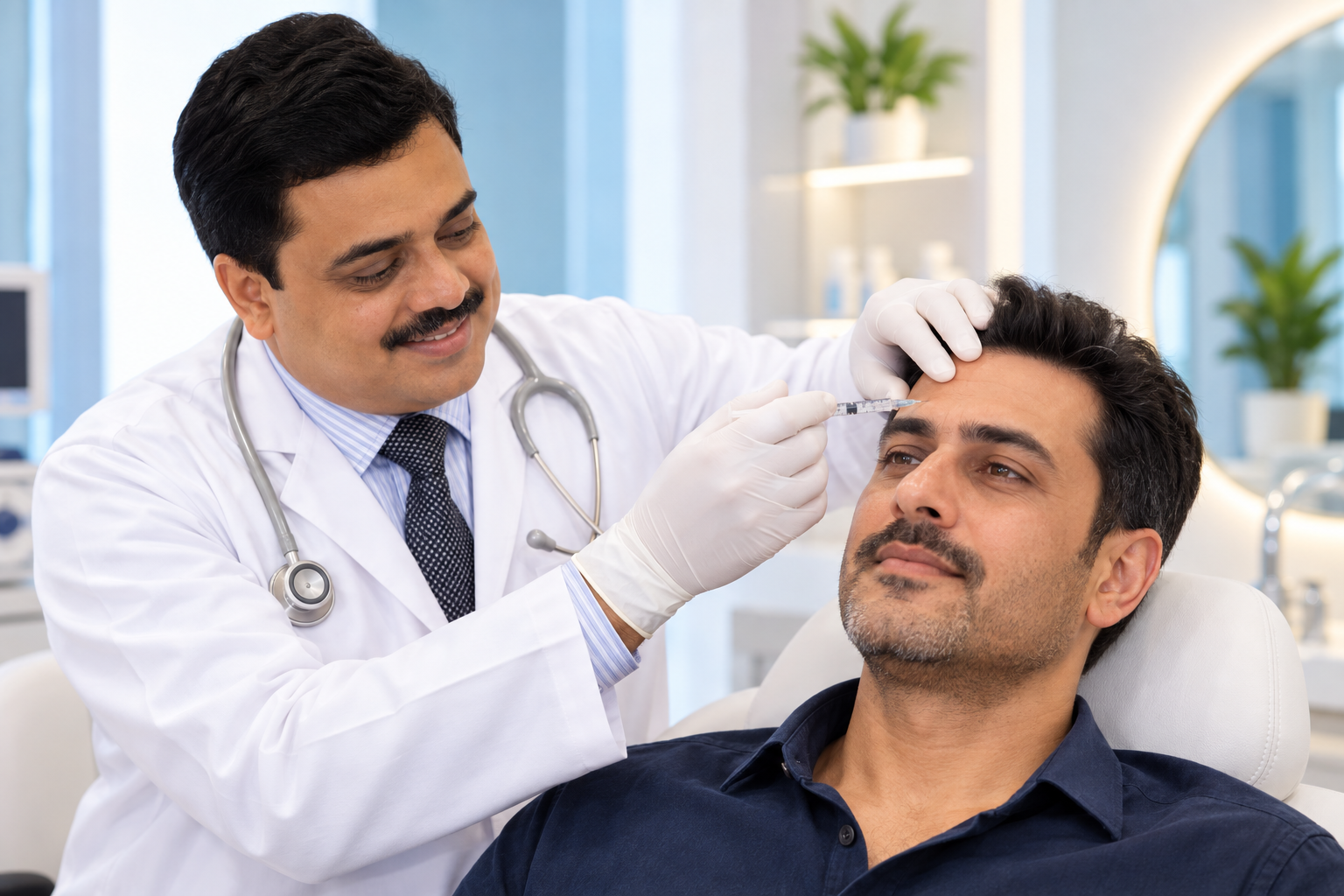
At Elegance Clinic in Surat, Dr. Ashutosh Shah can assess the movement of the brow area and determine whether Botox is an appropriate option based on your facial anatomy, muscle activity, skin quality, and aesthetic goals.
The Hidden Reason Frown Lines Stay Visible
Frown lines, also called glabellar lines, commonly develop in the area between the eyebrows.
When you repeatedly:
- Squint
- Concentrate
- Raise or pull the eyebrows together
- React emotionally
- Look at screens for prolonged periods
- Make habitual facial expressions
the muscles beneath the skin contract.
Initially, the resulting creases may disappear as soon as your face relaxes. Over time, repeated movement combined with ageing-related changes in the skin can make the creases more noticeable at rest.
A simple way to understand it
Repeated muscle movement → repeated skin folding → gradual loss of skin elasticity → lines become visible even at rest
This is one reason someone can develop noticeable frown lines without consciously spending their day frowning.
Why Do Frown Lines Become Visible When You Are Not Frowning?
Several factors can contribute.
1. Repeated facial muscle movement
The muscles around the eyebrows are active throughout the day. Every expression creates movement in the skin.
Years of repeated movement can contribute to persistent expression lines.
2. Natural collagen loss
As we age, the skin gradually produces less collagen and elastin. This can reduce firmness and make previously temporary creases easier to see.
3. Sun exposure
UV exposure can contribute to premature skin ageing and changes in collagen and elasticity. This may make facial lines appear more prominent.
4. Skin quality changes
Dryness, reduced elasticity, and cumulative environmental exposure can affect how quickly the skin returns to its smoother appearance after facial movement.
5. Individual facial anatomy
Everyone's brow shape, muscle strength, skin thickness, and expression patterns are different. Some people naturally develop prominent glabellar lines earlier than others.
What Are Glabellar or Frown Lines?
Glabellar lines are vertical or slightly angled wrinkles that develop between the eyebrows.
They are sometimes called:
- Frown lines
- “11 lines”
- Lines between the eyebrows
- Glabellar wrinkles
- Expression lines
They can make a person appear:
- Tired
- Worried
- Angry
- Serious
- Older than they feel
Importantly, the appearance of these lines does not necessarily reflect your actual mood.
Can Botox Help Frown Lines That Are Visible at Rest?
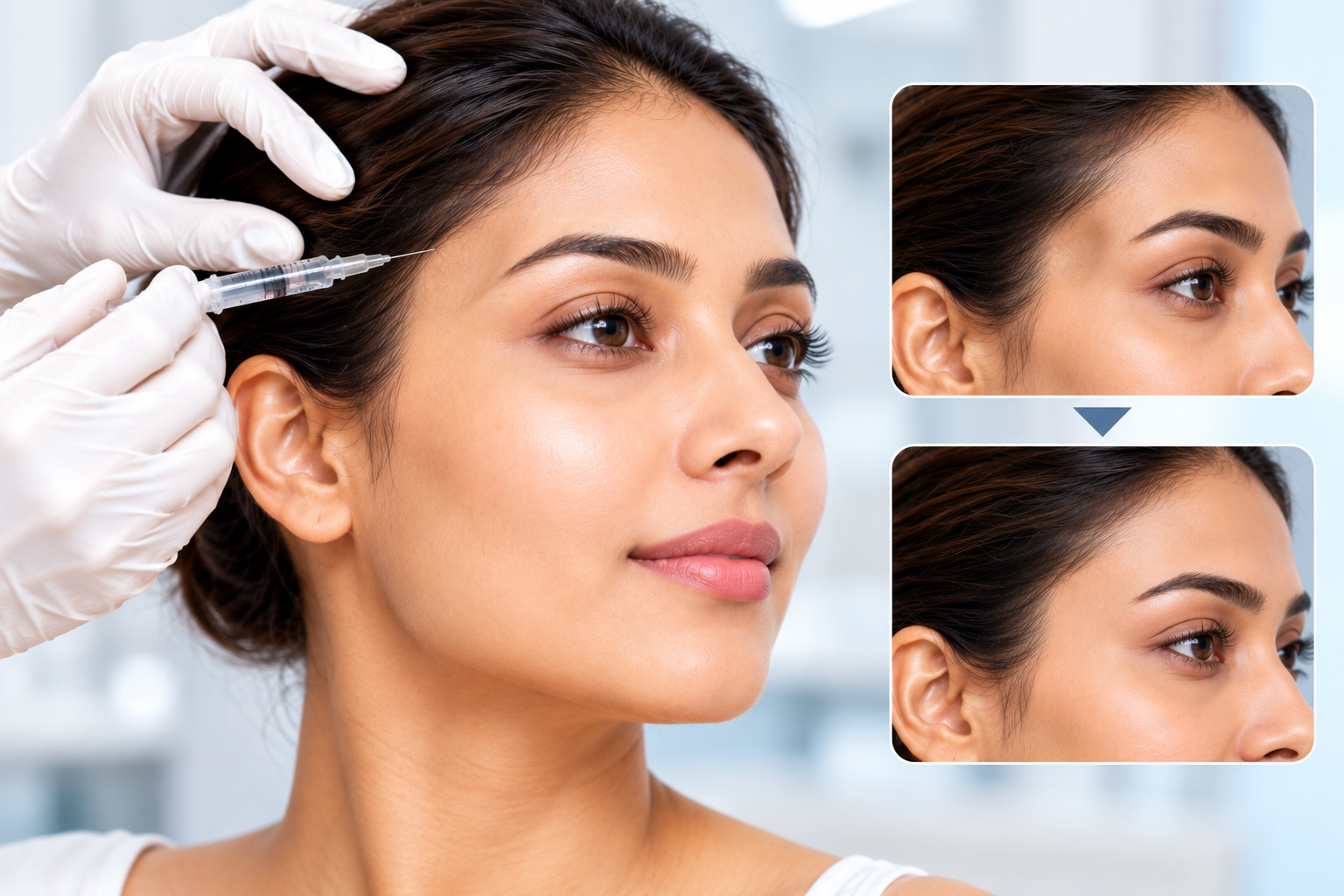
Yes, Botox may help soften dynamic frown lines and can reduce the appearance of some lines that remain visible at rest.
Botulinum toxin works by temporarily reducing the ability of targeted muscles to contract strongly. With less repeated contraction, the overlying skin may crease less during facial expressions.
However, Botox does not simply “erase every wrinkle.” The outcome depends on factors such as:
- How deep the lines are
- Whether they are primarily dynamic or static
- Skin elasticity
- Age-related skin changes
- Muscle strength
- Facial anatomy
- Previous treatments
- Individual response
For deeper, established lines, a consultation is particularly important because Botox may address the muscle activity while the remaining skin crease may require a different or additional approach.
Botox vs. Simply Trying Not to Frown
You might wonder: “Can I just stop making the expression?”
It can help to become aware of habitual facial movements, but it is difficult to consciously control every eyebrow contraction throughout the day.
You naturally move your face while:
- Talking
- Reading
- Working
- Looking at screens
- Expressing emotions
- Concentrating
This is why treatment decisions should focus on the underlying muscle activity and skin condition rather than simply trying to keep your forehead completely still.
What Happens During Botox Treatment for Frown Lines?
A typical consultation and treatment process may involve several stages.
Step 1: Facial assessment
A qualified practitioner evaluates the brow and forehead area both at rest and during facial movement.
This helps identify which muscles are contributing to the lines.
Step 2: Discussing your desired result
Some people want noticeable smoothing, while others prefer a subtle result that preserves natural facial expression.
Your treatment plan should reflect your goals.
Step 3: Targeted injections
Small amounts of botulinum toxin are administered into carefully selected muscles.
The precise injection points and amount depend on your individual anatomy and muscle activity.
Step 4: Aftercare guidance
You receive instructions about what to do and avoid after treatment.
Step 5: Follow-up assessment
Results develop gradually rather than appearing immediately. A follow-up may be recommended depending on your individual treatment plan.
Will Botox Make Your Face Look Frozen?
Not necessarily.
A natural-looking Botox result depends heavily on appropriate assessment, accurate muscle targeting, conservative treatment when appropriate, and individualised dosing.
The goal is generally not to eliminate every facial movement. Instead, treatment can aim to reduce excessive muscle activity responsible for unwanted lines while maintaining an appropriate degree of facial expression.
This is why choosing an experienced medical professional is important, particularly around the eyebrows and forehead where muscle balance can influence facial appearance.
Who May Consider Botox for Frown Lines?
Botox may be considered by adults who are concerned about:
- Visible frown lines
- Glabellar wrinkles
- “11 lines” between the eyebrows
- Expression-related brow wrinkles
- A persistent tired or concerned appearance caused by frown lines
However, Botox is not appropriate for everyone. A medical consultation is necessary to determine whether it is suitable for you.
What If the Lines Are Already Deep?
This is an important distinction.
Dynamic lines
These mainly appear when you move your eyebrows or make facial expressions.
Botox can be particularly useful for reducing the muscle activity that creates these lines.
Static lines
These remain visible even when your face is completely relaxed.
Botox may still reduce the muscle activity contributing to them, but established skin creases may not disappear completely from muscle relaxation alone.
In such cases, a practitioner may discuss whether other skin or aesthetic treatments could complement the result.
Why Professional Assessment Matters in Surat
The area between the eyebrows is not simply about removing a wrinkle. The muscles around the forehead and brow work together, so altering one area can affect the balance and appearance of another.
For this reason, Botox for Frown Lines in Surat should be approached as an individualised facial treatment rather than a one-size-fits-all procedure.
At Elegance Clinic, Surat, Dr. Ashutosh Shah can evaluate your facial movements, the depth of your glabellar lines, and your desired aesthetic outcome before recommending an appropriate treatment approach.
Can Frown Lines Appear on a Relaxed Face?
Yes. Frown lines can remain visible on a relaxed face because repeated muscle movement, ageing, collagen loss, sun exposure, and reduced skin elasticity can turn temporary expression creases into more persistent lines. Botox may help soften these lines by temporarily reducing the activity of the muscles responsible for repeated creasing.
Key Takeaways
- Frown lines can become visible even when you are not actively frowning.
- They are commonly known as glabellar lines or “11 lines.”
- Repeated facial movement can contribute to their development.
- Age-related changes in collagen and skin elasticity can make the lines more persistent.
- Botox for Frown Lines in Surat may reduce the muscle activity responsible for dynamic frown lines.
- Deep static lines may require a broader treatment assessment.
- Natural-looking results depend on appropriate evaluation and treatment planning.
- A consultation with a qualified medical professional is important before Botox treatment.
Botox for Frown Lines in Surat at Elegance Clinic
If the lines between your eyebrows make you look more serious, tired, or concerned than you actually feel, professional assessment can help determine what is causing them.
At Elegance Clinic in Surat, Dr. Ashutosh Shah evaluates facial muscle movement and skin characteristics to develop an individualised approach to frown-line concerns.
Looking for Botox for Frown Lines in Surat?
Book a consultation with Elegance Clinic to discuss your frown lines, facial movement, and suitable treatment options with Dr. Ashutosh Shah.