
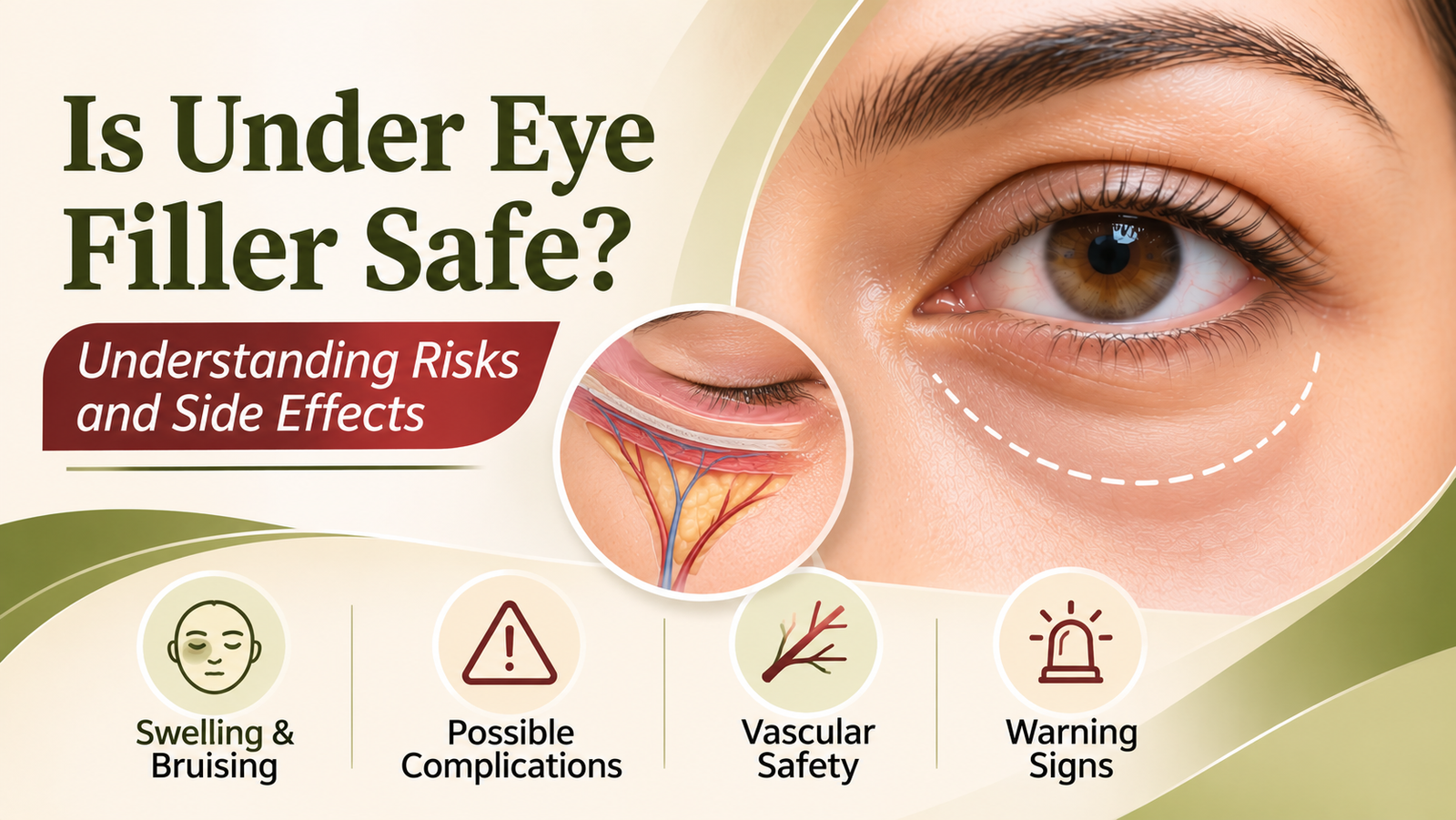
Is Under Eye Filler Safe?
Is Under Eye Filler Safe?
Under-eye filler is a non-surgical treatment that may help improve the appearance of hollowness beneath the eyes in carefully selected patients. However, like other injectable treatments, it carries potential side effects and complications that should be understood before making a decision.
Understanding under eye filler risks is particularly important because the skin around the eyes is delicate and the underlying anatomy is complex. While some reactions, such as temporary swelling and bruising, are relatively common, more serious complications can occur in rare cases.
A proper medical assessment, appropriate product selection and an experienced medical professional are important considerations when evaluating treatment safety.
Key Takeaways
-
Temporary swelling, bruising, redness and tenderness are possible after under-eye filler treatment.
-
Rare but serious complications include vascular blockage, tissue damage and vision problems.
-
Proper patient assessment, qualified injection practice and awareness of warning signs are essential for safety.
Is Under Eye Filler Safe?
Under-eye filler may be appropriate for selected individuals when performed by a qualified medical professional with a thorough understanding of facial anatomy.
However, no injectable treatment is completely risk-free.
The under-eye region contains delicate tissues and blood vessels. Incorrect product placement or accidental injection into a blood vessel can lead to complications.
Safety depends on several factors, including:
-
The patient's medical history.
-
Existing under-eye conditions.
-
The type of filler selected.
-
Injection technique and placement.
-
The practitioner's training and experience.
-
Proper management of complications.
Not everyone is suitable for tear trough filler. People with prominent eye bags, fluid retention, certain skin conditions or unsuitable facial anatomy may need alternative treatment options.
A consultation should establish whether the expected benefits justify the potential risks.
What Are the Common Side Effects of Under-Eye Filler?
Some reactions can occur shortly after treatment. These are often temporary, although their duration varies between individuals.
Common side effects include:
1. Swelling: Mild swelling around the injection area may occur as the tissues respond to treatment.
2. Bruising: Small blood vessels can be affected during injection, resulting in temporary bruising.
3. Redness: The injection points may appear slightly red or irritated.
4. Tenderness: The treated area may feel sensitive or uncomfortable for a short period.
5. Uneven Appearance: Temporary swelling can make the under-eye area look uneven during the initial recovery period.
These reactions should be monitored according to the doctor's instructions. Increasing discomfort or unusual changes should not be ignored.
Which Complications Are Rare but Important?
Although many side effects are temporary, patients should also understand the possibility of more significant complications.
Vascular Occlusion
Vascular occlusion occurs when filler blocks or interferes with blood flow in a blood vessel. This can damage surrounding tissues and requires immediate medical attention.
Skin Damage
Reduced blood supply can lead to tissue injury or skin necrosis. Early recognition is important to reduce the risk of permanent damage.
Vision Problems
A particularly serious but rare complication is accidental filler entry into a blood vessel connected to the eye's circulation. This can cause visual disturbances or, in severe cases, permanent vision loss.
Infection
Bacterial infection can develop around an injection site. Increasing redness, warmth, pain or discharge should be assessed by a medical professional.
Lumps and Unevenness
Filler may sometimes produce visible lumps, nodules or an uneven appearance. Product placement and individual tissue response can influence this complication.
These risks should be explained during the consultation so patients understand the treatment before providing consent.
Risk Table: Possible Side Effects of Under-Eye Filler
| Side Effect | How Common? | Possible Duration | What to Do |
|---|---|---|---|
| Swelling | Common | Often days; may last longer | Follow aftercare instructions. |
| Bruising | Common | Usually days to around two weeks | Avoid unnecessary pressure and follow medical advice. |
| Redness | Possible | Usually short-term | Monitor the injection area. |
| Tenderness | Possible | Usually temporary | Contact the doctor if pain increases. |
| Lumps or nodules | Less common | May persist | Arrange medical assessment. |
| Infection | Less common | Varies | Seek medical evaluation promptly. |
| Vascular occlusion | Rare but serious | Requires immediate attention | Seek emergency medical care. |
| Vision disturbances | Very rare but serious | May be permanent | Obtain immediate emergency assessment. |
How Are Under-Eye Filler Risks Reduced?
Although complications cannot be completely eliminated, appropriate precautions can help improve treatment safety.
1. Choose a Qualified Medical Professional
Check the practitioner's medical qualifications, relevant experience and knowledge of facial anatomy.
2. Complete a Proper Medical Assessment
Discuss allergies, medications, previous filler treatments, medical conditions and any history of eye-related concerns.
3. Use an Appropriate Filler Product
The product should be selected according to the patient's anatomy, treatment requirements and applicable regulatory guidance.
4. Discuss Emergency Management
Ask how the clinic recognises and manages vascular complications and whether an appropriate emergency response plan is available.
5. Follow Aftercare Instructions
Follow the doctor's instructions and attend recommended follow-up appointments.
Patients should also know whom to contact if unexpected symptoms develop.
How Do You Check a Doctor's Qualifications?
Before considering injectable treatment, patients should verify the professional's qualifications rather than relying only on advertisements or social media photographs.
Consider asking:
-
What medical qualifications and relevant training do you have?
-
How much experience do you have with under-eye filler?
-
Which filler product do you recommend and why?
-
What complications should I understand?
-
How are emergencies managed?
-
What follow-up support is available?
A responsible practitioner should explain both the potential benefits and the limitations of treatment.
Under Eye Filler in Bharuch: What Should Patients Ask Before Treatment?
People researching under eye filler in bharuch should understand that treatment suitability is more important than simply choosing an injectable procedure.
Before making an appointment, consider asking about:
-
The cause of your under-eye concern.
-
Whether filler is appropriate for your anatomy.
-
Potential side effects and complications.
-
The product being considered.
-
Expected recovery and follow-up.
-
Available alternatives if filler is unsuitable.
At Elegance Clinic, Dr. Ashutosh Shah can discuss treatment considerations and individual requirements during a consultation.
The final decision should always follow an appropriate medical assessment.
Which Warning Signs Need Immediate Medical Attention?
Some symptoms following filler treatment should never be treated as routine recovery effects.
Seek immediate medical attention if you experience:
-
Sudden or severe pain.
-
Unusual whitening or darkening of the skin.
-
Blistering or skin changes.
-
Sudden blurred vision or loss of vision.
-
Double vision or other new visual disturbances.
-
Severe or rapidly increasing swelling.
Do not wait for a routine follow-up appointment if these symptoms occur. Vision changes after filler injection are a medical emergency.
Conclusion
Under-eye filler may be useful for selected patients, but understanding its potential complications is an essential part of making an informed decision.
Temporary swelling and bruising can occur, while rare complications involving blood vessels, skin damage, and vision require particular attention.
Choosing a qualified medical professional, discussing your medical history and understanding emergency precautions can help you approach treatment more carefully.
A proper consultation should always come before deciding whether under-eye filler is suitable.