Crow's Feet Botox If You Smile A Lot: How A Lighter Dose Keeps The Smile Real
Written by Dr. Ashutosh A. Shah, M.B.B.S., M.S., M.Ch., D.N.B., Board Certified Plastic Surgeon, Elegance Clinic. Reg. no. [REG NO]. In practice since 2004.
Medically reviewed by Dr. Ashutosh A. Shah · Published 8 October 2026 · Last reviewed 8 October 2026
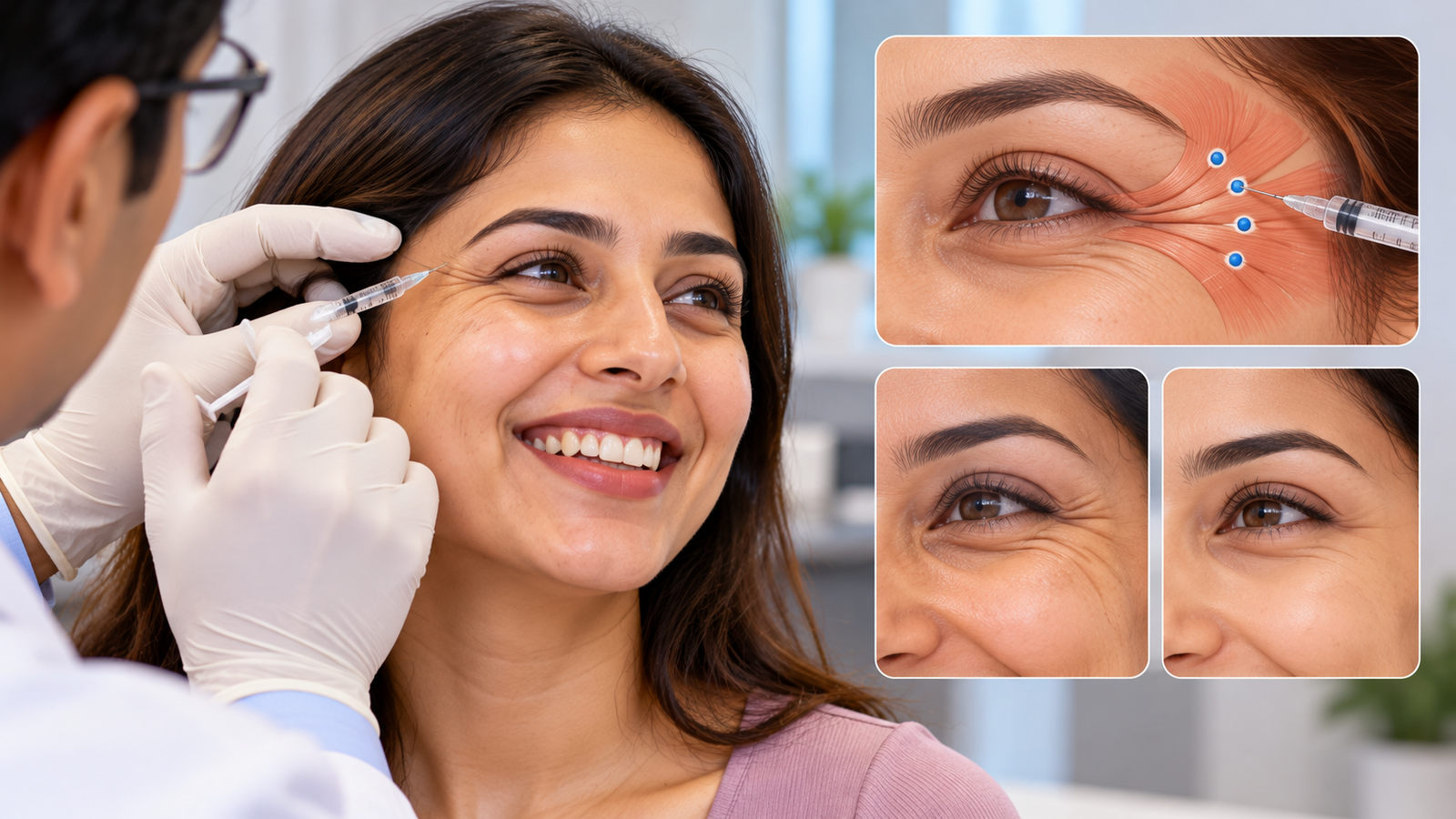
Crow's feet Botox softens the fan of lines at the outer eye by relaxing part of the orbicularis oculi muscle. People who smile a lot keep a natural look when the dose is kept light, a few units at two or three points per side, and when injections stay away from the cheek so the smile still lifts.
If your whole face joins in when you laugh, the worry is simple: will eyes look unnatural after Botox? They do not have to. Crow's feet Botox treatment goes wrong for big smilers in two ways, too much product or product placed too low, and both are avoidable.
Why do crow's feet form faster in people who smile a lot?
Because every full smile tightens the orbicularis oculi, the ring of muscle around the eye, and folds the thin skin at the outer corner in the same place. Fold the same skin thousands of times and the crease stays.
- Movement lines. They appear only when you smile, and these are what Botox treats.
- Lines at rest. They stay when the face is still, because they are etched into the skin. Botox softens these less.
- Cheek lines. The lower folds are pushed up by the cheek as it lifts, not made by the eye muscle. Botox should not chase them.
Smile lines near eyes mark an expressive face, so the aim is to soften them, not erase them.
How does dose change the look of your smile?
More units mean less movement at the outer eye. A light dose softens the fan of lines and leaves the crinkle that makes a smile look real, while a heavy dose can leave the mouth smiling and the eyes still.
How many units of Botox for crow's feet if I smile a lot? Usually fewer than the label dose at the first session.
- The label dose. The US FDA label for Botox Cosmetic sets 24 units in total: 4 units at 3 points per side, so 12 units per side.
- The lighter range. A published review of eye-area technique describes 2 to 4 units at each of 3 or 4 points per side.
| Dose range per side | Expected softening | Smile effect | Best for |
|---|---|---|---|
| About 6 units (2 units at 3 points) | Softer fan of lines. A fine crinkle stays at full smile. | Unchanged. The eyes still smile. | Light lines, first sessions, big smilers. |
| 8 to 12 units (up to the label dose) | Clear smoothing, even at full smile. | The outer eye moves less. Cheeks and mouth are unchanged. | Moderate lines, or when a light session did too little. |
| 12 units, not more, plus skin treatment | Movement lines smooth. Etched lines improve only partly. | Extra units flatten the eye without erasing etched lines. | Heavy lines that show at rest. |
The table is a guide, not a promise, and how many units for crow's feet you need is decided on your own face. Units are specific to each brand and cannot be swapped between products. The treatment itself is described on Botox for crow's feet.
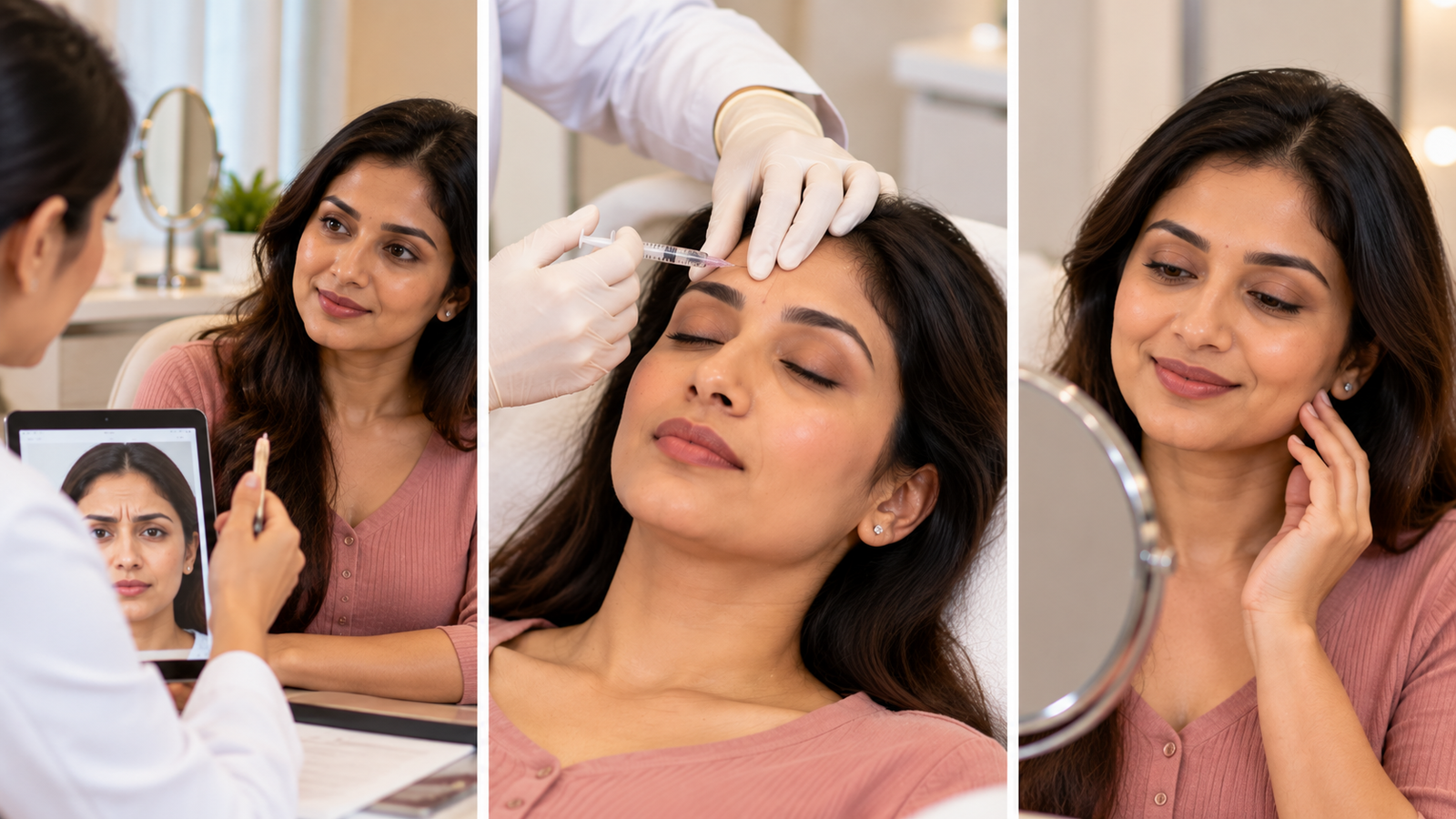
In our practice, people who smile a lot are usually started on the lighter dose and reviewed at day 14 before any more is added.
Where should the injection points sit, and where should they not?
They should sit in the outer part of the eye muscle, outside the bony rim of the eye socket and above the cheekbone. Will crow's feet Botox ruin my smile? Not when the points stay inside that zone.
- At least 1 cm outside the bony orbital rim. This is the rule used here. The US label places the first point 1.5 to 2 cm from the outer corner of the eye, just outside the rim.
- Above the cheekbone. Below it runs the zygomaticus major, the muscle that lifts the corner of the mouth. If product reaches it, the upper lip cannot lift on that side and the smile turns crooked.
- Needle pointing away from the eye. The label asks for this.
- Two or three points per side. Not a row running down onto the cheek.
- Not the lower eyelid by default. That is a separate decision, explained in Botox for lower eyelid lines.
What can go wrong near the eyes, and how is it avoided?
Most Botox side effects near eyes are mild and temporary, and the ones that change expression come from dose or placement. Can Botox around eyes look unnatural? Yes, when the dose is heavy or the points are low.
- Bruising. The skin here is thin. Avoiding visible veins and pressing afterwards reduces it.
- Eyelid swelling. The label reports eyelid oedema in 1% of people treated at 24 units. See Swelling after Botox near the eyes.
- Dry eye. Reported on the label after injections near this muscle. Symptoms that persist need an eye doctor.
- Crooked smile. Caused by product placed too low. Avoided by staying above the cheekbone.
- A flat outer eye. Caused by too many units. Avoided by a light first session.
These effects fade as the product wears off, though that can take weeks. Botox also carries a boxed warning about spread of toxin effect, so trouble swallowing, speaking or breathing after any injection needs urgent medical care.
When should crow's feet be treated with something other than Botox? Options for crow's feet treatment in Althan Surat
When the lines are there at rest, when they come from the cheek or the skin and not the muscle, or when Botox is not suitable for you.
- Lines etched at rest. These are a skin problem. Sun protection, skincare and skin resurfacing are discussed, with or without Botox.
- Hollows or lines under the eye. A different assessment, covered in Under-eye lines and Botox.
- Loose lower lids or existing bags. Botox in the lower lid can make these look worse.
- Pregnancy, breastfeeding or a neuromuscular condition. Treatment is usually deferred or avoided.
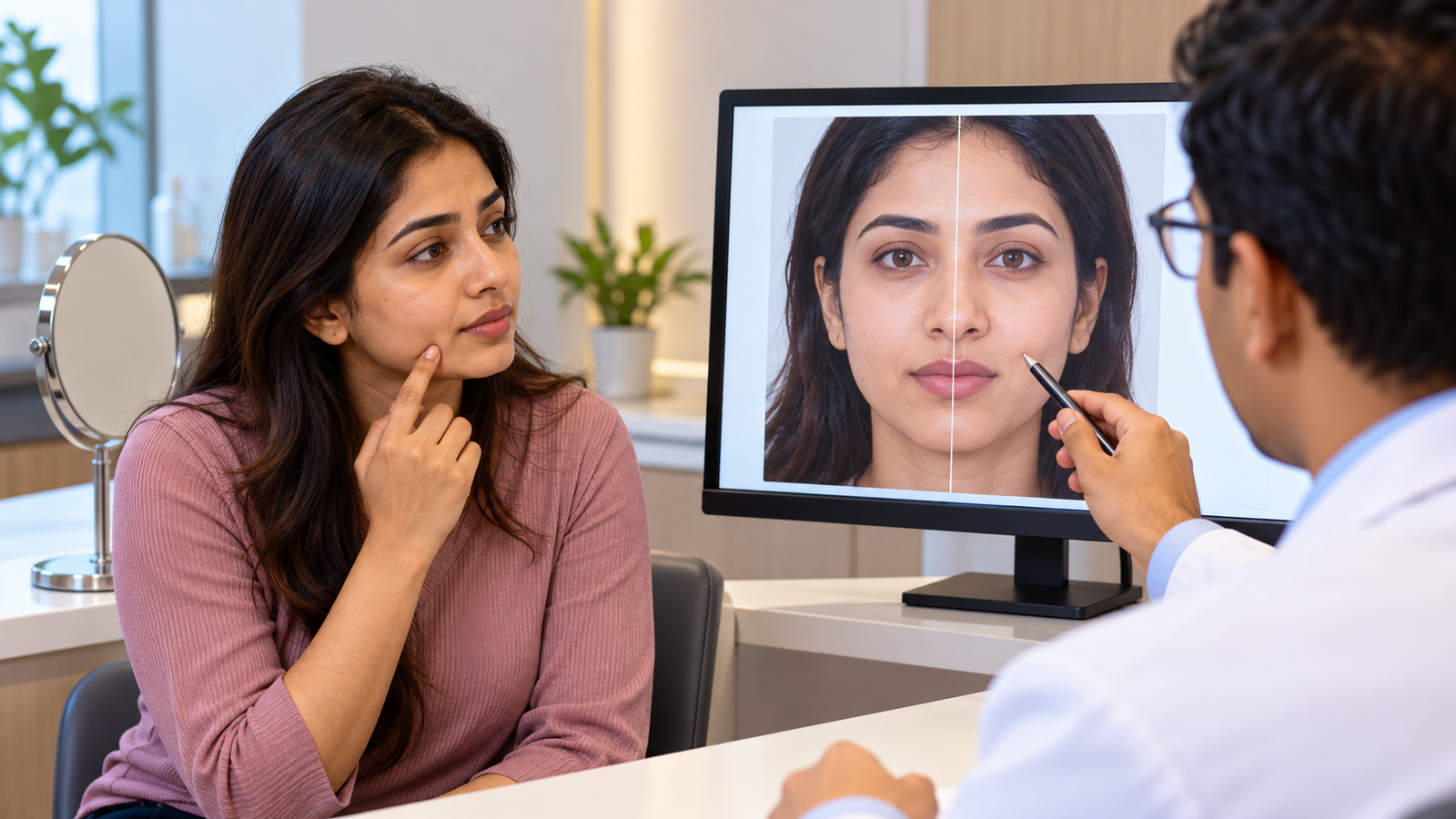
Next step: bring a photo of yourself laughing, and smile fully at the consultation so the lines can be mapped while they move. To book, call +91 8320500350.
This page is for education and is not a substitute for examination. Botox is a prescription medicine that must be prescribed and injected by a qualified doctor. The 24 unit dose, the eyelid oedema figure and the dry eye report are from the Botox Cosmetic prescribing information. A dose below the label dose is the doctor's clinical judgement, and the 1 cm rule and the day 14 review are this clinic's practice. The label gives its three to four month duration for frown lines, not crow's feet.