
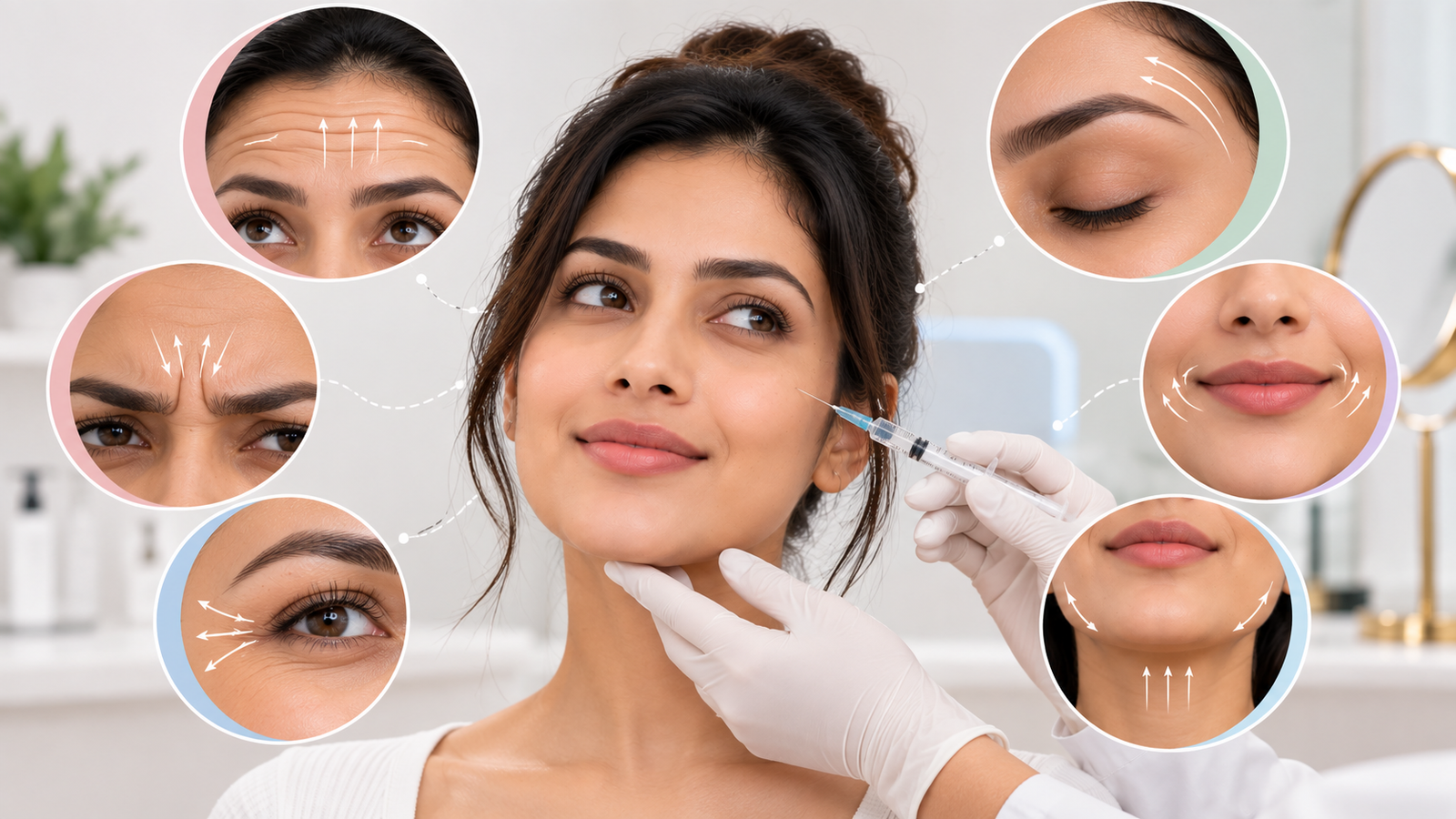
How Long Does Botox Last? Realistic Timelines For Each Treatment Area
Botox usually softens dynamic lines for around three to four months. Movement returns gradually rather than all at once, and a first treatment may sometimes seem to fade sooner than later sessions. Forehead and frown-line results commonly last around three to four months, crow's feet may vary, while jaw-slimming effects can remain noticeable for longer.
However, there is no exact Botox duration that applies to every person or every treatment area. Dose, muscle strength, treatment area, metabolism and previous treatment history can all influence how long the effect remains visible.
How Soon Does Botox Start Working After the Injection?
Botox does not produce its full effect immediately after injection.
Some people begin noticing reduced muscle movement within the first few days. The effect then develops progressively, with the treated muscles becoming less active and dynamic lines appearing softer.
The final result should therefore not be judged immediately after leaving the clinic.
What Happens During the First Few Days?
During the early period, you may still be able to move the treated muscles normally or almost normally. This does not necessarily mean that the treatment has failed.
Changes develop gradually.
For example, someone treated for horizontal forehead lines may initially notice that raising the eyebrows still creates lines. As the treatment takes effect, the strength of that movement begins to decrease.
The exact onset can vary between individuals and treatment areas.
If you are considering treatment for the first time, our complete guide to Botox treatment in Surat explains the procedure in more detail.
How Long Does Botox Last on the Forehead, Frown Lines and Crow's Feet?
When people ask how long does Botox last, the answer depends partly on where it has been injected.
Different facial muscles vary in size, strength and how frequently they are used.
Forehead Lines
Botox for horizontal forehead lines commonly produces an effect lasting around three to four months, although individual results vary.
As the effect gradually decreases, forehead movement begins returning. Dynamic horizontal lines may then become increasingly visible when raising the eyebrows.
Learn more about horizontal forehead lines treatment.
Frown Lines
The vertical lines between the eyebrows are created primarily by repeated contraction of muscles in the glabellar region.
Botox reduces the strength of this movement, helping soften dynamic frown lines.
Results commonly remain noticeable for approximately three to four months, but muscle strength, dose and individual response can influence the duration.
Crow's Feet
Crow's feet develop around the outer corners of the eyes, particularly during smiling and squinting.
Results can remain noticeable for several months, although duration differs between patients.
Because natural expression around the eyes is important, treatment should aim for an appropriate balance between softening lines and maintaining a natural appearance.
Read more about Botox for crow's feet.
Bunny Lines and Chin Dimpling
Botox may also be used for selected dynamic lines around the nose and for excessive chin muscle activity.
These are smaller treatment areas, but the duration still depends on muscle activity, dose and individual response.
Masseter or Jaw Slimming
Jaw-slimming treatment is different from treating a small expression line.
Botox is used to reduce activity in the masseter muscles. Over time, reduced muscle activity can also lead to a reduction in muscle bulk, which produces the slimming effect.
Because this involves changes in muscle size as well as activity, the visible contouring effect may remain noticeable longer than treatment of some facial expression lines.
You can learn more about Botox for a prominent square jaw.
Typical Botox Results Duration by Treatment Area
| Treatment Area | Typical Result Window* | What to Expect at the First Session | What May Change With Repeat Sessions |
|---|---|---|---|
| Forehead lines | Around 12–16 weeks | Movement gradually softens | Duration and response may become more predictable |
| Frown lines | Around 12–16 weeks | Frowning becomes less forceful | Treatment can be adjusted according to previous response |
| Crow's feet | Often around 10–16 weeks | Lines during smiling become softer | Dose and placement may be refined |
| Bunny lines | Around 8–16 weeks | Nose-scrunching lines may soften | Future treatment can reflect individual response |
| Chin dimpling | Around 8–16 weeks | Chin contraction becomes less prominent | Treatment can be adjusted if required |
| Masseter / jaw slimming | Often several months; contour change may persist longer | Muscle activity reduces before slimming becomes obvious | Muscle bulk and retreatment needs can be reassessed |
| Neck bands | Often around 12–16 weeks | Neck muscle activity gradually decreases | Subsequent treatment depends on response and anatomy |
These are general estimates, not guaranteed treatment durations. Individual results vary.
Why Does Botox Wear Off Faster for Some People?
Two people receiving Botox in the same area do not necessarily experience the same Botox results duration.
Several factors can influence how quickly the effect diminishes.
Muscle Strength
People with stronger or more active facial muscles may require a treatment plan different from someone with relatively mild muscle movement.
The masseter is a good example because it is much larger than many facial expression muscles.
Treatment Dose
The amount used and its distribution across the target muscle can influence the treatment effect.
More is not automatically better. The dose should be selected according to anatomy, muscle strength and the desired result.
Treatment Area
Different muscles behave differently.
This is why Botox for forehead lines cannot automatically be expected to last exactly as long as treatment for jaw slimming or neck bands.
Individual Response
People can respond differently even when treatment appears similar.
Your previous response is therefore useful when planning future sessions.
First Treatment vs Repeat Treatment
During a first session, neither the patient nor practitioner has a personal treatment history to refer to.
After seeing how the muscles respond, how natural the result appears and when movement returns, future treatment can be planned more individually.
This does not mean Botox will automatically last longer every time it is repeated.
What Happens to Your Lines When Botox Wears Off Completely?
Botox does not normally wear off suddenly overnight.
Instead, muscle activity gradually returns.
You may first notice slightly more movement when raising your eyebrows, frowning or smiling. Over time, movement can continue returning until the treated muscles are functioning closer to their previous level.
As muscle activity returns, dynamic wrinkles also become more visible again.
Will My Wrinkles Become Worse Than Before?
Stopping Botox does not automatically make wrinkles worse than they were before treatment.
When the effect disappears, normal muscle activity returns. This means the facial movements responsible for dynamic wrinkles can again produce those lines.
The contrast can sometimes make lines seem more noticeable because you have become accustomed to seeing them softened.
Botox also does not permanently stop normal facial ageing. Skin continues to change naturally with time.
Does Botox Wear Off Suddenly?
Usually, no.
The effect tends to decline progressively. You might notice increasing movement before you feel that the treatment has completely worn off.
This gradual return is also useful when deciding when to repeat Botox.
How Do You Decide When to Book the Next Session?
The next appointment should not be based only on a fixed calendar date.
Instead, consider how much movement has returned, whether the lines are becoming noticeable again and how the previous treatment performed.
Don't Automatically Rebook at the First Sign of Movement
Some movement returning does not necessarily mean the entire Botox effect has disappeared.
The goal of treatment is not always complete muscle immobility.
For many patients, maintaining natural facial expression is an important part of the result.
Avoid Repeating Treatment Too Early
Botox top-up timing and full retreatment timing are not necessarily the same thing.
A review shortly after treatment may be used to assess the initial response, symmetry and whether the expected effect has developed. That should not be confused with automatically repeating the full treatment.
Unnecessarily frequent treatment should be avoided. Your doctor should recommend timing based on the treated area, previous response and clinical assessment.
Use Your Previous Session as a Guide
If you have had Botox before, note:
- When you first noticed the effect
- When the result looked strongest
- When movement began returning
- When lines became noticeable again
- Whether you were happy with the degree of movement
- How long the overall result remained satisfactory
This information can make subsequent treatment planning more personalized.
When Should You Rebook?
For many facial areas, people may begin considering another consultation around the time the effect has substantially reduced, often within the general three-to-four-month range.
However, there is no need to schedule treatment simply because a certain number of weeks has passed.
The right when to repeat Botox decision should be based on your treatment area, response and aesthetic goals.
Conclusion
So, how long does Botox last? For common expression-line treatments such as forehead and frown lines, results are often noticeable for around three to four months, while other areas can have different timelines. The effect usually fades gradually rather than disappearing suddenly.
Your treatment area, muscle strength, dose, individual response and previous sessions can all influence duration. Instead of focusing on an exact expiry date, watch how your movement gradually returns and discuss the appropriate retreatment timing with an experienced medical professional.
Realistic expectations are important: Botox is temporary, and the aim should be an appropriate, natural-looking result rather than trying to make every treatment last for an identical number of weeks.


.png)