
What Not To Do In The First 48 Hours After Botox
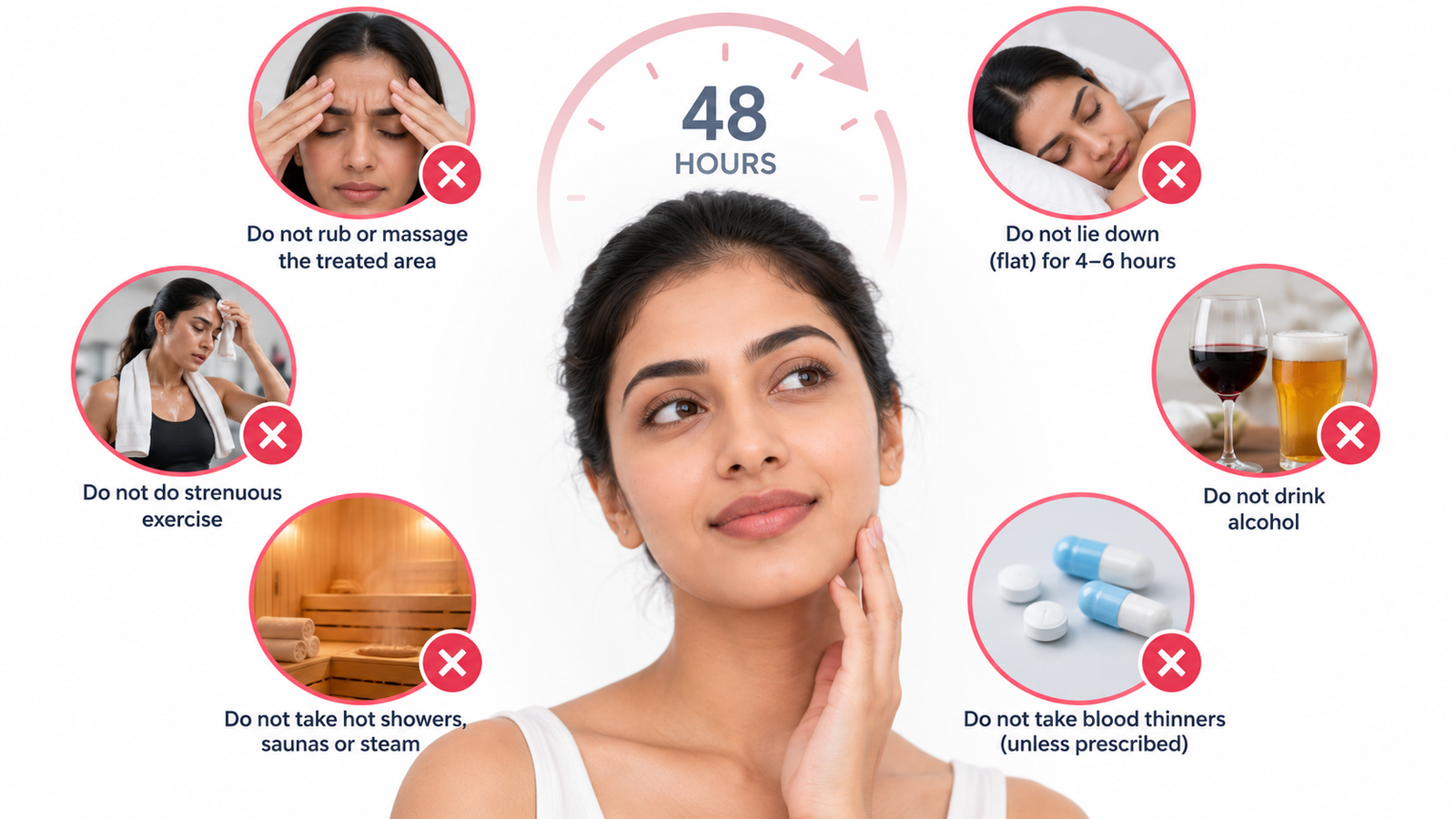
For the first four to six hours after Botox, stay upright, avoid rubbing or massaging the treated area, and skip strenuous exercise. For the first 48 hours, avoid facials, steam, sauna, swimming and head massage. Makeup can usually be restarted the next morning, while most normal activities can resume from day three, unless your treating doctor advises otherwise.
Following the right botox aftercare rules is straightforward, but it matters. The aim is not to make you afraid of normal movement; it is to avoid unnecessary pressure, manipulation, heat and strenuous activity during the early period after injections.
Your doctor's individual instructions should always take priority because the treatment area, dose, medical history and injection technique can change what is appropriate.
Why Do the First 48 Hours Matter More Than the Rest of the Week?
The first hours after treatment are when the injection sites are fresh and patients need to be most careful about unnecessary rubbing, pressure and strenuous activity.
Immediately after Botox, small raised bumps, mild redness, tenderness or tiny bruises can appear around injection points. These usually settle relatively quickly.
During this period, avoid repeatedly touching the area to check whether the treatment is "working." Botox does not produce its final cosmetic effect immediately.
First 4–6 Hours
Your treating doctor may advise you to:
- Remain upright
- Avoid rubbing the injection sites
- Avoid facial or head massage
- Skip strenuous exercise
- Avoid unnecessary pressure over treated areas
- Follow any treatment-area-specific instructions
Normal facial expressions and gentle everyday activity are generally different from deliberately rubbing or massaging the area.
First 24–48 Hours
Continue to be careful with activities involving substantial pressure, heat or manipulation of the treated area.
Facials, massages, steam rooms, saunas and similar treatments are commonly postponed.
By day three, many people can return to their usual routine, provided there are no unexpected symptoms and their clinician has not given different instructions.
Read the Botox treatment in Surat explained guide for more information about the treatment itself.
Which Everyday Habits Can Move the Product to the Wrong Muscle?
Patients sometimes hear that touching the face will make Botox "travel" around the face. That explanation is oversimplified.
Botulinum toxin is placed into carefully selected muscles. Unwanted effects can occur when nearby muscles are affected, which is why accurate injection technique, anatomy and appropriate dosing are important.
Early aftercare therefore focuses on avoiding unnecessary manipulation rather than trying to keep your face completely motionless.
Rubbing or Massaging Your Face
One of the clearest rules when considering what not to do after botox is to avoid deliberately rubbing or massaging freshly treated areas.
That includes:
- Face massage
- Head massage involving the forehead or temples
- Facial rollers
- Gua sha
- Aggressive cleansing
- Firm skincare application
- Beauty treatments involving facial pressure
Gentle incidental touching is different from repeatedly pressing or massaging an injection site.
Lying Down Immediately
Many patients specifically ask: can you lie down after botox?
Traditional aftercare protocols commonly recommend remaining upright for several hours after injections. Evidence for a precise universal time limit is limited, however, so follow the instructions provided by your treating clinician.
If your clinic asks you to remain upright for four hours, arrange the appointment so that you do not need to sleep immediately afterwards.
Sleeping on Your Face
Try to avoid deliberately placing prolonged pressure directly over freshly treated areas during the early post-treatment period.
You do not need to stay awake worrying about changing position while asleep. Follow the specific sleeping advice provided by your injector.
Applying Pressure While Cleansing
You can eventually wash your face, but avoid aggressive rubbing.
Use gentle movements rather than vigorously massaging cleansers, serums or moisturisers into recently injected areas.
For additional instructions, see the Elegance Clinic patient guide.
When Can You Exercise, Steam, Swim or Have a Facial Again?
The timing of normal activities is one of the most common questions after treatment.
Your injector's advice should take priority, particularly if you have received injections in several areas or have significant bruising or swelling.
Exercise After Botox
Strenuous exercise after botox is commonly postponed during the initial aftercare period.
This can include:
- Running
- Heavy weight training
- HIIT workouts
- Intense cycling
- Strenuous yoga
- Competitive sports
Gentle walking and routine daily movement are different from a high-intensity workout.
If you train every day, ask your clinician exactly when you can restart your normal programme.
Steam and Sauna
It is sensible to postpone high-heat environments during early aftercare, particularly while injection sites remain red, swollen or tender.
Avoid steam rooms, saunas and heat-intensive facial treatments for the period recommended by your clinician.
Swimming
Your sheet's aftercare plan recommends avoiding swimming during the first 48 hours.
After that, return according to your clinician's advice and how the injection sites have settled.
Facials
Do not schedule a facial immediately after Botox.
Facials may involve massage, pressure, devices, exfoliation or heat around recently treated areas. Tell your aesthetic practitioner that you have recently received Botox before restarting facial treatments.
Head Massage After Botox
A head massage after botox can involve considerable pressure over the forehead and temples.
If these areas have been treated, postpone head massage during the early aftercare period and restart according to your clinician's instructions.
48-Hour Botox Do and Don't Checklist
| Period | Activity | Allowed? | Why |
|---|---|---|---|
| First 6 hours | Stay upright | Recommended if instructed | Follow your injector's immediate protocol |
| First 6 hours | Rub or massage treated area | No | Avoid unnecessary manipulation |
| First 6 hours | Strenuous exercise | No | Commonly restricted during immediate aftercare |
| First 24 hours | Gentle daily activity | Yes | Normal movement is generally acceptable |
| First 24 hours | Aggressive skincare | No | Avoid pressure and irritation |
| First 24 hours | Makeup | Usually wait until advised | Avoid unnecessary manipulation of fresh injection sites |
| First 48 hours | Facial | Avoid | Often involves pressure, massage or devices |
| First 48 hours | Head/face massage | Avoid | Direct manipulation of treated areas |
| First 48 hours | Sauna or steam | Avoid | Heat may aggravate temporary redness or swelling |
| First 48 hours | Swimming | Avoid | Allows the early treatment period to settle |
| Days 2–7 | Normal routine | Gradually resume | Follow individual clinical instructions |
| Days 2–7 | Judge final Botox result | Not yet | The treatment effect develops progressively |
At Elegance Clinic, Dr. Ashutosh Shah advises patients to follow treatment-specific aftercare instructions because the appropriate restrictions can vary according to the Botox area, dose and individual patient factors.
Which Medicines and Supplements Should Be Paused Around the Appointment?
This is an area where botox aftercare rules need to be individualized.
The most important rule is: do not stop a prescribed medicine yourself simply because you are having Botox.
Some medicines and supplements can affect bleeding or bruising, but stopping medically necessary treatment without appropriate advice may carry greater risks than a cosmetic bruise.
Tell Your Doctor What You Take
Before your appointment, disclose:
- Prescription medicines
- Blood thinners
- Over-the-counter medicines
- Vitamins
- Herbal products
- Nutritional supplements
Do this even if you think a particular tablet or supplement is unrelated to Botox.
What About Blood-Thinning Medicines?
If you take an anticoagulant or antiplatelet medicine for a medical condition, do not stop it without instructions from the clinician responsible for your treatment.
Your Botox provider needs to know that you take it, but that does not mean it should automatically be discontinued.
What About Painkillers?
Some medicines can affect bruising. However, you should not change a medically necessary pain-treatment plan simply to prepare for a cosmetic procedure without professional advice.
What About Supplements?
Tell your clinician about supplements as well as conventional medicines.
"Natural" does not automatically mean irrelevant to a medical procedure.
If a medicine or supplement needs to be paused, your healthcare professional should tell you what to stop, why, and when it can be restarted.
What Is Normal and What Needs a Call Back to the Clinic?
Minor local reactions can occur after Botox.
Usually Normal
Temporary effects around injection sites can include:
- Mild redness
- Small bumps
- Minor swelling
- Slight tenderness
- Small bruises
These generally settle rather than progressively worsen.
If swelling is your main concern, see Swelling after Botox explained in Gujarati.
When Should You Call the Clinic?
Contact your treating clinic if you develop an unexpected symptom, significant asymmetry, persistent reaction or a problem that appears to be worsening rather than settling.
Remember that the cosmetic effect develops gradually. The appearance during the first 24–48 hours is not the final result.
When Is Urgent Medical Care Needed?
Seek urgent medical attention for serious symptoms such as:
- Difficulty breathing
- Difficulty swallowing
- Significant speech difficulty
- Severe allergic symptoms
- Marked or generalized weakness
- Severe or rapidly worsening symptoms
Do not wait for a routine Botox review if you develop potentially serious symptoms.
You can also review the clinic's Botox and filler FAQs.
Conclusion
Understanding what not to do after botox does not mean avoiding every normal activity for a week. The most important early precautions are avoiding unnecessary rubbing or massage, following instructions about remaining upright, postponing strenuous exercise and delaying facials, steam, sauna, swimming and head massage as advised.
Do not independently stop prescribed medicines or supplements for a Botox appointment.
Most patients can progressively return to their normal routine after the initial aftercare period, while the Botox result itself continues developing over the following days.
If anything seems unusual, worsening or significantly different from the expected recovery, contact your treating clinic.

.png)