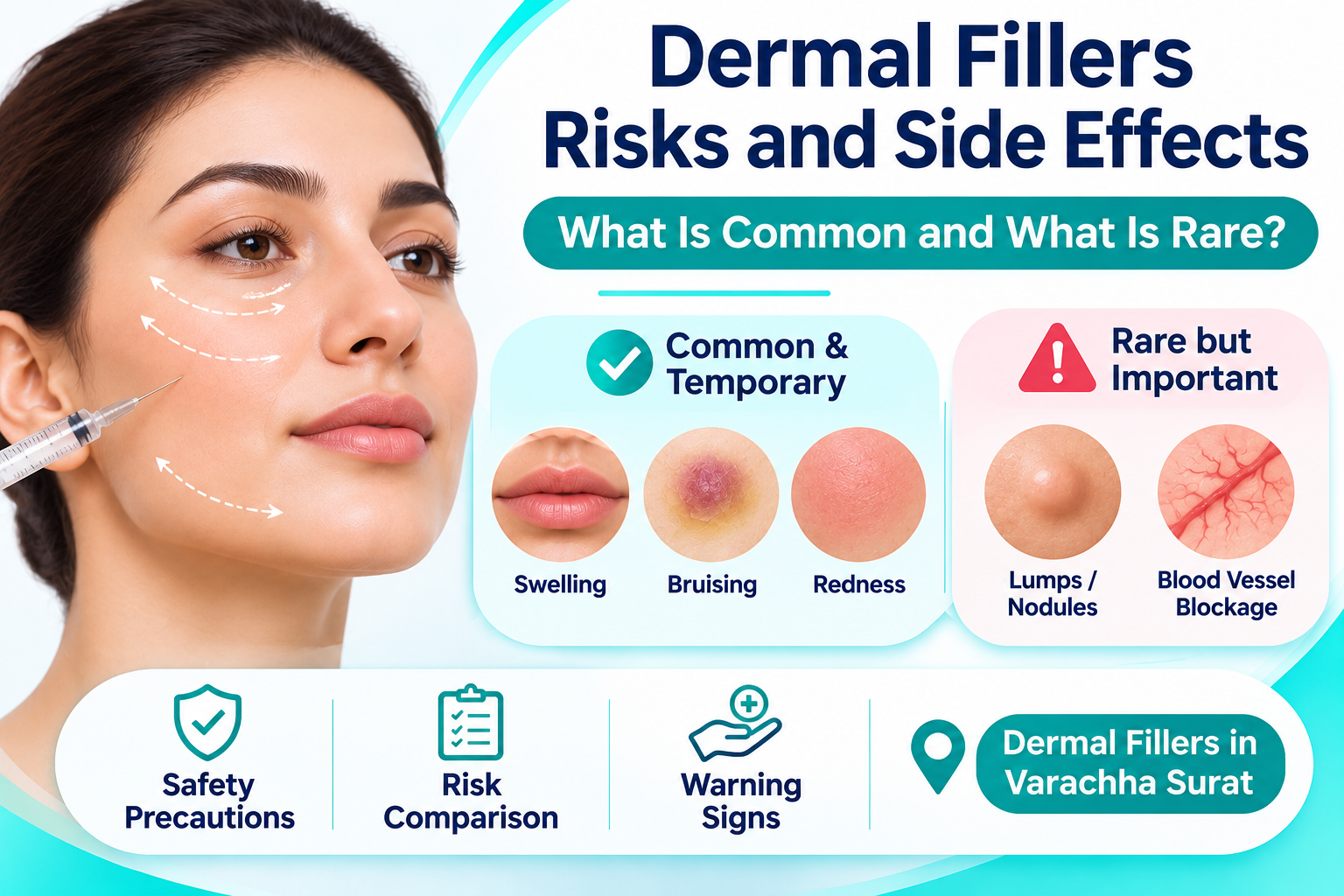
Dermal Fillers Risks and Side Effects: What Is Common and What Is Rare?
Dermal fillers are injectable treatments used to restore facial volume, improve facial contours and soften the appearance of certain lines and wrinkles. They are commonly chosen for areas such as the lips, cheeks and chin.
Although dermal fillers can provide noticeable cosmetic improvements, every injectable procedure carries some risk. Most people experience only temporary reactions, such as swelling, redness or bruising. However, less common complications can require medical attention.
The type of filler, injection area, product quality and experience of the person performing the procedure all influence treatment safety.
Before choosing fillers, it is important to understand the possible side effects, recognise warning signs and know how complications can be reduced.
Which Side Effects Are Common and Temporary?
Most common side effects occur around the injection site shortly after treatment. They generally improve as the treated area settles.
1. Swelling
Mild swelling is one of the most common reactions. It may be more noticeable around sensitive areas, particularly the lips. Swelling usually improves gradually.
2. Bruising
Small blood vessels can be affected during injections, resulting in temporary bruising. Its appearance and duration vary between individuals.
3. Redness and Tenderness
The injection area may look slightly red or feel tender. This usually settles without additional treatment.
4. Pain or Discomfort
Some people experience mild pain, pressure or stinging during and shortly after the procedure.
5. Itching and Sensitivity
Temporary itching or skin sensitivity can occur around the treated area. Persistent irritation should be assessed.
These reactions are generally temporary, but their duration depends on the product, treatment area and individual response.
Which Complications Are Rare but Important?
Although serious complications are uncommon, they should never be ignored.
1. Infection
Bacteria can enter the skin during an injection procedure. Infection may cause increasing redness, warmth, pain, swelling or discharge.
2. Lumps and Nodules
Small bumps may develop beneath the skin when filler collects unevenly or an inflammatory reaction occurs. Some may settle, while others require medical assessment and treatment.
3. Allergic Reactions
Certain filler materials can trigger allergic reactions. Symptoms may include itching, swelling, redness or a more serious systemic reaction.
4. Filler Migration
In some cases, filler material may move away from the original injection area, affecting the intended appearance.
5. Skin Discolouration and Scarring
Inflammation, infection or tissue injury may lead to changes in skin colour. Severe complications can sometimes cause permanent scarring.
6. Blood Vessel Blockage
One of the most serious complications occurs when filler accidentally enters or blocks a blood vessel. This can interrupt blood supply and cause tissue damage.
In rare cases, vascular complications can result in vision loss, blindness or stroke. Immediate medical attention is essential if warning signs appear.
Dermal Fillers in Varachha Surat: How Can Treatment Risks Be Reduced?
If you are considering dermal fillers in varachha surat, understanding the safety measures before treatment is essential.
A few important precautions can help reduce avoidable risks.
Choose a Qualified Medical Professional
Filler injections should be treated as medical procedures. Choose an appropriately licensed professional with specific training and experience in injectable treatments.
Check the Product
Ask about the filler brand, product name, manufacturer, packaging and authenticity. Avoid unknown or unlabelled products.
Discuss Your Medical History
Share information about allergies, previous filler treatments, medical conditions, medications and any history of complications.
Understand the Injection Area
Different facial areas have different anatomical structures and risk profiles. Ask about the specific risks associated with the area being treated.
Avoid Unregulated Injection Settings
Do not receive fillers at parties, homes or non medical settings. Avoid purchasing injectable products online or attempting self injection.
Discuss Emergency Preparedness
Before treatment, understand how complications are recognised and managed. The treatment provider should have an appropriate emergency response plan.
Which Warning Signs Require Immediate Medical Attention?
Knowing the warning signs can make an important difference when dealing with serious filler complications.
Seek immediate medical attention if you experience:
-
Severe or unusual pain during or after injection.
-
Skin becoming unusually pale, white, grey or blue.
-
Sudden changes in vision or blurred vision.
-
Increasing pain with unusual skin discolouration.
-
Sudden weakness, facial drooping or difficulty speaking.
-
Severe headache, dizziness or confusion.
These symptoms can indicate a serious vascular complication or another medical emergency.
Do not wait for the symptoms to disappear or attempt to manage them with home remedies. Contact emergency medical services or seek immediate medical care.
Dermal Fillers Risk Comparison Table
| Side effect | How common | How long | What to do |
|---|---|---|---|
| Swelling | Common | Usually days to two weeks | Follow aftercare |
| Bruising | Common | Usually days to two weeks | Avoid unnecessary pressure |
| Redness | Common | Usually temporary | Monitor the area |
| Tenderness | Common | Usually temporary | Follow instructions |
| Itching | Less common | Varies | Seek advice if persistent |
| Lumps or nodules | Less common | May persist | Arrange assessment |
| Infection | Uncommon | Varies | Seek medical attention |
| Allergic reaction | Uncommon | Varies | Obtain medical assessment |
| Skin tissue damage | Rare | May be permanent | Seek emergency attention |
| Vision loss or stroke | Very rare | Can be permanent | Seek emergency attention immediately |
The table provides general guidance. Actual risks and recovery times vary according to the filler material, injection location and individual circumstances.
Who Should Avoid or Delay Dermal Fillers?
Dermal fillers may not be appropriate for everyone.
Treatment may need to be delayed or reconsidered in certain situations, including:
-
Active skin infections near the intended injection area.
-
Known allergies to a filler ingredient.
-
Previous serious complications from injectable treatments.
-
Certain bleeding disorders or medications that affect bleeding.
-
Pregnancy or breastfeeding, when safety information is limited.
-
Certain medical conditions that may affect healing.
People with a history of severe allergic reactions or abnormal scarring should discuss their suitability carefully.
A medical assessment helps identify possible concerns before treatment.
What Should You Do Before and After Dermal Filler Treatment?
Preparation and aftercare are important parts of the treatment process.
Before treatment, share your medical history and medication list. Discuss previous cosmetic procedures and any known allergies.
After treatment, follow the specific instructions provided. Avoid unnecessary pressure, rubbing or massage unless advised. Follow recommendations about exercise, sun exposure and skincare.
Do not attempt to correct lumps or unevenness yourself.
If you are exploring different injectable treatments, our guide to Fillers Treatment explains the available options.
You can also read about Advanced Dermal Filler Scar Correction to understand how fillers may be considered for selected scar concerns.
For people comparing treatments for facial lines, our article on Lines Between Eyebrows Treatment provides additional information about available approaches.
Final Thoughts
Dermal fillers can help improve selected facial concerns, but understanding their risks is just as important as knowing their cosmetic benefits.
Temporary swelling, redness and bruising are common reactions. More serious complications, including infection, tissue damage and vascular blockage, are uncommon but can have significant consequences.
Choosing a qualified professional, checking product authenticity and following appropriate aftercare instructions can help reduce avoidable risks.
Always make an informed decision after discussing the expected results, possible complications and available alternatives.