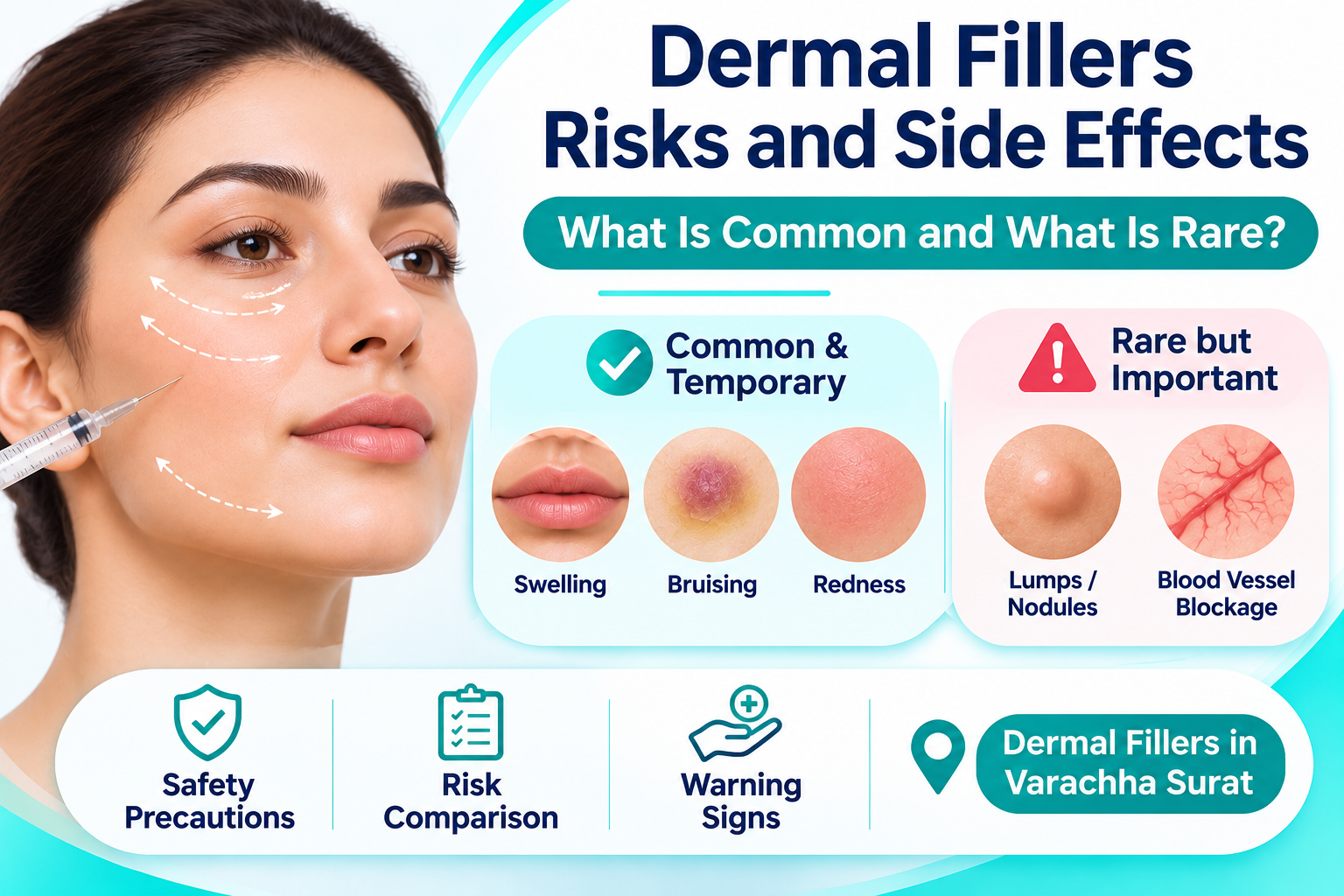
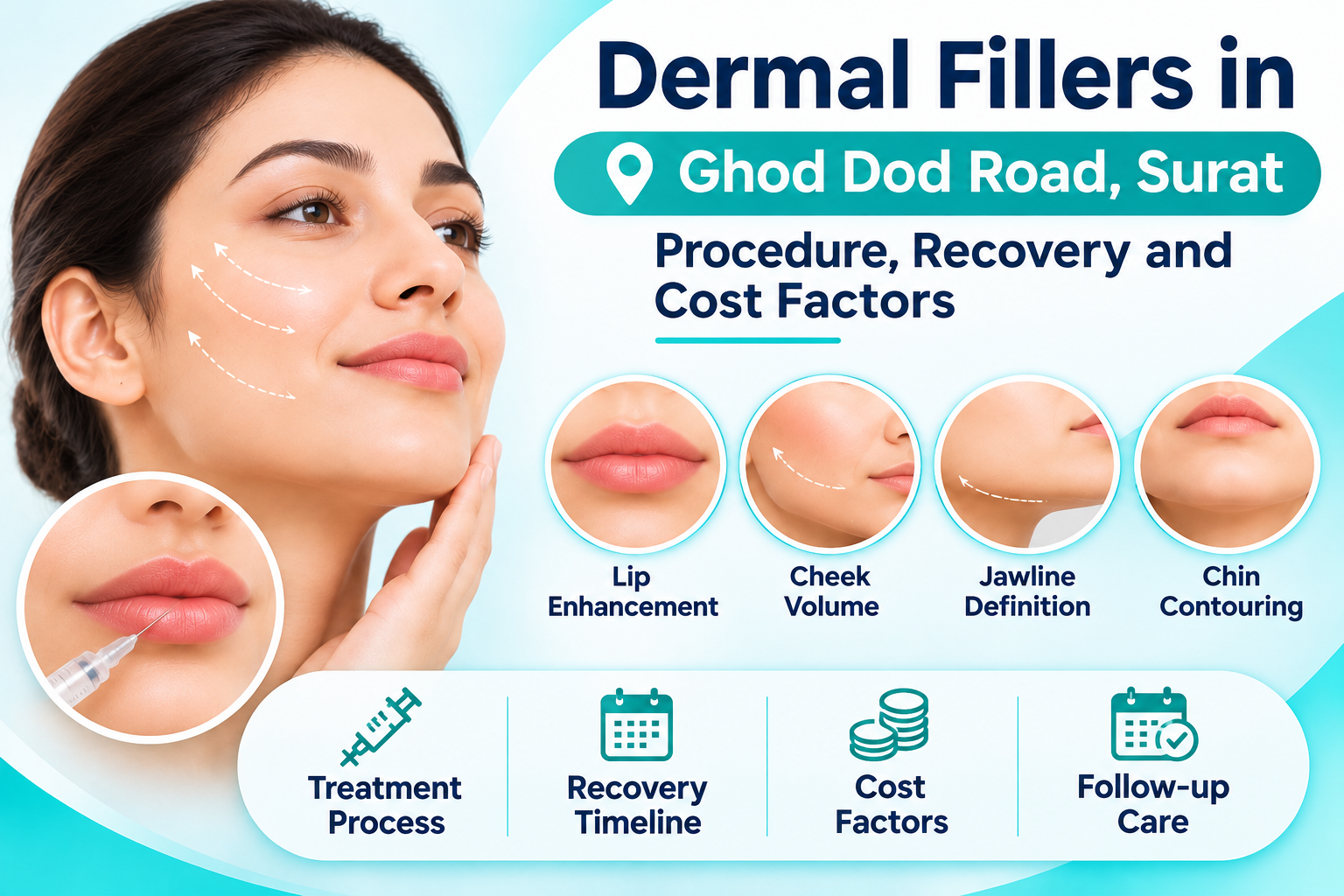
Dermal Fillers in Ghod Dod Road, Surat: Procedure, Recovery and Cost Factors
Dermal fillers are a popular non surgical cosmetic treatment used to restore facial volume, improve facial contours and soften the appearance of certain lines and wrinkles. They can also enhance features such as the lips, cheeks and chin when used appropriately.
As the skin ages, it gradually loses collagen, elasticity and natural fullness. This can make certain areas appear less defined or create visible folds. Dermal fillers offer an option for addressing selected concerns without undergoing surgery.
However, getting natural looking results involves more than simply choosing a filler. The type of product, injection area, amount required and individual facial structure all influence the treatment plan.
If you are considering this procedure, understanding how it works, what happens during the appointment, how long recovery takes and what affects the cost can help you make a more informed decision.
What Are Dermal Fillers and Who Can Consider Them?
Dermal fillers are injectable products designed to add volume beneath the skin or improve the appearance of selected facial areas.
Different filler materials have different properties. Hyaluronic acid fillers are commonly used because they can provide temporary volume and are generally gradually broken down by the body.
Depending on the product and treatment area, dermal fillers may be considered for:
-
Restoring volume in the cheeks.
-
Improving the appearance of certain facial folds.
-
Enhancing lip shape and fullness.
-
Improving chin definition.
-
Addressing selected areas of facial volume loss.
-
Improving the appearance of certain scars.
Not everyone needs the same treatment. Some people may benefit from a small amount of filler, while others may be better suited to alternative cosmetic procedures.
A proper facial assessment helps determine whether fillers are appropriate and what results can realistically be expected.
How Is the Dermal Filler Procedure Performed?
The procedure usually involves several steps. The exact process depends on the treatment area, filler material and individual requirements.
Step 1: Consultation and Facial Assessment
The first step is understanding the person's concerns and desired results.
The facial structure, skin condition, existing volume and medical history are assessed. Previous cosmetic treatments, allergies, medications and any history of complications should also be discussed.
This helps determine whether dermal fillers are suitable.
Step 2: Selecting the Appropriate Filler
Different products are designed for different purposes.
Some are formulated for areas requiring subtle movement and flexibility, while others are designed to provide more structural support.
The selected product should be appropriate for the intended injection area. The expected duration, possible side effects and available alternatives should be explained before treatment.
Step 3: Preparing the Treatment Area
The skin is cleaned before the procedure. Depending on the product and area being treated, a topical numbing cream or another form of local anaesthesia may be used.
The treatment area is then carefully identified.
Step 4: Filler Injection
The filler is introduced into selected areas using a fine needle or cannula, depending on the treatment plan.
The amount and placement are adjusted according to the facial structure and intended result.
Some people experience mild pressure, stinging or temporary discomfort during injection.
Step 5: Immediate Assessment
After the injections, the treated area is examined for swelling, symmetry and overall appearance.
Some initial swelling is normal, so the immediate appearance should not always be considered the final result.
Follow up appointments may be recommended to assess the outcome.
Quick Facts About Dermal Fillers
| Treatment detail | General information |
|---|---|
| Procedure type | Non surgical injectable treatment |
| Duration | Often 15 to 30 minutes for many treatments |
| Anaesthesia | Topical numbing or local anaesthesia when needed |
| Hospital stay | Usually not required |
| Return to routine | Often possible the same day |
| Initial results | Often visible immediately |
| Follow ups | Depend on product and treatment area |
The actual duration and recovery requirements vary according to the selected filler and individual circumstances.
What Is the Recovery Time After Dermal Fillers?
Most people experience relatively little downtime after dermal filler treatment. However, temporary reactions are possible.
First 24 Hours
Mild swelling, redness, tenderness or bruising may appear around the injection sites.
Avoid unnecessary pressure or touching the treated areas. Follow the specific aftercare instructions provided.
First Three Days
Swelling may gradually reduce, although some areas can remain sensitive.
Avoid strenuous exercise for the period recommended by the treating professional. Do not massage the area unless specifically instructed.
First Week
Bruising and swelling generally continue to settle.
The treated area may begin to look more natural as the initial swelling improves.
Following Weeks
The final appearance becomes easier to assess once temporary reactions have settled.
Some filler types provide immediate volume, while collagen stimulating products may take longer to show their full effect.
If you notice unusual pain, skin discolouration or changes in vision, seek immediate medical attention rather than waiting for a routine follow up.
Which Factors Affect the Cost of Dermal Fillers?
The cost of dermal fillers is not the same for everyone. Several factors determine the overall treatment expense.
1. Type of Filler
Different filler materials and product formulations have different prices. The selected product should be appropriate for the intended purpose.
2. Amount of Filler Required
The quantity used depends on the treatment area, existing volume and desired result.
3. Treatment Area
Lip enhancement, cheek volume restoration and chin contouring require different approaches and product quantities.
4. Brand and Product Quality
The manufacturer's product, authenticity, packaging and traceability are important considerations.
5. Professional Experience
The qualifications, training and experience of the person performing the injections are important factors in treatment planning and safety.
6. Follow Up Requirements
Additional appointments and any necessary assessment may affect the overall treatment expense.
Before proceeding, ask for a clear estimate covering the product, quantity, procedure and follow up requirements. Choosing a treatment based only on the lowest price can overlook important safety considerations.
Dermal Fillers in Ghod Dod Road, Surat: Planning Your Visit
If you are considering dermal fillers in ghod dod road surat, planning your consultation properly can make the experience easier.
Before your appointment, think about the specific changes you want to achieve. It is helpful to discuss whether you want subtle facial enhancement, restored volume or improved definition.
You should also share information about previous filler treatments, cosmetic procedures, allergies, medical conditions and all medicines or supplements you take.
During the consultation, consider asking:
-
Which filler is appropriate for my treatment area?
-
How much product will be required?
-
How long can the results last?
-
What temporary reactions should I expect?
-
What are the serious complications?
-
What happens if a complication occurs?
-
What is included in the complete treatment cost?
You can explore the fillers treatment page to learn more about available treatment options.
If you are comparing different facial rejuvenation approaches, the article about Botox and Fillers with Facelift provides additional information about how these cosmetic approaches differ.
How Can You Maintain Your Results After Dermal Fillers?
Dermal filler results are not permanent in most cases. Their duration depends on the material, treatment area, metabolism and individual response.
A few simple habits can help support the treated area.
Follow aftercare instructions
Avoid unnecessary pressure, rubbing or massage unless specifically recommended.
Protect your skin
Use suitable sunscreen and maintain a consistent skincare routine.
Avoid unnecessary repeat treatments
Do not schedule additional injections before the appropriate time. Reassessment is important before considering further treatment.
Attend follow up appointments
A follow up assessment helps evaluate the results and identify any concerns.
Maintain realistic expectations
The aim should be balanced facial enhancement rather than excessive volume.
It is also important to understand that fillers intended for the face should not automatically be considered suitable for other body areas. You can read our information about dermal fillers and breast fullness, but this should not be taken as a recommendation for breast augmentation using injectable fillers. The FDA specifically advises against using dermal fillers for breast enlargement.
Final Thoughts
Dermal fillers can help restore selected areas of facial volume and improve facial contours without surgery. However, choosing the correct product, treatment area and injection technique is essential.
Before proceeding, understand the expected results, possible complications, recovery requirements and overall cost.
A conservative treatment approach, proper medical assessment and appropriate follow up can help support a safer experience and natural looking results.