Blepharospasm Botox: Dose, Duration And Aftercare, Explained For Patients And Families
Written and medically reviewed by Dr. Ashutosh Shah, M.B., M.S., M.Ch., D.N.B., plastic surgeon at Elegance Clinic.
Botox is a standard first-line treatment for benign essential blepharospasm, the condition where the eyelids squeeze shut involuntarily. Small doses are injected into the muscle around the eyes, relief usually starts within a few days and lasts about 3 months, and the dose is adjusted at each visit. Diagnosis should involve a neurologist or eye specialist.
For people with blepharospasm, everyday tasks such as reading, watching television, walking outdoors or driving can become difficult because the eyes keep closing. Botox for blepharospasm does not cure the condition, but it gives reliable relief for most patients when it is planned and repeated correctly. This guide explains the diagnosis, the dose, how long it lasts and what families should watch for afterwards..
પરિવાર માટે ટૂંકમાં: બ્લેફેરોસ્પાઝમમાં આંખની પાંપણો પોતાની મેળે જોરથી બંધ થઈ જાય છે. બોટોક્સના નાના ઇન્જેક્શન આંખની આસપાસના સ્નાયુમાં આપવામાં આવે છે. અસર સામાન્ય રીતે થોડા દિવસમાં શરૂ થાય છે અને લગભગ ત્રણ મહિના ટકે છે, પછી ફરી ઇન્જેક્શન લેવા પડે છે. સારવાર પહેલાં ન્યુરોલોજિસ્ટ અથવા આંખના નિષ્ણાત પાસે નિદાન કરાવવું જરૂરી છે. પાંપણ નીચે ઢળી પડે, બેવડું દેખાય અથવા આંખ બંધ ન થાય તો તરત ડૉક્ટરને જણાવો.
What is blepharospasm, and how is it different from an eye twitch?
Blepharospasm is a neurological condition in which the muscles around both eyes contract involuntarily, causing frequent blinking or forceful closure of the eyelids. It is a type of focal dystonia, a movement disorder in which the brain sends abnormal signals to specific muscles.
A normal eye twitch, called myokymia, is very different. It is a fine flicker of one eyelid, often linked to stress, tiredness or caffeine, and it usually settles on its own within days or weeks. Blepharospasm, in contrast:
- Usually affects both eyes
- Causes the eyelids to squeeze shut, sometimes for several seconds
- Often worsens with bright light, stress, reading or driving
- Tends to persist and gradually worsen without treatment
- Most commonly begins in middle or later life
Many patients also notice dry, gritty eyes and sensitivity to light. In some people, spasms spread to the lower face or jaw, a related condition called Meige syndrome.
Who should diagnose it before Botox is planned?
Blepharospasm should be diagnosed by a neurologist or an eye specialist (ophthalmologist) before Botox is planned. They confirm the diagnosis and rule out other causes, such as dry eye disease, eyelid inflammation, hemifacial spasm, medication side effects or other neurological conditions.
At Elegance Clinic, we follow a shared care approach. The diagnosis comes from a neurologist or ophthalmologist, and Botox injections are then planned and given in coordination with them. Bring any previous reports, prescriptions and your specialist's letter to the first visit.
How is the dose worked out and where are the injections?
The dose is worked out from the label starting dose and then adjusted to your response at each visit. According to the Botox prescribing information, the initial dose for blepharospasm is 1.25 to 2.5 units per injection site.
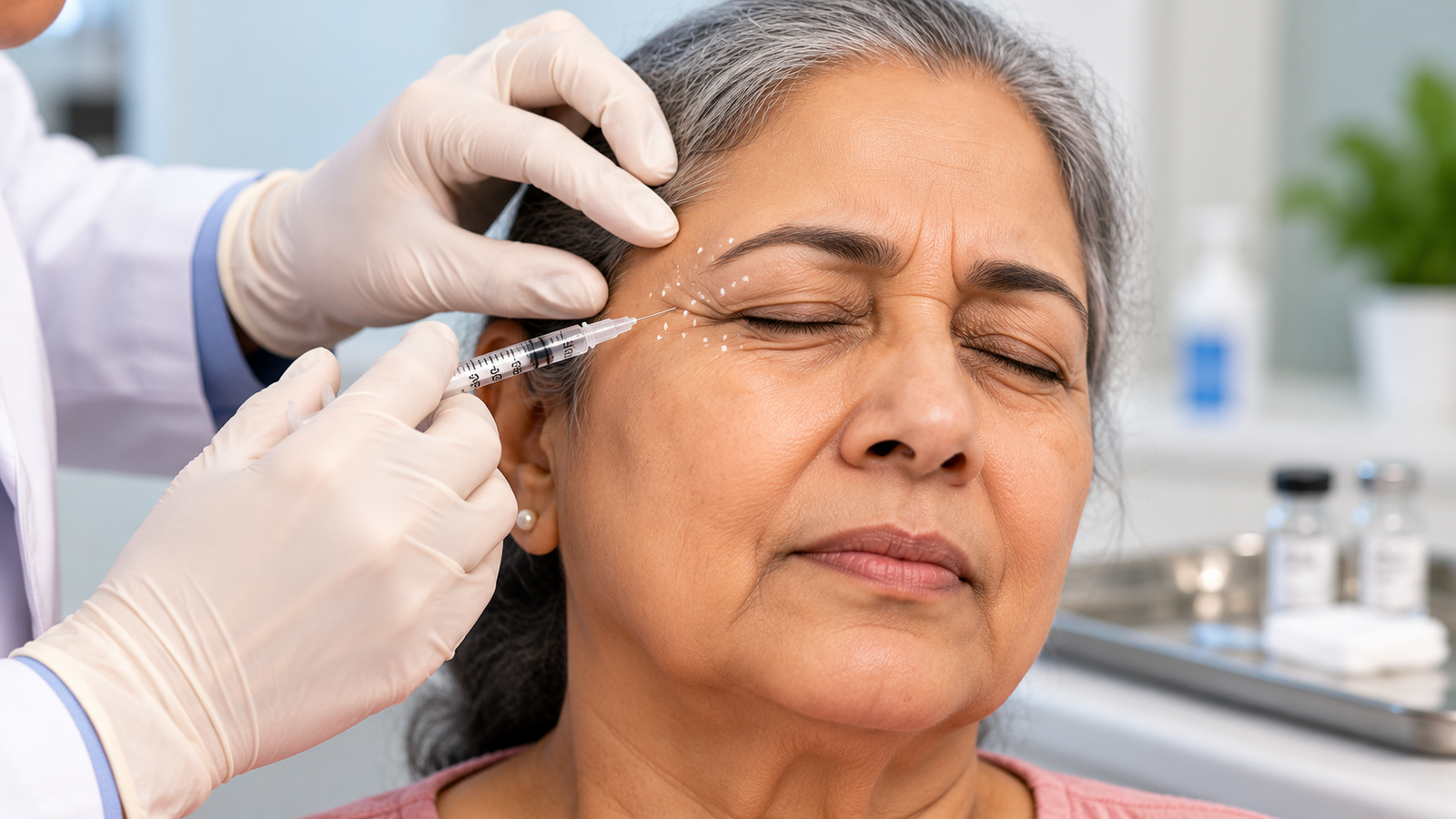
The usual injection sites are:
- The inner and outer part of the upper eyelid muscle, close to the lash line
- The outer part of the lower eyelid muscle
- Additional points around the eyebrow or outer eye corner if spasms involve these areas
The inner part of the lower eyelid is usually avoided, as this reduces the risk of double vision. The label also notes that:
- If the first response is not enough, the dose may be increased up to two-fold at the next session.
- Little extra benefit is seen above 5 units per site.
- The total dose over 30 days should not exceed 200 units.
- Treating more often than every three months may lead to reduced response.
The injections use a very fine needle and take only a few minutes. You can find more about our approach on our medical and aesthetic Botox page and about injections near the lower lids on our Botox around the lower eyelids page.
How long does relief last and when is the next session due?
Relief usually begins within three days, reaches its peak in one to two weeks and lasts about three months. Most patients book the next session around the three-month mark, or when spasms clearly begin to return.
How long does Botox last for blepharospasm in practice? It varies from person to person. Some people get relief for a little less than three months, while others find it lasts longer. The American Academy of Neurology guideline update (2016) rates botulinum toxin as probably effective for blepharospasm and supports considering it as treatment.
A treatment diary helps your doctor fine-tune the dose. Bring this to each visit:
| Date | Dose per site | Onset day | Peak relief | When spasms return | Side effects noticed |
|---|---|---|---|---|---|
| Date of injection | Units at each site, as noted by the doctor | Day you first noticed improvement | Week of best relief and how good it was | Week spasms started coming back | Drooping, dry eye, watering, double vision or bruising |
What aftercare and side effects should families watch for?
After the injections, avoid rubbing the eyes, keep using lubricating eye drops if advised, and watch for drooping, double vision or difficulty closing the eye. Most blepharospasm treatment side effects are mild and temporary, settling within a few weeks.
Aftercare steps:
- Do not rub or massage the treated area for the rest of the day.
- Use lubricating eye drops, especially if you have dry eyes.
- Wear sunglasses outdoors if light sensitivity is a problem.
- Apply a cool pack gently if there is mild swelling, as explained in our guide on swelling after Botox near the eyes.
- Note any changes in your treatment diary.
Possible side effects include:
- Drooping of the upper eyelid (ptosis)
- Dry eye or, sometimes, excess watering
- Reduced blinking, which can irritate the surface of the eye
- Small bruises at injection points
- Double vision, which is uncommon
- The lower eyelid turning slightly outward, which is uncommon
Contact your doctor promptly if you cannot close the eye fully, if the eye becomes painful or red, or if vision changes.
Where can families get eye twitching treatment in Athwa?
Families can arrange assessment and Botox treatment for blepharospasm at Elegance Clinic, where injections are planned and given by Dr. Ashutosh Shah in shared care with the patient's neurologist or ophthalmologist. Each visit records the dose per site and the response, and the plan is adjusted using the treatment diary.
If eyelid spasms are affecting daily life, a specialist diagnosis followed by a carefully planned Botox schedule can help. Call Elegance Clinic on +91 83205 00350 to book a consultation with Dr. Ashutosh Shah.
Medical disclaimer: This article is for general education and is not a substitute for professional medical advice. Blepharospasm should be diagnosed by a neurologist or ophthalmologist. Please consult Dr. Ashutosh Shah or your specialist about your own treatment.