Can Botox Cause Lasting Damage? What Years Of Repeat Treatment Actually Do
Written by Dr. Ashutosh A. Shah, M.B.B.S., M.S., M.Ch., D.N.B., Board Certified Plastic Surgeon, Elegance Clinic. In practice since 2004.
Medically reviewed by Dr. Ashutosh A. Shah
In cosmetic doses, Botox does not cause permanent damage to nerves or skin, because its effect wears off as nerve endings regrow over three to four months. Years of repeat treatment can thin the treated muscle slightly and, rarely, the body can stop responding. Most problems, like a heavy brow, are temporary and come from dose or placement.
Can Botox cause permanent damage if you have it every few months for ten years? It is one of the most common questions we hear, and "it is safe in expert hands" is not a full answer. This guide explains the real Botox long term effects on muscles and skin, which risks are real, which claims have no evidence, and how to plan treatment so it stays safe. For a wider look at injectable safety, read Are beauty injections safe.
What happens to a muscle after years of Botox?
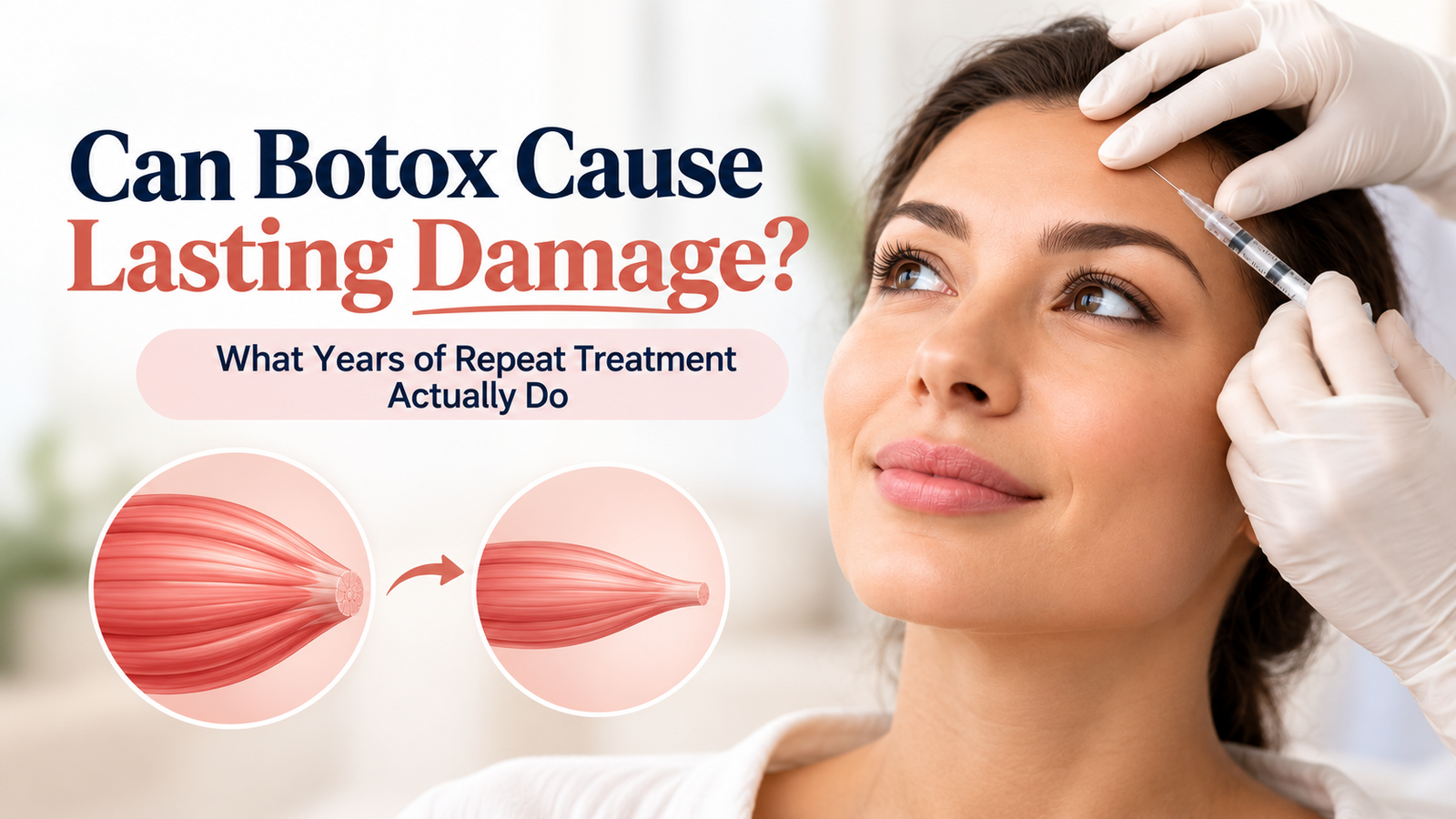
The muscle relaxes for a few months and then recovers, each time. Over years of regular treatment, the treated muscle can become slightly thinner and weaker, but the nerve itself is not destroyed.
Botox is a purified form of botulinum toxin type A. It blocks the chemical signal (acetylcholine) that tells a muscle to contract. The nerve ending is not cut or killed. The product label explains that the muscle slowly regains its nerve supply, which reverses the effect.
- Weeks 1 to 2: the signal is blocked and the muscle relaxes.
- Months 1 to 3: the nerve grows small new sprouts to reach the muscle.
- Months 3 to 4: the original nerve ending recovers, and movement returns.
According to the BOTOX Cosmetic prescribing information, the effect on frown lines lasts about 3 to 4 months. Mayo Clinic gives the same range.
Because the muscle is used less while it is relaxed, it does less "exercise". Studies of long-term use have reported a mild reduction in muscle bulk in treated areas. On the face this is usually invisible, and in areas like the jaw it is often the goal. The areas we treat are listed on our Botox treatments page.
Is it bad to get Botox for many years?
Not when it is given at the right dose and interval by a qualified doctor, which is also the short answer to whether Botox is safe for face treatment over time. In our clinic, many patients have had Botox for years with steady results. The two long-term issues worth knowing are mild muscle thinning and, rarely, reduced response. Both are linked to dose and frequency.
Can the body stop responding to Botox?
Yes, but it is uncommon at cosmetic doses. A small number of people develop neutralising antibodies, which are immune proteins that block the toxin, so it stops working as well.
The prescribing information reports that of 916 people treated with BOTOX Cosmetic in studies, 1.5% developed binding antibodies and none developed neutralising antibodies. The same label notes that injections at more frequent intervals or higher doses may lead to more antibody formation.
- Higher total dose: large doses, common in medical uses, carry more risk than small facial doses.
- Short intervals: repeating treatment before the last one wears off adds exposure.
- "Top-up" injections: small extra doses within a few weeks of a session add up.
- Signs to watch: results that get shorter or weaker over several sessions, even at the same dose.
If response drops, a doctor first checks dose, placement and product before suspecting antibodies. Switching to a different botulinum toxin product is sometimes considered.
Does long-term Botox make skin thinner or saggier?
Does Botox damage face skin? There is no good evidence that Botox thins or damages skin. Botox acts on muscle, not on the skin itself, and by reducing repeated folding it may help slow the deepening of dynamic lines.
The Botox long term side effects on the face that patients notice are usually not skin damage at all. Sagging usually comes from ageing, sun damage and loss of facial fat and bone, which happen with or without Botox. A forehead can look heavy if the forehead muscle is relaxed too much, but that is a dose and placement issue, and it wears off. We explain this in more detail in Can treatment damage forehead skin.
- Heavy brow or droopy eyelid: temporary, caused by dose or placement, fades over weeks.
- "Frozen" look: too high a dose for that face; adjusted at the next session.
- Bruising or swelling: short-lived, at the injection points.
Can Botox cause permanent damage to the face?
At cosmetic doses, there is no evidence that Botox causes permanent damage to facial nerves or skin. Its effect is reversible because the nerve regrows. Side effects such as a heavy brow are real but temporary. Permanent harm is more likely to come from unverified products or untrained injectors.
What claims about Botox have no evidence?
Several common fears are not supported by research, while two real effects, resistance and mild muscle thinning, are often ignored. The table separates the two.
| Claim | What research shows | What it means for you |
|---|---|---|
| Permanent nerve damage | The label describes the effect as reversible: the nerve supply returns and movement comes back in about 3 to 4 months. | Stopping treatment lets the muscle return to normal function. |
| Faster ageing after stopping | No evidence that skin ages faster. Lines return gradually as movement comes back. | You go back to your natural ageing, not a worse version of it. |
| Cancer | No link between cosmetic Botox and cancer has been shown. The label notes long-term animal cancer studies were not done. | There is no evidence-based reason to fear cancer from cosmetic Botox. |
| Resistance | Real but uncommon at cosmetic doses; linked to higher doses and shorter intervals. | Keep doses low and intervals long to protect future response. |
| Muscle thinning | Real; long-term use can reduce bulk of the treated muscle slightly. | Usually not visible on the face; your doctor can space or reduce doses. |
What happens when you stop Botox after years?
Movement returns over a few months and lines slowly reappear, but they do not become worse than they would have been. Some patients notice their lines are softer than before they started, because the muscle was relaxed for years. Botox does not make you dependent on it.
How can repeat treatment be planned to stay safe? Questions for a botox clinic near Hazira
Use the lowest effective dose and keep at least 12 weeks between sessions. These two rules protect against both resistance and over-relaxed muscles, and they are the planning rules we follow.
- Minimum 12-week interval: wait until the last treatment has worn off before the next one.
- Lowest effective dose: start low and add only if needed at review.
- Avoid frequent top-ups: plan one review visit at about two weeks, not repeated small doses.
- Keep a record: brand, units and areas from every session.
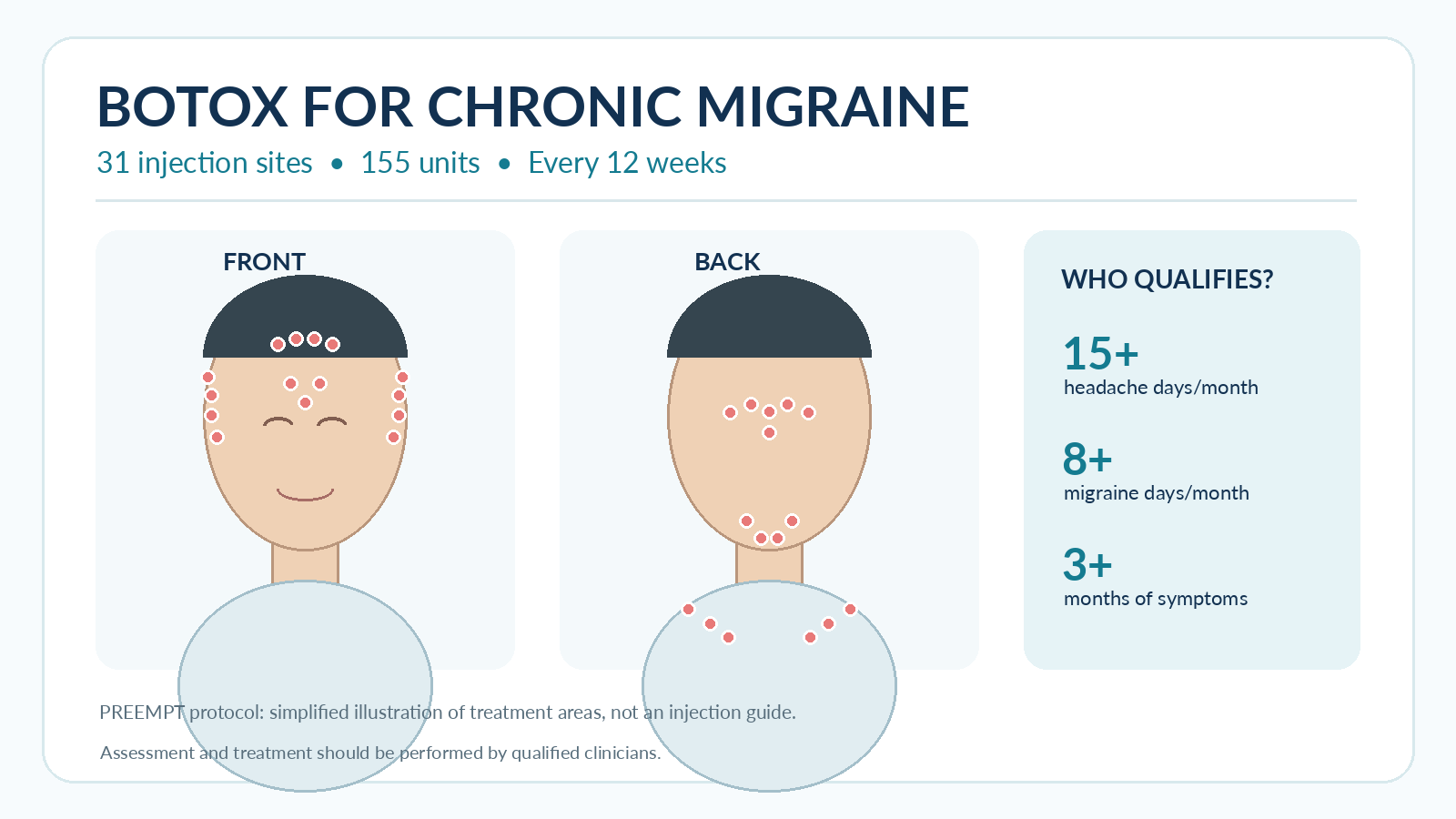
- Tell your doctor about medical Botox: migraine or sweating doses add to your total exposure.
- Use a doctor and a verified product: ask to see the sealed box before treatment.
The US FDA boxed warning about toxin spreading away from the injection site relates mainly to the larger doses used for conditions such as spasticity and cervical dystonia. The label states that no confirmed serious case of distant spread has been reported at the recommended frown-line dose.
Next step
Botox at cosmetic doses is reversible, and the real long-term risks are manageable with the right dose and interval. Bring your past treatment records to your consultation so your plan can be set safely. More common questions are answered on our Botox FAQs page, or call +91 8320500350.
This page is for education and is not a substitute for medical examination. Botox must be given by a qualified doctor. Facts on duration, antibodies and spread are from the BOTOX Cosmetic prescribing information and Mayo Clinic. Results and risks vary between individuals. Consult Dr. Ashutosh A. Shah or a qualified specialist before treatment.